Peppered Beef Jerky in a Dehydrator
Make tender, peppery beef jerky in a dehydrator with a savory marinade, simple timing, storage tips, and reliable food-safety guidance for home cooks.
Prep
25 minutes
Cook
4 hours 30 minutes
Rest
0 minutes
Total
4 hours 55 minutes
Servings
4
Difficulty
Easy
Cut
Eye of round
Method
Dehydrated
Safe internal temperature
71°C / 160°F
Nutrition per serving
320 calories
- Protein
- 43g
- Fat
- 8g
- Carbs
- 18g
- Fiber
- 1g
- Sat. fat
- 3g
- Sugar
- 13g
- Sodium
- 780mg
Nutrition values are estimates based on the listed ingredients and serving size.
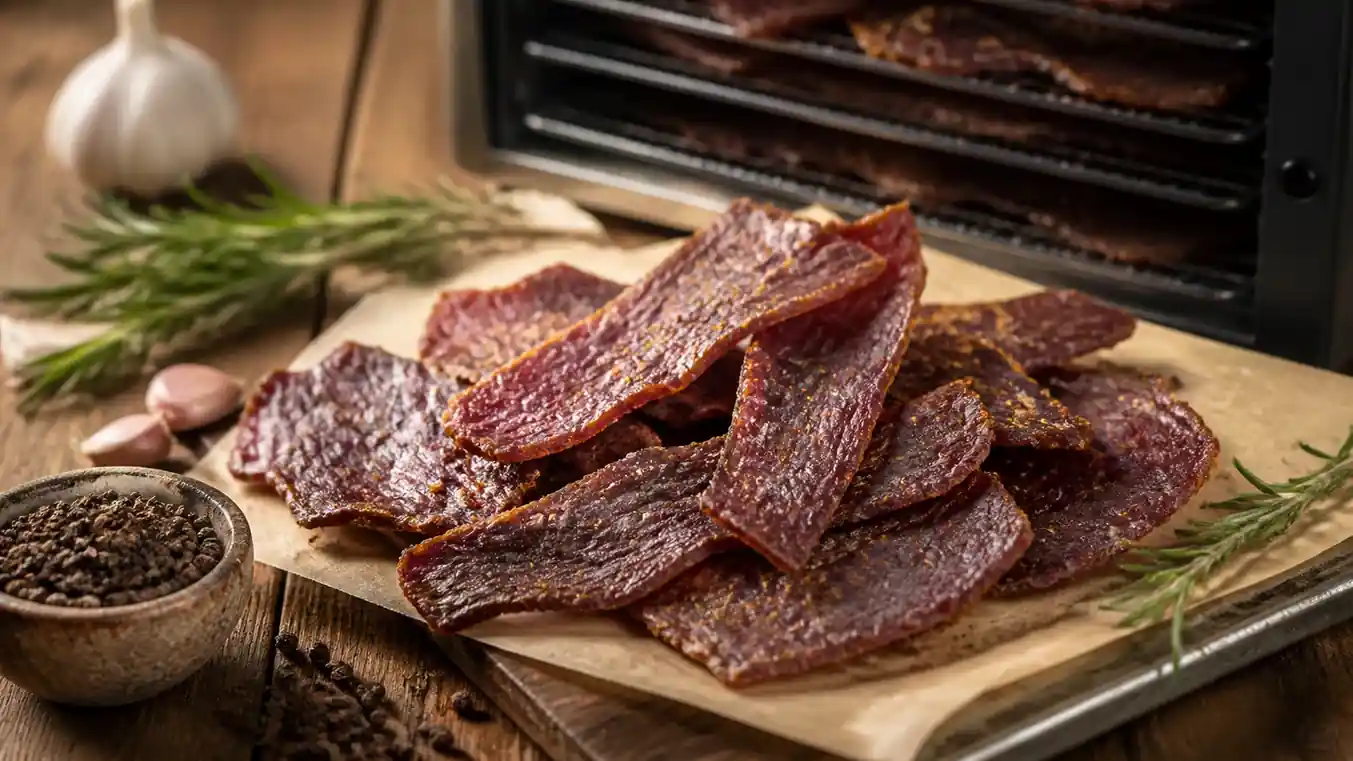
Homemade beef jerky is mostly a matter of getting a few details right: choose a lean cut, slice it evenly, marinate it well, and let the dehydrator dry it steadily. These peppery strips come out chewy and tender, with enough seasoning for a snack, lunchbox, or road trip.
Trim the visible fat and slice across the grain for a more tender bite. The marinade is made from familiar pantry ingredients—soy sauce, Worcestershire-style sauce, brown sugar, garlic, and plenty of black pepper—so the method is simple without tasting flat.
Why You'll Love This Recipe
- It turns a budget-friendly lean roast into a protein-rich snack.
- The marinade is savory, gently sweet, and adjustable for heat.
- A dehydrator keeps the drying process steady without requiring you to watch the oven.
- You can portion the finished jerky right away for grab-and-go snacks.
- The method gives you a dependable base for more beef snack ideas, including our beef recipes.
Recipe Information
| Detail | Amount |
|---|---|
| Prep time | 25 minutes, plus 8 to 12 hours to marinate |
| Cook time | 4 hours 30 minutes |
| Rest time | 0 minutes |
| Total active and drying time | 4 hours 55 minutes |
| Servings | 4 |
| Internal temperature | 71°C / 160°F |
The recipe data lists 25 minutes of prep, 4 hours 30 minutes of drying, and 4 hours 55 minutes total. The 8 to 12 hours of marinating is separate; it is hands-off, but it gives the beef time to take on the full flavor of the sauce.
Ingredients
- 2 pounds (900g) halal-certified eye of round beef, well chilled
- 1/2 cup low-sodium soy sauce
- 2 tablespoons Worcestershire-style sauce, alcohol-free
- 2 tablespoons packed light brown sugar
- 1 tablespoon honey
- 1 teaspoon garlic powder
- 1 teaspoon onion powder
- 1 teaspoon smoked paprika
- 1 teaspoon freshly ground black pepper, plus more to finish
- 1/2 teaspoon red pepper flakes, optional
- 1 teaspoon liquid smoke, optional and alcohol-free
Eye of round works especially well because it is lean, affordable, and easy to slice into uniform strips. Top round and bottom round are good alternatives. Avoid highly marbled steak: the fat does not dry safely and can shorten the jerky's storage life.
Step-by-Step Instructions
1. Trim and slice the beef
Place the beef in the freezer for 25 to 35 minutes, until the edges feel firm but the center is not frozen solid. Trim away every visible piece of surface fat and silverskin. Slice the beef into strips about 1/8 inch (3mm) thick. Cut across the grain for easier chewing, or with the grain if you prefer a firmer, more traditional jerky texture.
Keep the strips as close to the same thickness as you can. Thin pieces dry sooner, while thick pieces may stay moist in the center. A sharp knife is enough; a deli slicer simply makes uniform strips easier.
2. Mix the marinade
In a large zip-top bag or shallow nonreactive container, stir together the soy sauce, Worcestershire-style sauce, brown sugar, honey, garlic powder, onion powder, paprika, black pepper, red pepper flakes, and liquid smoke if using. Mix until the sugar is mostly dissolved.
Add the beef strips and turn them until every surface is coated. Press out the excess air, seal the bag, and refrigerate for 8 to 12 hours. Turn the bag once or twice during that time if you can; it helps the strips season evenly.
3. Heat the beef for food safety
Because jerky dries at a low temperature, bring the beef to a safe internal temperature of 71°C / 160°F before or during drying. A dependable approach is to arrange the marinated strips on a wire rack over a lined baking sheet and bake at 135°C / 275°F for 10 minutes. Check a thick strip with an instant-read thermometer; it must reach 71°C / 160°F.
Do not reuse the raw-beef marinade. Discard it after removing the strips, then wash your hands, utensils, and any surfaces that touched the raw beef.
4. Arrange the dehydrator trays
Blot the warmed strips lightly with paper towel. Arrange them in a single layer on the dehydrator trays, leaving a little space between pieces for airflow. Add a light sprinkle of extra black pepper if you want a sharper pepper finish. Do not stack the strips or let their edges overlap.
Set the dehydrator to 65°C / 150°F. If your model has a jerky setting, confirm that it runs near this temperature. Rotate trays halfway through if the manufacturer recommends it or if your dehydrator dries unevenly.
5. Dry until properly finished
Start checking after 3 1/2 hours. Most strips need 4 to 5 hours, depending on their thickness, the humidity, and your dehydrator. Finished jerky should look dry and darker, feel firm, and bend with small cracks in the fibers. It should not feel wet, sticky, or spongy in the middle.
Cool one test strip for five minutes before judging it. Warm jerky feels softer than it will at room temperature. If it is still moist when torn, return all the strips to the dehydrator for 20 to 30 minutes, then test again.
Tips for Best Results
Keep the slices thin and even
An eighth-inch slice dries predictably and gives a good balance of chew and tenderness. If you are slicing by hand, chilling the roast briefly is the easiest way to avoid ragged strips.
Trim fat thoroughly
Drying removes water, not fat. Visible fat can turn rancid during storage, so take the extra minute to trim it away. For a longer shelf life, this is the most useful step you can take.
Taste the marinade, not the raw beef
Before adding the meat, taste a tiny spoonful of the marinade and adjust the pepper, sweetness, or heat. Once it touches raw beef, it must be discarded. For a gentler batch, leave out the pepper flakes; for more heat, add another 1/4 teaspoon.
Avoid overdrying
Jerky should be dry, not brittle. Check early and often near the end of the drying window. If every strip snaps instead of bending, it has gone a little too far, but it is still good finely chopped into weeknight dinner recipes such as rice bowls or salads.
Ingredient Substitutions
- Top round or bottom round: Swap in the same weight for eye of round.
- Coconut aminos: Use in place of part or all of the soy sauce for a slightly sweeter, less salty marinade. Add a pinch of salt if needed.
- Maple syrup: Replace the honey with an equal amount for a deeper caramel note.
- Chipotle powder: Use instead of red pepper flakes for a smoky heat.
- Fresh garlic: Use 2 finely grated cloves in place of the garlic powder, knowing fresh garlic makes the marinade a little thicker.
For a sesame note, add 1 teaspoon toasted sesame oil to the marinade, but keep the beef well trimmed. Do not swap in a fatty cut just to add richness.
What to Serve With
These beef jerky strips are good on their own with fruit, roasted nuts, and cheese. Chop a few pieces over a grain bowl, tuck them into a picnic snack box, or use them to add savory depth to a salad. For a bigger spread, pair them with easy chicken recipes and crisp vegetables for a make-ahead lunch table.
For a lighter contrast, serve jerky with apple slices, orange segments, cucumber sticks, or whole-grain crackers. The sweet fruit and cool vegetables are especially good against the peppery beef.
Storage Instructions
Cool the jerky completely before packing it. Trapped warmth creates condensation, which can make the strips spoil sooner. Store it in a clean airtight container in the refrigerator for up to 2 weeks. For longer storage, freeze portions in airtight freezer bags for up to 3 months.
If you see moisture inside the container, refrigerate the jerky immediately and use it within a few days. Discard any batch that develops an off smell, visible mold, or an unusual slimy surface. Homemade jerky is less shelf-stable than many commercial products because it has no curing preservatives.
Reheating Instructions
Jerky is meant to be eaten at room temperature, so it does not need reheating. If it has been refrigerated, let a portion sit at room temperature for 10 to 15 minutes for a softer chew. Do not microwave it; the strips can turn tough or scorch quickly.
Frequently Asked Questions
How long does beef jerky take in a dehydrator?
At 65°C / 150°F, thin strips usually take 4 to 5 hours after the safety-heating step. Begin checking at 3 1/2 hours, since thickness and humidity make a real difference.
Can I make dehydrated beef jerky strips without liquid smoke?
Yes. Liquid smoke adds a campfire-style note, but it is optional. Smoked paprika gives the marinade a gentler smoky character without it.
What is the best cut of beef for jerky?
Eye of round is a favorite because it is lean and slices neatly. Top round, bottom round, and London broil are also good choices when trimmed carefully.
Why is my homemade jerky too tough?
It may have been sliced with the grain, cut too thick, or dried too long. Slice across the grain for a more tender result, keep the pieces near 1/8 inch thick, and start testing before the four-hour mark.
Is a dehydrator necessary for this recipe?
A dehydrator offers the most even, low-temperature airflow, but an oven set to its lowest stable temperature can work. Use a wire rack over a baking sheet and keep a close eye on the beef. For more practical meat cooking ideas, browse our turkey recipes.
Conclusion
These dehydrated beef jerky strips make a homemade snack feel manageable and full of flavor. Use lean, evenly sliced beef, marinate it overnight, heat it to 71°C / 160°F for safety, then dry it until it bends and cracks. From there, you can adjust the pepper, sweetness, and spice to suit what you keep in your pantry.
Nutrition is an estimate per serving and varies with the exact beef, marinade absorption, and amount of liquid discarded.
Keep cooking
You might also like
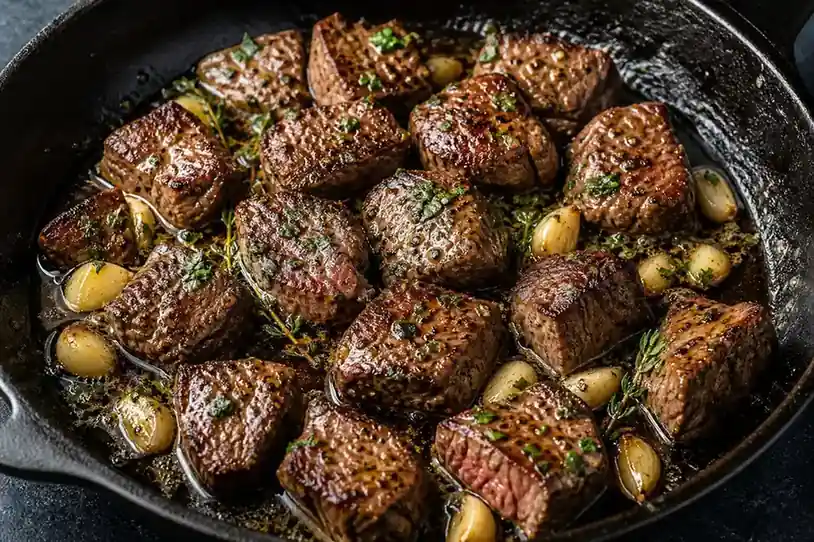
Garlic Butter Steak Bites
Juicy garlic butter steak bites cooked quickly in a skillet for an easy high-protein dinner.
Beef · Prep 10 minutes · Cook 10 minutes
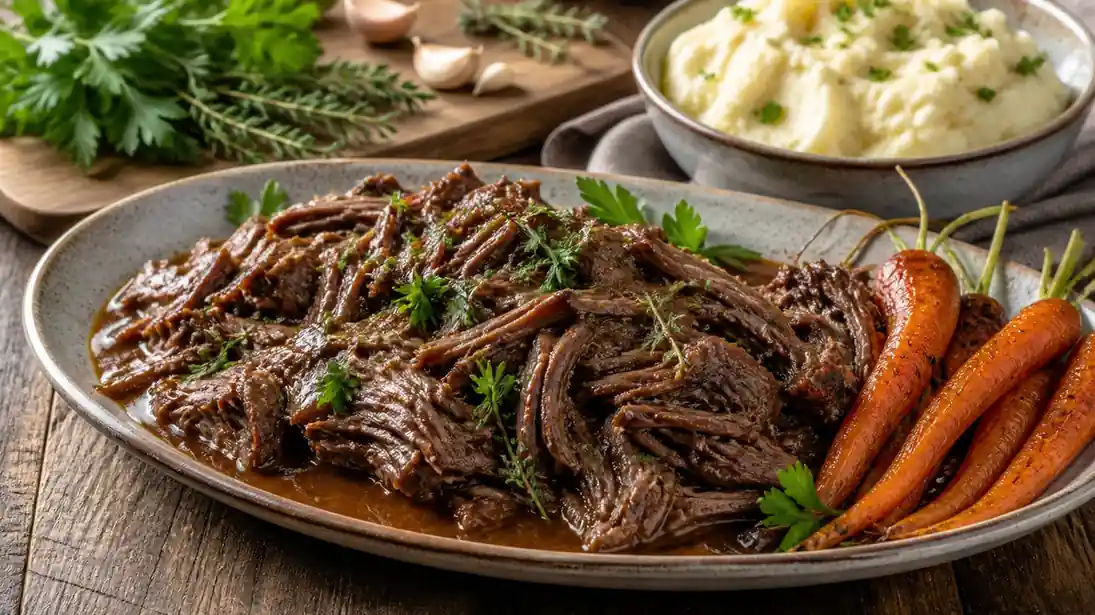
Shredded Beef Recipe: Tender Slow-Cooked Chuck Roast
This shredded beef recipe makes tender, richly seasoned chuck roast with savory pan juices, simple steps, storage advice, and satisfying serving ideas.
Beef · Prep 20 minutes · Cook 3 hours 30 minutes

Beef Tongue Taco Recipe: Tender, Crisp Skillet Tacos
This beef tongue taco recipe turns tender braised beef tongue into crisp skillet tacos with onion, cilantro, lime, and salsa verde for an easy dinner.
Beef · Prep 25 minutes · Cook 3 hours