Deboned Leg of Lamb Recipe with Garlic and Rosemary
Make this deboned leg of lamb recipe with garlic, rosemary, roasted potatoes, and thermometer tips for a juicy oven roast that is easy to carve.
Prep
25 minutes
Cook
1 hour 5 minutes
Rest
15 minutes
Total
1 hour 45 minutes
Servings
6
Difficulty
Easy
Cut
Deboned leg of lamb
Method
Oven roasted
Safe internal temperature
63°C / 145°F
Nutrition per serving
575 calories
- Protein
- 47g
- Fat
- 34g
- Carbs
- 23g
- Fiber
- 4g
- Sat. fat
- 11g
- Sugar
- 3g
- Sodium
- 690mg
Nutrition values are estimates based on the listed ingredients and serving size.
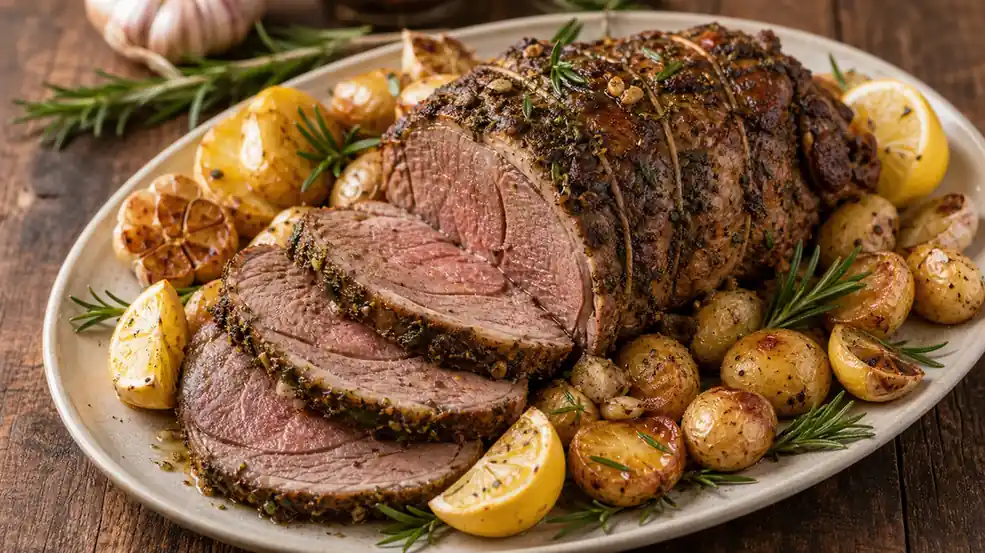
A deboned leg of lamb makes an impressive roast without the awkward carving. The compact, boneless shape is easy to season evenly and slice, while garlic, rosemary, lemon, and olive oil form a savory crust. Baby potatoes roast in the same pan and pick up the flavorful drippings as they cook.
Use the thermometer as your guide rather than relying only on the clock. Remove the lamb at 60°C / 140°F and let it rest until it reaches about 63°C / 145°F for medium-rare. For a more-done roast, continue cooking until the center reaches 68°C / 155°F. Resting the meat and slicing it thinly across the grain will help keep it tender.
Why You'll Love This Recipe
- The tied, boneless roast is easy to carve into neat slices.
- Lamb and potatoes cook together in one roasting pan.
- Garlic and rosemary add plenty of flavor without hard-to-find ingredients.
- Thermometer guidance makes the doneness easier to judge.
- Leftover slices work well in sandwiches, salads, and grain bowls.
Deboned Leg of Lamb Recipe Information
| Detail | Amount |
|---|---|
| Preparation time | 25 minutes |
| Cooking time | 1 hour 5 minutes |
| Resting time | 15 minutes |
| Total time | 1 hour 45 minutes |
| Servings | 6 |
| Internal temperature | 63°C / 145°F |
These times are for a 1.6 kg / 3 1/2-pound tied roast. The roast's thickness matters more than its weight, so start checking early if yours is narrow or unusually flat. Insert an instant-read thermometer into the thickest part of the center, away from a seam, twine, or the roasting pan.
Ingredients
For the lamb
- 1 deboned leg of lamb, about 1.6 kg / 3 1/2 pounds, tied
- 2 tablespoons olive oil, divided
- 6 garlic cloves, finely grated or minced
- 1 tablespoon finely chopped fresh rosemary
- 2 teaspoons fresh thyme leaves
- 1 teaspoon finely grated lemon zest
- 1 3/4 teaspoons fine sea salt
- 1 teaspoon freshly ground black pepper
- 1 teaspoon ground cumin
For the roasting pan
- 900 g / 2 pounds baby potatoes, halved if large
- 2 medium red onions, cut into wedges
- 1 lemon, cut into wedges
- 120 ml / 1/2 cup low-sodium chicken stock or water
- 1 tablespoon chopped parsley, optional, for serving
Step-by-Step Instructions
1. Prepare the lamb and oven
Take the lamb out of the refrigerator 30 minutes before cooking so the surface is not ice-cold. Do not leave raw lamb at room temperature for more than 2 hours. Heat the oven to 220°C / 425°F with a rack in the center, then pat the roast dry with paper towels. A dry surface browns much better than a wet one.
Make sure the butcher's twine is secure. Without a reasonably even cylinder, a deboned leg can open up or cook unevenly. If the roast needs it, ask a butcher to retie it or use kitchen twine to make three or four snug loops along its length.
2. Make the garlic-herb rub
Mix 1 tablespoon olive oil with the garlic, rosemary, thyme, lemon zest, salt, pepper, and cumin in a small bowl. Rub it over every side of the lamb, working some of the mixture into the folds. It only needs to coat the outside; there is no need to build up a thick paste.
In a large roasting pan, toss the potatoes, onions, lemon wedges, remaining tablespoon olive oil, and a small pinch of salt and pepper. Spread the vegetables into one layer, leaving a space in the middle. Set the lamb in that space so hot air can move around it.
3. Roast hot, then lower the heat
Roast at 220°C / 425°F for 20 minutes to brown the crust. Without opening the oven door, lower the temperature to 180°C / 350°F and continue roasting for 35 to 50 minutes, depending on the roast's thickness.
Once it has spent 35 minutes at the lower temperature, start checking the center. If the pan looks dry, pour the stock or water around the potatoes, not over the lamb; liquid on the roast will soften the crust. Rotate the pan once if your oven browns unevenly.
4. Cook to temperature and rest
For medium-rare lamb, take the roast out when the thermometer reads 60°C / 140°F; it should climb to about 63°C / 145°F as it rests. For medium, remove it closer to 65°C / 149°F. For more-done lamb, cook it to 68°C / 155°F. Transfer the roast to a board and tent it loosely with foil for 15 minutes.
If the potatoes need more color while the lamb rests, stir them and return the pan to the oven for 5 to 10 minutes, until they are tender and browned at the edges. Remove the twine, slice the lamb thinly across the grain, and serve it with the potatoes, onions, pan juices, parsley, and roasted lemon.
Tips for Best Results
Use a thermometer instead of depending on the listed cooking time. An evenly tied roast may finish quickly, while a thick one will need longer. Check from the side and push the probe into the center without touching the pan. If the readings vary, use the lowest temperature from the thickest part.
Leave the roast uncovered as it cooks. Covering it traps steam and keeps the garlic-herb crust from developing. Foil is helpful during the resting period, but place it loosely over the meat rather than sealing it tightly.
Give the lamb time to rest before slicing. The pause allows the hot juices to settle, making it easier to cut clean slices and keeping the meat moist. Find the visible muscle fibers and cut across them, not in the same direction, for the most tender bite.
Ingredient Substitutions
Fresh oregano can stand in for the thyme, or add an extra teaspoon of rosemary. Dried herbs are fine as well: use 1 teaspoon dried rosemary and 1/2 teaspoon dried thyme, crushing them between your fingers before mixing. Orange zest can replace the lemon zest.
Replace some of the baby potatoes with carrots, parsnips, or chunks of sweet potato. Cut the vegetables to similar sizes so they cook at the same pace. Water can replace the stock; it prevents the drippings from scorching and still helps make light pan juices.
What to Serve With Deboned Leg of Lamb
The potatoes and onions already make this a complete roast dinner. For something fresh alongside it, add crisp green beans, cucumber salad, or peppery arugula. Warm flatbread or rice pilaf is useful for catching the savory pan juices, too.
For more roast ideas, browse lamb recipes, try these lamb kabobs, or save lamb loin chops for a faster dinner. If you want a poultry option for another night, grilled chicken drumsticks pair well with the same lemon-and-herb flavors.
Storage Instructions
Refrigerate leftover lamb and vegetables in shallow, airtight containers within 2 hours of serving. The lamb keeps for up to 4 days. If possible, store the slices with a spoonful of pan juice to help them stay moist.
For longer storage, freeze cooled lamb slices in a freezer-safe container for up to 2 months. Freeze the potatoes separately because they soften after thawing. Thaw the lamb overnight in the refrigerator, never on the counter.
Reheating Instructions
Warm the lamb slices gently in a covered baking dish with a splash of stock or pan juices at 150°C / 300°F for 10 to 15 minutes, just until hot. Reheat the potatoes on a baking sheet at 200°C / 400°F until crisp again.
For one serving, cover the lamb and microwave it at 50% power in short intervals with a spoonful of liquid. Reheat only what you plan to eat, rather than repeatedly chilling and reheating the same food.
Frequently Asked Questions
Is deboned leg of lamb the same as boneless leg of lamb?
Yes. Both terms describe a leg with the bone removed, usually rolled and tied into a roast. The boneless shape is easy to season and slices cleanly after resting.
How long does a deboned leg of lamb take to roast?
A 1.6 kg / 3 1/2-pound tied roast commonly needs about 55 to 70 minutes in the oven with this method. Start checking the temperature early, since the roast's shape can change the timing substantially.
Can I season the lamb ahead?
Yes. Apply the garlic-herb rub, cover the lamb, and refrigerate it for up to 12 hours. Let it sit at room temperature for 30 minutes before roasting, and wait to prepare the vegetables until you are ready to cook.
How do I know which way to slice the roast?
Find the direction of the long muscle fibers and cut perpendicular to them. Thin slices across the grain shorten those fibers, which makes the lamb feel more tender.
Conclusion
This deboned leg of lamb recipe keeps a centerpiece roast manageable. Tie the lamb evenly, coat it with the garlic-and-rosemary rub, cook to temperature, and let it rest before slicing. The potatoes and roasted lemon use the same pan, giving you a dependable lamb dinner with little extra work.
Keep cooking
You might also like
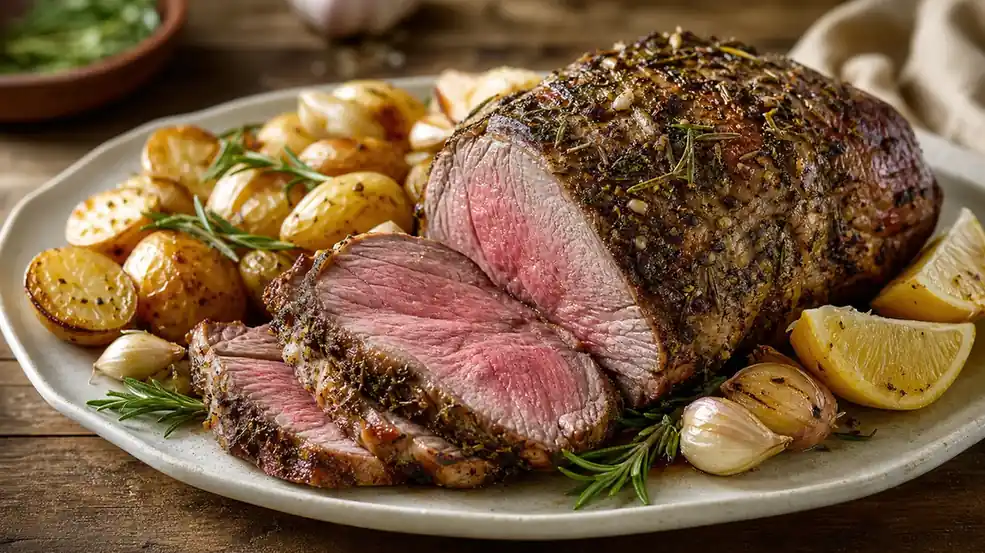
Boneless Leg of Lamb Recipe (Garlic Herb Roast)
Make this boneless leg of lamb recipe with a garlic-herb crust, juicy slices, and crisp potatoes for an easy, impressive roast dinner at home.
Lamb · Prep 20 minutes · Cook 1 hour 10 minutes
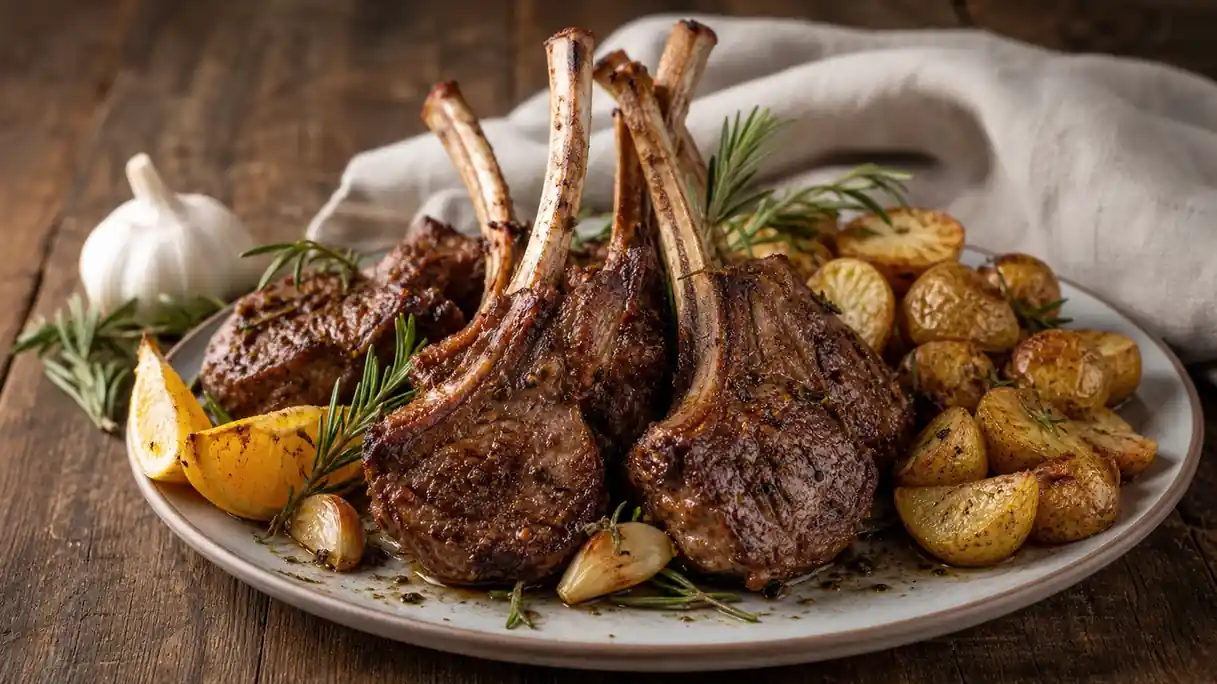
Easy Lamb Lollipops Recipe with Garlic and Rosemary
Make this lamb lollipops recipe with garlic, rosemary, and lemon for tender oven-roasted rib chops, plus crisp potatoes for an easy dinner at home tonight.
Lamb · Prep 15 minutes · Cook 18 minutes
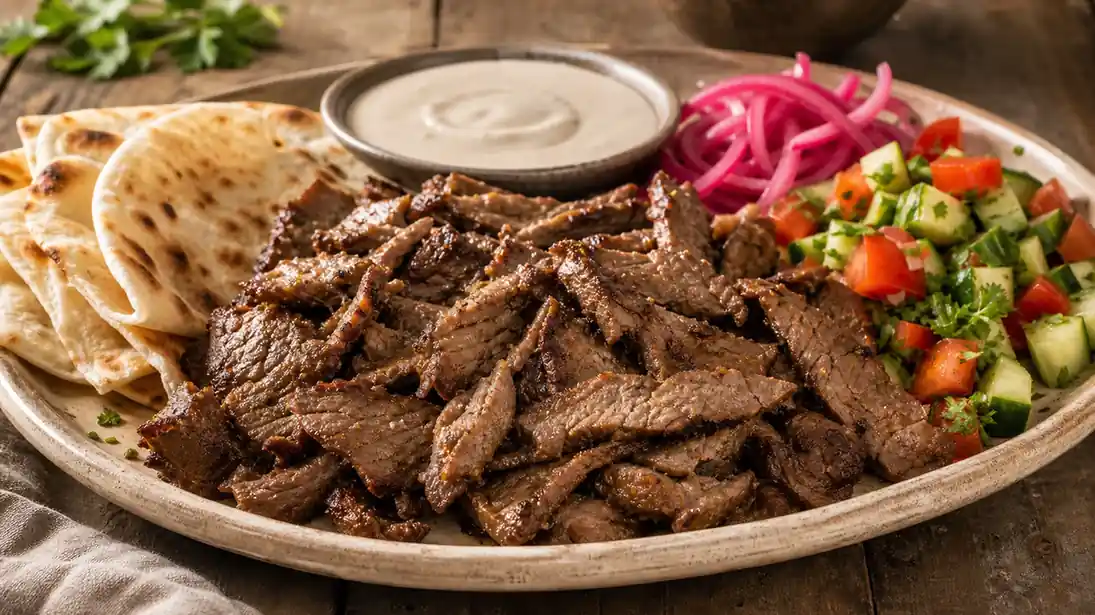
Lamb Shawarma Recipe with Oven-Roasted Spiced Lamb
Make this lamb shawarma recipe with tender oven-roasted spiced lamb, warm flatbread, crisp salad, and creamy tahini yogurt sauce for an easy dinner.
Lamb · Prep 20 minutes · Cook 35 minutes