Low Carb Chicken Recipes: Lemon Garlic Skillet Dinner
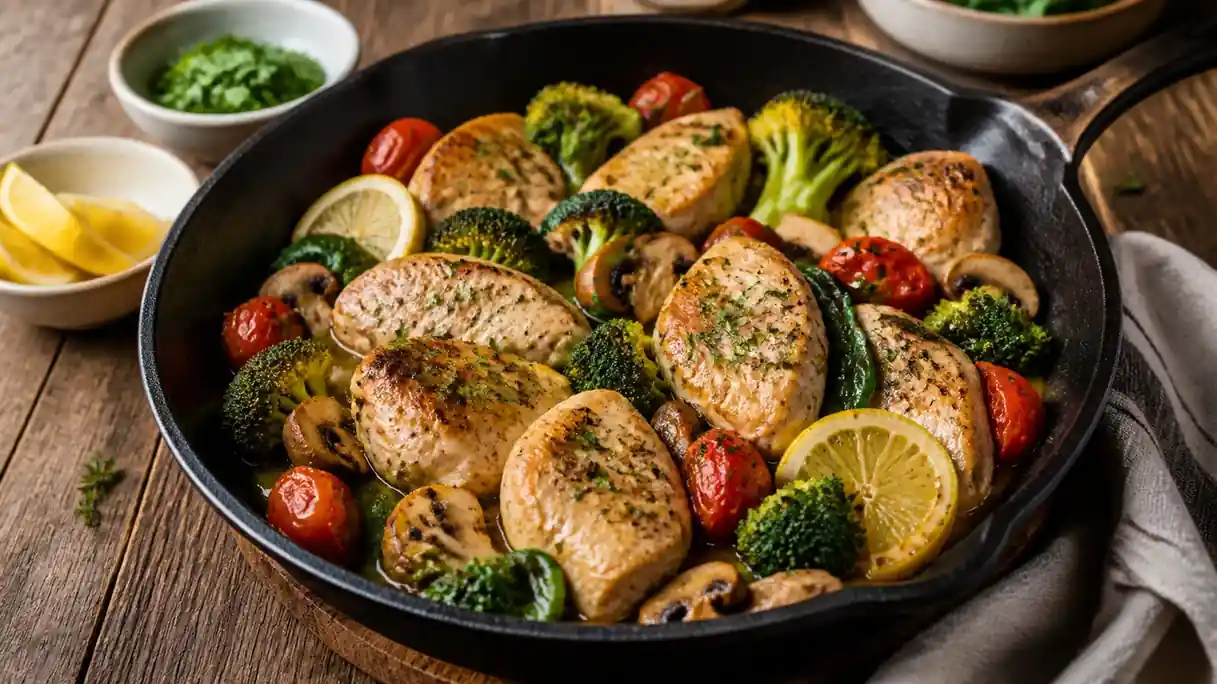
These low carb chicken recipes begin with a lemon garlic chicken skillet with broccoli, mushrooms, and spinach for a quick, satisfying dinner.
Prep
15 minutes
Cook
20 minutes
Rest
5 minutes
Total
40 minutes
Servings
4
Difficulty
Easy
Cut
Boneless skinless chicken breasts
Method
Skillet cooked
Safe internal temperature
74°C / 165°F
Nutrition per serving
330 calories
- Protein
- 40g
- Fat
- 16g
- Carbs
- 14g
- Fiber
- 4g
- Sat. fat
- 4g
- Sugar
- 6g
- Sodium
- 510mg
Nutrition values are estimates based on the listed ingredients and serving size.
Low Carb Chicken Recipes: Lemon Garlic Skillet Dinner
If you want low carb chicken recipes that still feel like a full dinner, start with this lemon garlic skillet. Chicken breast cooks with broccoli, mushrooms, spinach, and tomatoes in one pan, giving you plenty of color and texture without rice, pasta, or bread. Lemon lifts the savory pan juices and keeps the vegetables tasting fresh.
The method is straightforward: cut the chicken evenly, brown it in batches, and finish it with the vegetables in the same skillet. Serve it as written, spoon it over cauliflower rice, or add a crisp salad. Use a thermometer rather than guessing—the thickest piece of chicken should reach 74°C / 165°F.
Why You'll Love This Recipe
- A chicken-and-vegetable dinner is ready in about 40 minutes.
- One skillet keeps preparation and cleanup manageable.
- Broccoli, mushrooms, and spinach add volume and fiber while keeping the dish low in carbohydrates.
- Lemon, garlic, and herbs build flavor from familiar ingredients.
- The method adapts easily to the vegetables you already have.
For more practical poultry meals, browse chicken recipes or make a crowd-friendly batch of grilled chicken drumsticks.
Low Carb Chicken Recipes: Recipe Information
- Preparation time: 15 minutes
- Cooking time: 20 minutes
- Resting time: 5 minutes
- Total time: 40 minutes
- Servings: 4
- Internal temperature: 74°C / 165°F in the thickest piece of chicken
Ingredients
- 1 1/2 pounds boneless, skinless chicken breasts, cut into 1-inch pieces
- 1 teaspoon kosher salt, divided
- 1/2 teaspoon black pepper
- 1 teaspoon sweet paprika
- 2 tablespoons olive oil, divided
- 8 ounces cremini mushrooms, sliced
- 3 cups broccoli florets, cut into bite-size pieces
- 1 cup cherry tomatoes, halved
- 4 garlic cloves, finely chopped
- 1/2 cup low-sodium chicken broth
- 1 tablespoon lemon juice, plus lemon wedges for serving
- 1 teaspoon lemon zest
- 1/2 teaspoon dried oregano
- 3 packed cups baby spinach
- 2 tablespoons chopped fresh parsley
Choose chicken breasts that are close in thickness so the pieces cook at the same pace. Pre-cut florets are convenient, but halve any very large pieces so they become tender during the short skillet cooking time. Low-sodium broth gives you more control over the seasoning, so taste the finished pan sauce before adding more salt.
Step-by-Step Instructions
1. Season the chicken
Pat the chicken dry with paper towels and place it in a bowl. Add 3/4 teaspoon salt, the pepper, and paprika, then toss to coat. Dry chicken browns more effectively; wet chicken tends to steam. Set it beside the stove with the vegetables, broth, lemon, and herbs measured and ready.
2. Brown the chicken in batches
Heat 1 tablespoon olive oil in a large cast-iron or heavy skillet over medium-high heat. When the oil shimmers, add half the chicken in a single layer. Leave it alone for 2 to 3 minutes, then turn and cook for another 2 to 3 minutes, until browned but not necessarily cooked through. Transfer it to a clean plate and repeat with the remaining oil and chicken.
Avoid crowding the pan. Too much chicken at once lowers the temperature, causing the pieces to release liquid instead of developing a browned surface. The chicken finishes in the sauce, so a little pinkness at this stage is normal.
3. Cook the vegetables and build the sauce
Lower the heat to medium. Add the mushrooms and remaining 1/4 teaspoon salt, then cook for 3 minutes, stirring occasionally. Add the broccoli and tomatoes and cook for 4 minutes more. Stir in the garlic and oregano and cook for 30 seconds, just until fragrant.
Pour in the broth and scrape up the browned bits from the bottom of the skillet with a wooden spoon. Add the lemon juice and zest. Those bits bring concentrated flavor to the broth and turn it into a quick pan sauce.
4. Finish and rest the chicken
Return the chicken and any juices on the plate to the skillet. Cover loosely and simmer for 4 to 6 minutes, stirring once, until the broccoli is crisp-tender and the thickest chicken piece registers 74°C / 165°F. Take the skillet off the heat, fold in the spinach until just wilted, and scatter the parsley over the top.
Let the skillet rest for 5 minutes before serving. The short rest lets the chicken settle and the pan juices coat the vegetables. Use a clean instant-read thermometer for the final check; if it touched raw chicken, wash it before using it again.
Tips for Best Results
Use a skillet that is at least 12 inches wide so the chicken can brown instead of piling up. If your pan is smaller, brown the chicken in three batches. Keep the heat at medium-high for browning, then reduce it before adding the garlic so it does not scorch.
Cut the broccoli into bite-size florets. Large, thick pieces need longer than the chicken, which can leave you with undercooked vegetables or overcooked meat. If the broccoli is especially firm, add a tablespoon of water with the broth and cover the skillet for the first two minutes of simmering.
The thermometer is the most reliable guide. Check the center of the largest chicken piece and remove the pan as soon as it reaches 74°C / 165°F. Chicken can dry out if it keeps simmering after it is safely cooked.
Ingredient Substitutions
Boneless, skinless chicken thighs can replace the chicken breast. Cut them into similar pieces and allow a few extra minutes if needed, still checking for 74°C / 165°F. Turkey breast works as well, though it may need a little more broth because it is lean.
Replace part of the broccoli with zucchini half-moons, green beans, or bell pepper. Keep the total vegetable volume about the same, adding quick-cooking vegetables toward the end. Kale can replace spinach, but give it 2 to 3 minutes in the sauce to soften.
If you do not have a fresh lemon, use 2 teaspoons bottled lemon juice, skip the zest, and add a small pinch of extra oregano. For a richer finish, stir in one tablespoon of unsalted butter after taking the pan off the heat; it will slightly increase the nutrition estimate.
What to Serve With
This skillet is filling on its own, but cauliflower rice makes an easy base for the lemony juices. Cucumber salad, roasted asparagus, or a simple leafy salad rounds out the meal without competing with the garlic and herbs. For another chicken dinner later in the week, try oven-baked chicken thighs or chicken souvlaki.
If you are serving people with different appetites, put optional sides on the table separately. Roasted sweet potatoes or warm flatbread work for guests who are not eating low carb, while the skillet stays exactly as written.
Storage Instructions
Cool leftovers within 2 hours, then transfer them to shallow airtight containers. Refrigerate for up to 3 days. Storing the chicken and vegetables in the pan juices helps keep the lean breast from drying out.
To freeze it, cool the chicken mixture completely and pack it into individual freezer-safe containers. Freeze for up to 2 months. The vegetables will be softer after thawing, but the dish still works well for a quick lunch. Thaw overnight in the refrigerator rather than on the counter.
Reheating Instructions
Reheat refrigerated portions in a covered skillet over medium-low heat with a splash of broth or water for 5 to 7 minutes. Stir gently until hot throughout. Alternatively, microwave a portion in a covered microwave-safe dish in 60-second bursts, stirring between bursts.
Reheat leftovers until steaming hot throughout. If you use a thermometer, aim for 74°C / 165°F in the center. Avoid prolonged high heat, which makes chicken breast tough and the vegetables mushy.
Frequently Asked Questions
Are these low carb chicken recipes suitable for meal prep?
Yes. Divide the cooled chicken and vegetables among four containers and refrigerate them for up to 3 days. Add fresh parsley or a lemon wedge after reheating for a little brightness. Because the recipe contains no grains, it is easy to pair with cauliflower rice or salad.
Can I use frozen broccoli?
Yes, but thaw it first and blot away excess moisture. Frozen broccoli releases more water than fresh, so add it after the mushrooms have browned. Cook it until hot, then continue with the broth and chicken. The finished texture will be softer than fresh broccoli.
Why is my chicken not browning?
The usual causes are a crowded skillet, chicken that was not dried first, or heat that is too low. Work in batches and wait for the oil to shimmer. Once the chicken is in the pan, leave it alone long enough for a browned crust to form before turning it.
Is the nutrition information per serving?
Yes. The estimates are for one-quarter of the completed skillet, including the chicken, oil, broth, and listed vegetables. Actual values vary with the size of the chicken pieces, broth brand, and amount of pan sauce served.
Conclusion
Keep this lemon garlic skillet in your rotation when you want low carb chicken recipes that are flavorful, practical for a busy night, and easy to serve. Brown the chicken in batches, use a thermometer for food safety, and let the vegetables take on the lemony pan juices. The basic formula also gives you room to change the vegetables and herbs when you want a different dinner.
Nutrition estimates are per serving and are based on the listed ingredients.
Keep cooking
You might also like
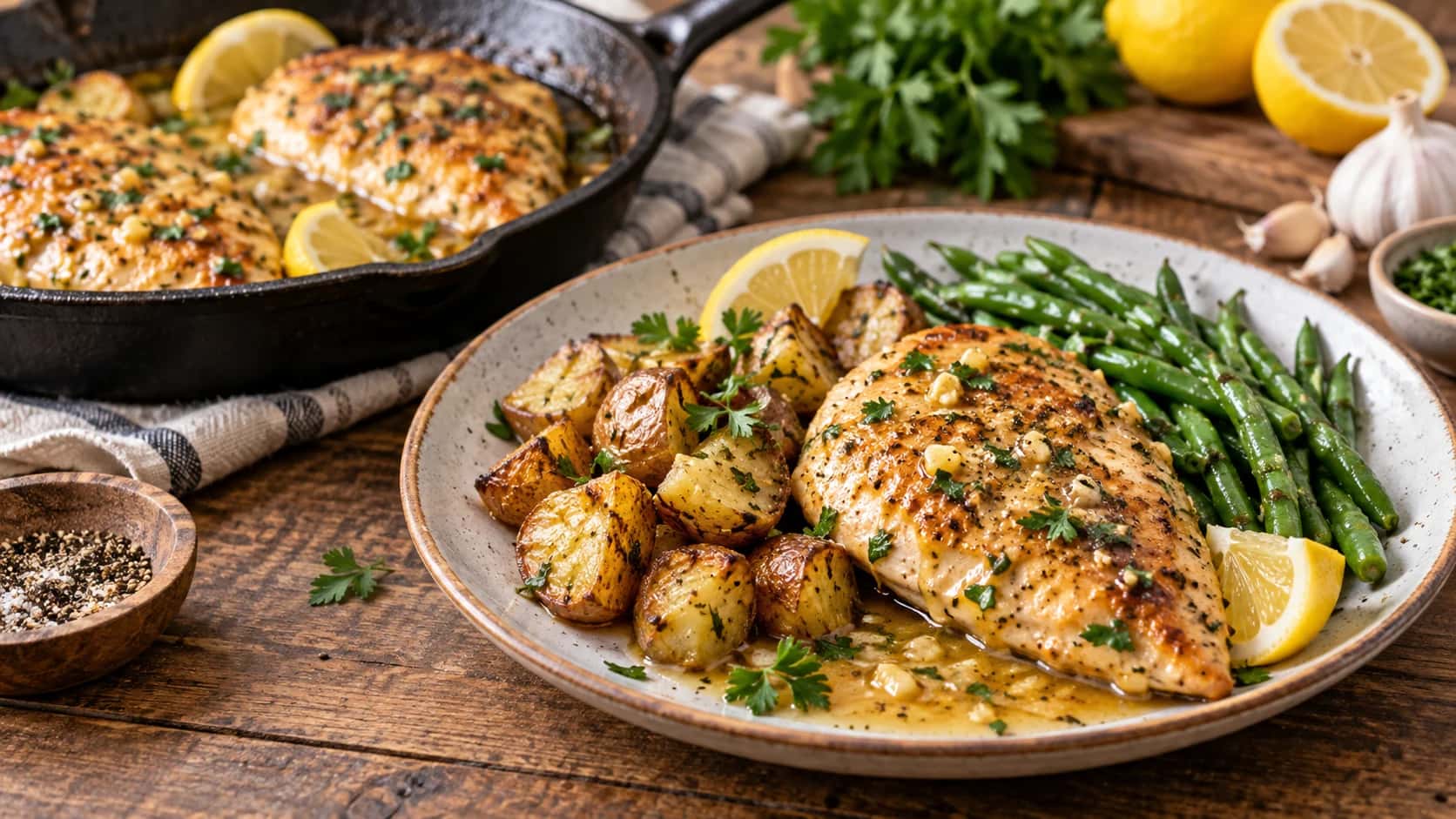
Easy Recipes With Chicken Breast: Lemon Garlic Skillet
These recipes with chicken breast start with a juicy lemon-garlic skillet dinner, tender potatoes, and green beans for an easy family meal tonight at home.
Chicken · Prep 15 minutes · Cook 25 minutes
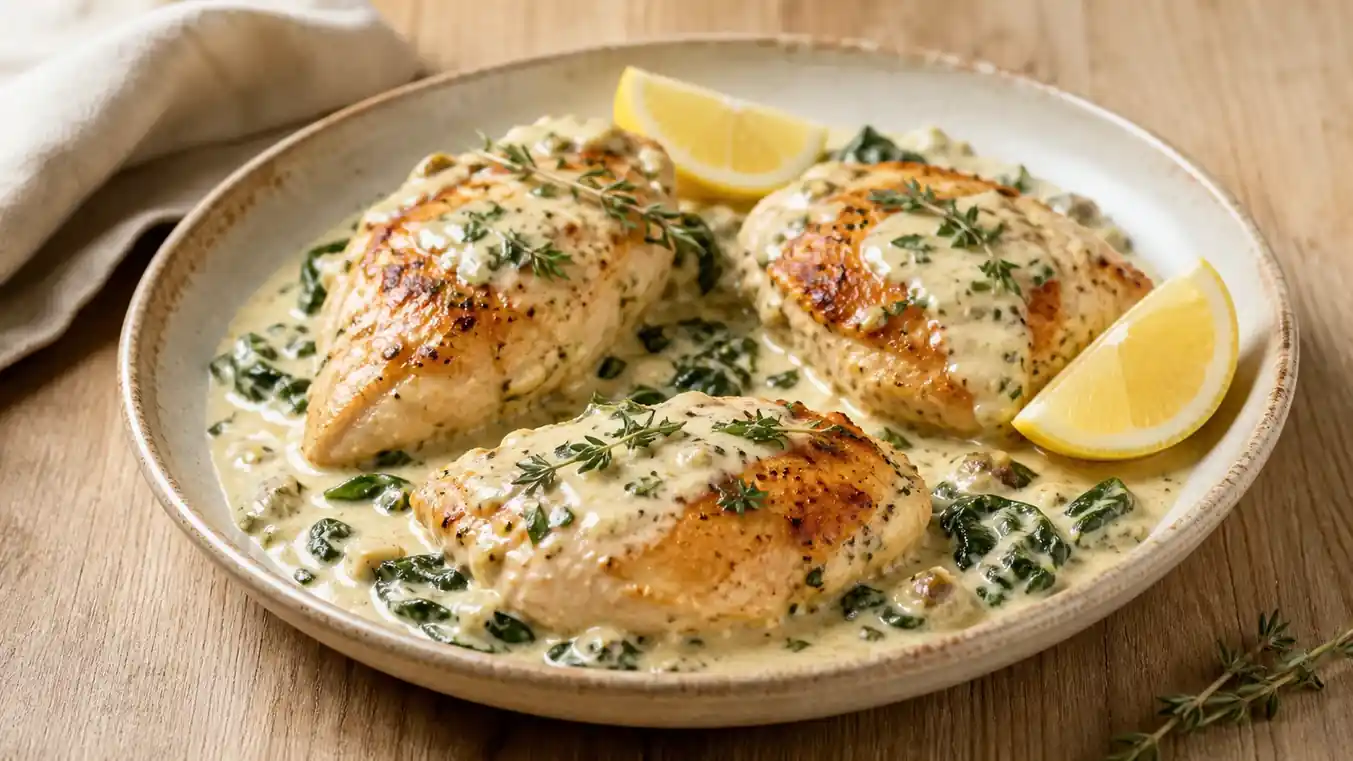
Easy Boursin Chicken Recipe with Creamy Spinach Sauce
This Boursin chicken recipe pairs golden skillet chicken with a creamy garlic-herb sauce and spinach for an easy, comforting 50-minute dinner at home.
Chicken · Prep 20 minutes · Cook 25 minutes
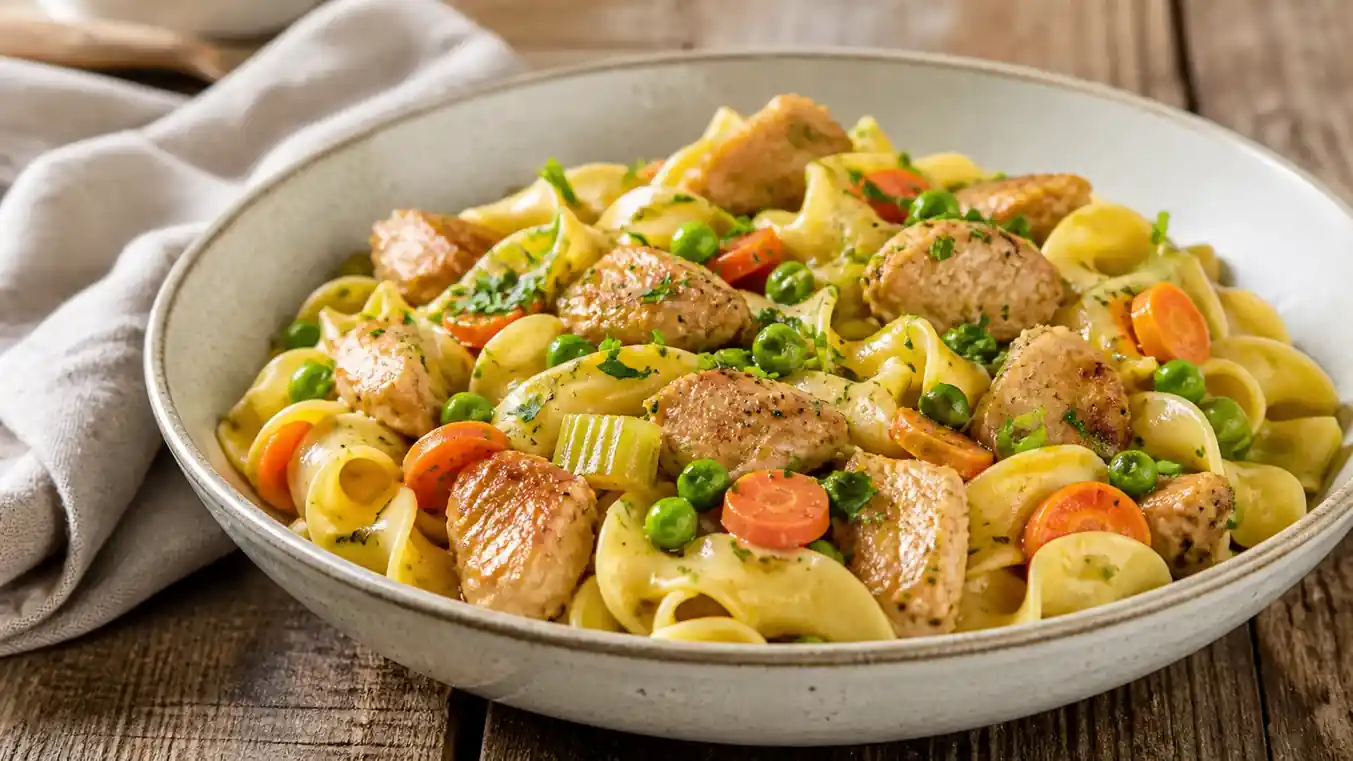
Easy Skillet Chicken and Noodles Recipe with Egg Noodles
This chicken and noodles recipe with egg noodles makes a cozy skillet dinner with tender chicken, vegetables, herbs, and a savory pan sauce for dinner.
Chicken · Prep 20 minutes · Cook 25 minutes