Easy Turkey Breast Tenderloin Recipes for a Juicy Dinner
These turkey breast tenderloin recipes make a juicy garlic-herb roast with simple ingredients, clear temperature guidance, and easy dinner sides.
Prep
15 minutes
Cook
30 minutes
Rest
10 minutes
Total
55 minutes
Servings
4
Difficulty
Easy
Cut
Turkey breast tenderloins
Method
Oven roasted
Safe internal temperature
74°C / 165°F
Nutrition per serving
310 calories
- Protein
- 54g
- Fat
- 9g
- Carbs
- 5g
- Fiber
- 1g
- Sat. fat
- 2g
- Sugar
- 4g
- Sodium
- 720mg
Nutrition values are estimates based on the listed ingredients and serving size.
Turkey breast tenderloins are a good answer when a whole bird is more than dinner requires. They are lean, mild, and quick to roast, while a simple mix of olive oil, garlic, lemon, Dijon, and herbs gives them a savory, well-seasoned crust.
The oven keeps this recipe straightforward, but an instant-read thermometer does the most important work. Take the tenderloins out when the thickest part reaches 74°C / 165°F, then let them rest before slicing. That brief rest helps keep the meat juicy.
Why You'll Love This Recipe
- It delivers roast-turkey flavor in under an hour.
- The ingredients are familiar pantry staples and easy to adjust.
- Tenderloins cook faster and more evenly than a large turkey breast.
- Leftover slices work well in sandwiches, salads, and grain bowls.
- The method is simple enough for a family dinner on a busy night.
Turkey Breast Tenderloin Recipes: Recipe Information
| Detail | Amount |
|---|---|
| Preparation time | 15 minutes |
| Cooking time | 30 minutes |
| Resting time | 10 minutes |
| Total time | 55 minutes |
| Servings | 4 |
| Internal temperature | 74°C / 165°F |
Ingredients
- 2 pounds (900 g) turkey breast tenderloins, usually 2 tenderloins
- 1 tablespoon olive oil
- 1 tablespoon Dijon mustard
- 1 tablespoon honey
- 1 tablespoon fresh lemon juice
- 3 garlic cloves, finely grated or minced
- 1 teaspoon dried thyme
- 1 teaspoon dried rosemary, crushed
- 1 teaspoon sweet paprika
- 1 1/4 teaspoons fine sea salt
- 1/2 teaspoon freshly ground black pepper
- 1 lemon, cut into wedges, for serving
- 1 tablespoon chopped parsley, optional, for serving
Choose tenderloins that are close in size so they cook at roughly the same pace. Remove any tough silvery membrane with a small sharp knife. If one end is much thinner, fold it underneath and secure it with kitchen twine to prevent it from overcooking.
Step-by-Step Instructions
1. Heat the oven and prepare the pan
Set a rack in the center of the oven and heat it to 220°C / 425°F. Line a rimmed baking tray with parchment paper or lightly oil it. Pat the turkey dry with paper towels so the seasoning adheres and the surface browns instead of steaming.
2. Mix the garlic-herb coating
Stir the olive oil, Dijon, honey, lemon juice, garlic, thyme, rosemary, paprika, salt, and black pepper together in a small bowl. The mixture should be thick enough to cling to the turkey. If you want to adjust the pepper or herbs, taste the seasoning before it touches the raw poultry.
3. Season the tenderloins
Place the tenderloins on the prepared tray, leaving space between them. Rub the garlic-herb mixture over every side, including the tapered ends. Leave the meat at room temperature only while the oven heats; do not marinate it on the counter.
4. Roast until safely cooked
Roast for 25 to 35 minutes, depending on thickness. Start checking at 25 minutes, inserting an instant-read thermometer into the center of the thickest section without touching the tray. The turkey is safe when it reaches 74°C / 165°F. If one piece finishes first, transfer it to a plate and return the other to the oven.
5. Rest, slice, and serve
Move the turkey to a clean board and loosely cover it for 10 minutes. This gives the juices time to settle into the meat. Slice across the grain into thick medallions, add parsley if you like, and serve with lemon wedges.
Tips for Best Results
Use a thermometer rather than the clock alone. Tenderloins vary in thickness, and checking the temperature is the surest way to avoid dry lean meat. For the most accurate reading, insert the probe horizontally into the center.
Patting the turkey dry matters. A wet surface does not brown as well, and the herb coating can slide off. For extra color, broil for the final 1 to 2 minutes, keeping a close eye on it because the honey can darken quickly.
Let the turkey rest before cutting it. Slicing right away sends the juices onto the board instead of into each serving. Use a sharp knife and smooth strokes rather than sawing to keep the slices neat.
Ingredient Substitutions
Maple syrup can replace the honey. It makes the coating a little thinner and adds a deeper sweetness. Whole-grain mustard works in place of Dijon for a more textured finish. If fresh lemon is unavailable, use 2 teaspoons of apple cider vinegar and serve with an extra lemon wedge if you have one.
For the herbs, substitute 2 teaspoons of a dried poultry-herb blend for the thyme and rosemary. Fresh herbs work too: use 1 tablespoon each of finely chopped fresh thyme and rosemary. If using a salty seasoning blend, reduce the sea salt.
What to Serve With
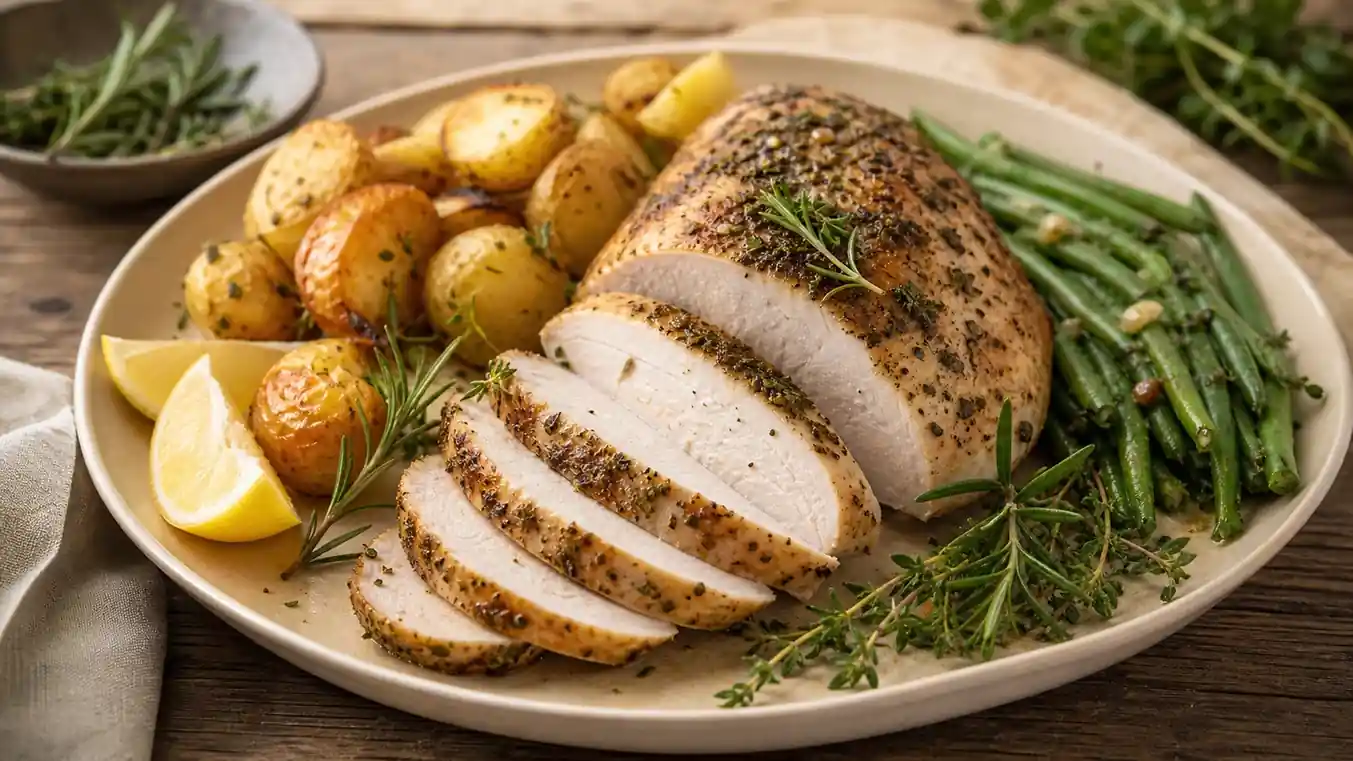
Serve the sliced turkey with roasted baby potatoes and green beans for the simple plate shown in the hero image. A crisp salad, steamed rice, buttered couscous, or roasted carrots also fit the lemon-herb flavor without overpowering it.
For more menu ideas, browse turkey recipes, pair it with easy chicken dinners, or add a hearty side from our beef recipes. Leftover slices are especially good in a lunch bowl with rice, cucumbers, and a lemony yogurt sauce.
Storage Instructions
Cool leftover turkey promptly and refrigerate it in an airtight container within 2 hours of cooking. It keeps well for up to 4 days. For longer storage, arrange slices in a freezer-safe container with parchment between layers and freeze for up to 3 months. Thaw frozen turkey overnight in the refrigerator, not on the counter.
Reheating Instructions
For the best texture, warm slices in a covered skillet over low heat with a splash of water or unsalted broth until hot throughout. You can also cover them in a baking dish and warm at 160°C / 325°F for about 10 minutes. Microwave in short, covered intervals at medium power to avoid toughening the lean meat. Reheat leftovers to 74°C / 165°F before serving.
Frequently Asked Questions
Are turkey breast tenderloins the same as a turkey breast?
No. They are smaller, tender strips from the breast rather than a full boneless breast roast, which is why they cook more quickly. If you substitute a larger turkey breast, use the same target temperature but expect a longer roasting time.
Can I make these turkey breast tenderloin recipes ahead?
Yes. Mix the seasoning and coat the turkey up to 12 hours ahead, then cover and refrigerate it. Roast directly from the refrigerator, adding a few minutes if needed, and confirm doneness with the thermometer.
Why did my turkey tenderloin turn out dry?
It was likely cooked past 74°C / 165°F. Check early, especially with thin tenderloins, and rest the meat before slicing. The modest amount of oil in the seasoning also helps protect the surface during roasting.
Can I grill the tenderloins instead?
Yes. Grill over medium heat with the lid closed, turning once or twice, until the center reaches 74°C / 165°F. Grill heat and thickness affect the timing, so use the thermometer instead of a fixed minute count.
Conclusion
Keep these turkey breast tenderloin recipes in your weeknight rotation when you want a quick roast with dependable results. The garlic-herb coating, hot oven, and short resting period make a simple cut into tender slices that suit nearly any side. Cook to 74°C / 165°F, slice across the grain, and save the extra portions for an easy second meal.
Keep cooking
You might also like
Easy Oven-Roasted Turkey Tenderloin Recipe with Herbs
This turkey tenderloin recipe makes juicy garlic-herb roasted turkey with lemon in under an hour, a simple, flavorful choice for an easy family dinner.
Turkey · Prep 15 minutes · Cook 30 minutes
Wild Turkey Recipes: Easy Herb-Roasted Breast Dinner
These wild turkey recipes start with a juicy herb-roasted breast, crisp potatoes, and green beans for an easy, flavorful dinner with reliable cooking tips.
Turkey · Prep 20 minutes · Cook 40 minutes
Easy Turkey in a Bag Recipe for a Golden Holiday Roast
Make a juicy turkey in a bag recipe with rosemary, lemon, and vegetables; the roasting bag locks in moisture for an easy, golden holiday table centerpiece.
Turkey · Prep 20 minutes · Cook 3 hours