Chicken Hainan Rice Recipe for Tender Poached Chicken
Make this chicken hainan rice recipe with tender poached chicken, fragrant ginger rice, bright sauces, and easy step-by-step tips for a flavorful family dinner.
Prep
25 minutes
Cook
50 minutes
Rest
10 minutes
Total
1 hour 25 minutes
Servings
4
Difficulty
Easy
Cut
Bone-in chicken thighs
Method
Poached
Safe internal temperature
74°C / 165°F
Nutrition per serving
640 calories
- Protein
- 41g
- Fat
- 22g
- Carbs
- 77g
- Fiber
- 2g
- Sat. fat
- 5g
- Sugar
- 3g
- Sodium
- 830mg
Nutrition values are estimates based on the listed ingredients and serving size.
Chicken Hainan Rice Recipe
This chicken hainan rice recipe gets its character from gentle cooking: tender poached thighs, rice cooked in fragrant broth, and bright sauces spooned over the top. The chicken never needs a hard boil. It comes up to temperature in the aromatic broth, then finishes in the residual heat. That keeps the meat moist and leaves you with a savory liquid for both the rice and the table.
For another dependable poultry meal, browse these easy chicken recipes.
Why You'll Love This Recipe
- Poaching keeps the chicken tender without a marinade.
- The jasmine rice cooks in the chicken broth, carrying that flavor through the whole plate.
- The sauces come together while the chicken rests, so there is no last-minute scramble.
- Bone-in thighs are juicy, economical, and forgiving to cook.
- Leftovers travel well for lunch when you pack the broth separately.
Chicken Hainan Rice Recipe Information
| Detail | Amount |
|---|---|
| Prep time | 25 minutes |
| Cook time | 50 minutes |
| Rest time | 10 minutes |
| Total time | 1 hour 25 minutes |
| Servings | 4 |
| Internal temperature | 74°C / 165°F |
The total time covers poaching the chicken, cooking the rice, and resting the chicken before slicing. Check the thickest part of a thigh with an instant-read thermometer, keeping the probe away from the bone. Poultry is safe when it reaches 74°C / 165°F.
Ingredients
For the poached chicken and broth
- 2 pounds (900 g) bone-in, skin-on chicken thighs
- 8 cups (1.9 L) cold water
- 1 tablespoon kosher salt, plus more to taste
- 1 1/2 inches fresh ginger, sliced
- 5 garlic cloves, lightly crushed
- 4 scallions, cut into 2-inch pieces
- 1 teaspoon whole white or black peppercorns
For the fragrant rice
- 1 1/2 cups jasmine rice, rinsed until the water is mostly clear
- 1 tablespoon neutral oil, such as avocado or sunflower oil
- 2 garlic cloves, finely minced
- 1 teaspoon finely grated ginger
- 2 1/4 cups reserved chicken broth
- 1/4 teaspoon fine salt, if needed
For the sauces and serving
- 3 scallions, finely sliced
- 2 tablespoons finely grated ginger
- 3 tablespoons neutral oil, warmed until shimmering
- 1 tablespoon low-sodium soy sauce or tamari
- 1 red chili, finely chopped, optional
- 1 tablespoon fresh lime juice
- 1 teaspoon sugar
- 1 small cucumber, thinly sliced
- Fresh cilantro leaves, optional
Choose chicken from a source you trust. If you need a gluten-free meal, check the label on your soy sauce or tamari. The broth is lightly seasoned on purpose; the rice and sauces add more salt later, and you can adjust the broth at the table.
Step-by-Step Instructions
1. Build the aromatic poaching broth
Arrange the chicken thighs in a large, deep pot, keeping them in one layer if possible. Add the water, salt, ginger, garlic, scallions, and peppercorns. Set the pot over medium-high heat and warm it until small bubbles gather around the edge. Do not bring it to a rolling boil; vigorous boiling can tighten the chicken and make the broth cloudy.
When the liquid reaches a bare simmer, lower the heat until only an occasional bubble breaks the surface. Turn the thighs once, cover the pot slightly ajar, and cook for 25 to 30 minutes. The exact time will depend on the size of the thighs and your pot, so keep the heat gentle and use the thermometer in the next step.
2. Check the chicken and let it rest in the broth
Test the thickest thigh with an instant-read thermometer. Once it reaches 74°C / 165°F, turn off the heat, cover the pot fully, and leave the chicken in the broth for 10 minutes. That short rest evens out the temperature and helps the meat stay juicy.
Transfer the chicken to a plate. Strain 2 1/4 cups of broth for the rice, then strain the rest into a clean pot or serving bowl. Spoon off excess fat if you like, leaving a little behind for flavor. Keep the chicken loosely covered while you cook the rice.
3. Toast the rice aromatics
Heat the neutral oil in a medium saucepan over medium heat. Add the garlic and grated ginger and cook for about 30 seconds, just until fragrant. Stir in the rinsed jasmine rice and cook for 1 to 2 minutes. The aromatic oil coats the grains and gives the finished rice a deeper flavor and a fluffy, separate texture.
Pour in the measured hot broth. Taste carefully and add the fine salt only if the broth needs it. Bring the rice to a gentle simmer, cover, reduce the heat to low, and cook for 15 minutes. Keep the lid closed so the rice can hold on to the steam it needs.
4. Steam the rice and make the sauces
After 15 minutes, take the covered rice pan off the heat and let it stand for 10 minutes. While it rests, combine the sliced scallions and grated ginger in a heat-safe bowl. Warm the 3 tablespoons neutral oil in a small pan until shimmering, then carefully pour it over the scallion mixture. Stir in the soy sauce or tamari.
For the quick chili sauce, mix the chili, lime juice, sugar, and 1 tablespoon of warm broth. Add a pinch of salt if needed. Prefer less heat? Leave out the chili and serve extra lime instead.
5. Slice and serve
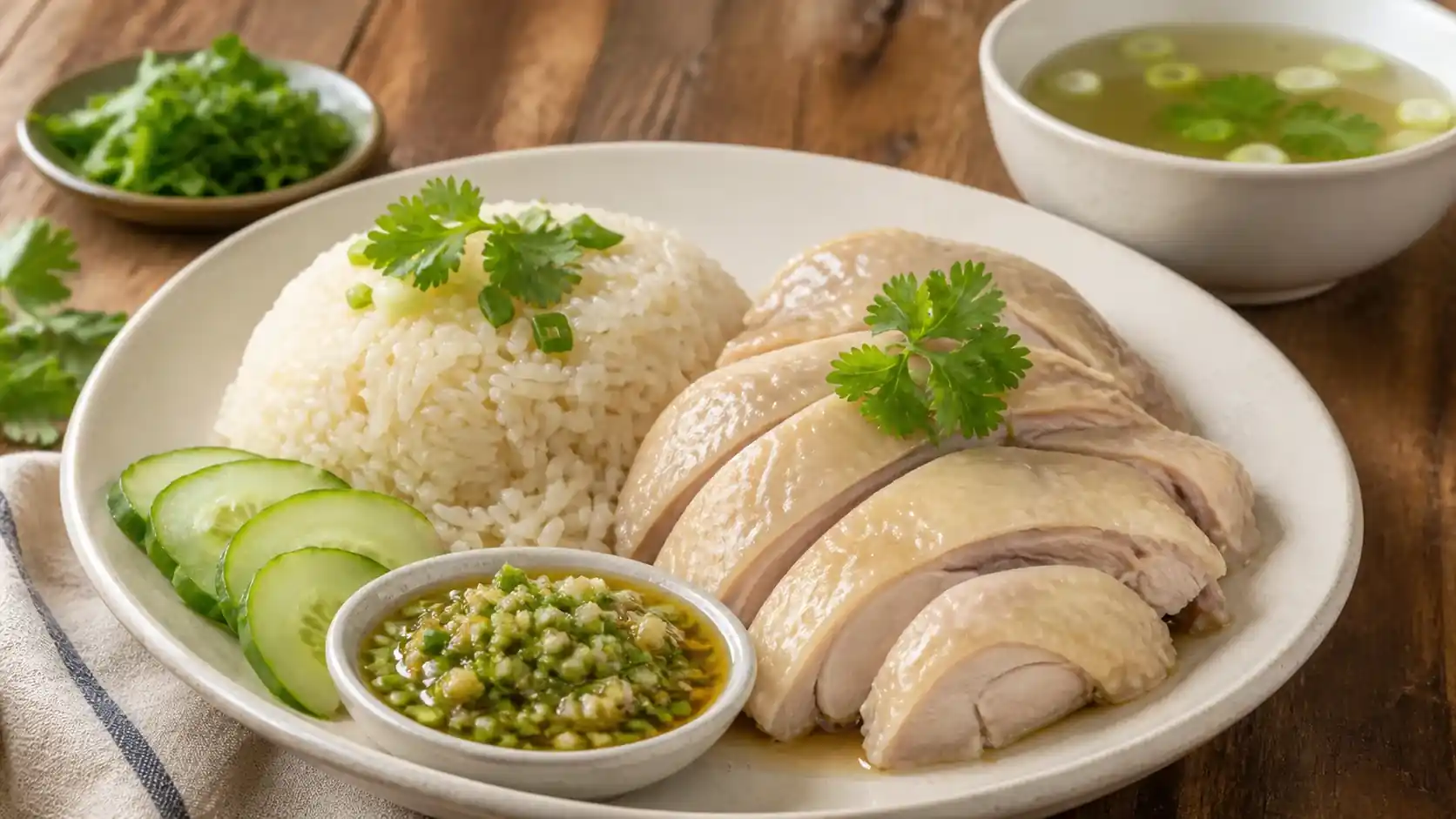
Fluff the rice with a fork. Slice the chicken into thick pieces, or leave the thighs whole for a more casual serving style. Arrange the chicken with the rice, cucumber, scallion-ginger sauce, and chili sauce. Add cilantro if using, and serve a small bowl of warm strained broth with each portion.
Tips for Best Results
Keep the poaching liquid below a full boil. This is the detail that matters most in a chicken hainan rice recipe: a quiet simmer cooks the thighs gently and keeps the broth clear enough to serve. If the surface starts bouncing hard, move the pot off the heat for a minute, then return it to low.
Rinse the rice until the water is mostly clear, but do not soak it for a long time. Removing excess surface starch helps the grains stay distinct, while the brief toast with ginger and garlic develops the savory aroma.
Use a thermometer instead of judging doneness by the color near the bone. Thigh meat can remain slightly rosy in places even when safe, so visual cues are not enough. The dependable check is 74°C / 165°F in the thickest part.
Ingredient Substitutions
Boneless, skinless chicken thighs can replace the bone-in thighs. Start checking them at 16 to 18 minutes because they cook faster. Chicken breasts also work, but they are less forgiving; remove them as soon as they reach temperature. A small whole chicken will need more time, and you should check both the breast and thigh before resting it in the broth.
Basmati rice is a reasonable substitute for jasmine rice, although the aroma and texture will change. Use the water ratio on the package as a guide, replacing the water with broth. Brown rice is not an ideal swap because it needs a longer cooking time and more liquid.
If you do not have scallions, use finely chopped chives in the sauce and add an extra garlic clove to the broth. Replace fresh red chili with a pinch of crushed red pepper. For another chicken-and-rice dinner, try this easy chicken fried rice recipe.
What to Serve With
The cucumber and warm broth already make the meal feel complete, but a crisp vegetable adds a useful contrast. Quick-blanched bok choy, sautéed green beans, or a simple cabbage salad all fit. Keep the seasoning light so the chicken and fragrant rice remain the focus.
For a larger gathering, add a tray of oven-baked chicken thighs or a fresh salad, then let everyone choose their sauces. For another practical comfort-food option later in the week, try these chicken and egg noodle recipes.
Storage Instructions
Cool the chicken, rice, sauces, and broth promptly. Refrigerate them in separate shallow containers within 2 hours, and use them within 4 days. Keeping the components apart prevents soggy rice and makes reheating more even.
For longer storage, freeze the sliced chicken and broth for up to 2 months. Freeze the rice in portion-sized containers for up to 1 month. Thaw frozen portions overnight in the refrigerator; do not thaw cooked chicken on the counter.
Reheating Instructions
Add a splash of broth or water to the rice, cover loosely, and microwave until steaming hot, stirring once. Reheat the chicken gently with a few spoonfuls of broth in a covered skillet over low heat, or use short microwave bursts. Heat leftovers until hot throughout, ideally 74°C / 165°F, without boiling them hard.
Warm the broth separately and add fresh cucumber after reheating. The scallion-ginger sauce is best at room temperature, so take it out while the rice warms. If the lime flavor in the chili sauce has faded, make a fresh batch.
Frequently Asked Questions
Is Hainan chicken rice supposed to have bland chicken?
No. The chicken is gently flavored by the aromatic broth, while the rice and sauces bring depth, salt, and brightness. Season the broth properly and serve the chicken with sauce; that is what keeps the dish from tasting plain.
Can I make chicken hainan rice recipe ahead of time?
Yes. Poach the chicken, cook the rice, and strain the broth up to 3 days ahead. Store each component separately, then slice and reheat the chicken gently just before serving so it stays moist.
Why did my rice turn out wet?
Too much broth, lifting the lid repeatedly, or skipping the resting time can all leave the rice wet. Measure the broth, keep the pan covered while it cooks, and let it steam off the heat for the full 10 minutes before fluffing.
Conclusion
The appeal of this chicken hainan rice recipe is its quiet, careful cooking. Keep the broth at a gentle simmer, use it to flavor the rice, and finish the plate with cucumber and bright sauces. The result is tender chicken, fragrant rice, and a dinner simple enough to make again.
Keep cooking
You might also like
Chicken Salad Chick Recipe Copycat for Creamy Lunches
Make this chicken salad chick recipe copycat with tender chicken, celery, and a creamy sweet-tangy dressing for easy sandwiches and lunches.
Chicken · Prep 20 minutes · Cook 15 minutes

Easy Recipe for Broccoli Rice Casserole with Chicken
This recipe for broccoli rice casserole with chicken makes a creamy, cheesy family dinner with tender chicken, rice, broccoli, and a golden cheese topping.
Chicken · Prep 20 minutes · Cook 35 minutes

Crispy Air Fryer Chicken Wings: Easy 40-Minute Recipe
Make crisp, juicy air fryer chicken wings with a smoky garlic spice rub, simple timing, and reliable food-safety guidance for an easy, fast dinner at home.
Chicken · Prep 15 minutes · Cook 20 minutes