Easy Cheesecloth Turkey Recipe for a Juicy Holiday Roast
This cheesecloth turkey recipe makes a golden, juicy roasted turkey breast with herb butter, easy prep, and reliable carving tips for a stress-free meal.
Prep
20 minutes
Cook
1 hour 45 minutes
Rest
20 minutes
Total
2 hours 25 minutes
Servings
8
Difficulty
Easy
Cut
Bone-in turkey breast
Method
Oven roasted
Safe internal temperature
74°C / 165°F
Nutrition per serving
430 calories
- Protein
- 55g
- Fat
- 13g
- Carbs
- 21g
- Fiber
- 2g
- Sat. fat
- 5g
- Sugar
- 2g
- Sodium
- 650mg
Nutrition values are estimates based on the listed ingredients and serving size.
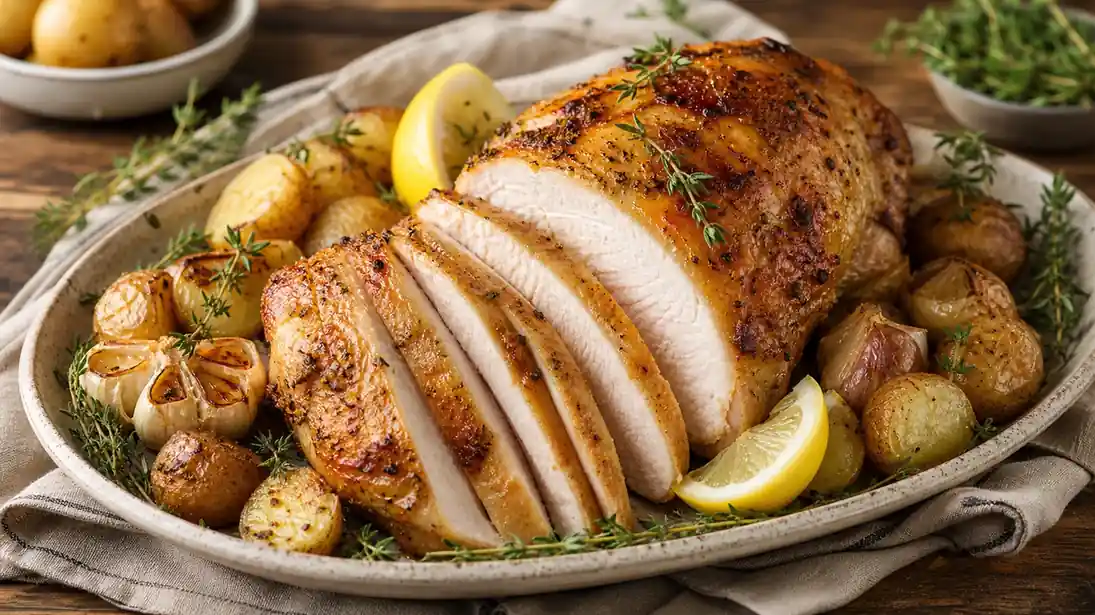
This cheesecloth turkey recipe gives a bone-in turkey breast a golden, burnished finish while helping the meat stay tender. Butter-soaked cheesecloth gently bastes the surface as it roasts, which means you get flavorful skin without opening the oven over and over. It’s a practical choice for a smaller holiday gathering, Sunday dinner, or make-ahead meal prep.
The method is straightforward: use plain, unbleached cotton cheesecloth, keep it moist with herb butter and broth, then remove it near the end so the skin can brown. Roast until the thickest part of the breast reaches a safe temperature, and let it rest before carving. You’ll end up with juicy slices, crisp-edged skin, and savory drippings in the pan.
Why You’ll Love This Recipe
- The cheesecloth keeps the surface moist during roasting.
- A bone-in breast cooks faster than a whole bird and is easier to carve.
- Garlic, lemon, and thyme add plenty of flavor without the extra step of a brine.
- The roasting-pan vegetables become an easy side and add flavor to the drippings.
- Leftovers are ideal for turkey rice soup or sandwiches.
Cheesecloth Turkey Recipe Information
| Detail | Amount |
|---|---|
| Preparation time | 20 minutes |
| Cooking time | 1 hour 45 minutes |
| Resting time | 20 minutes |
| Total time | 2 hours 25 minutes |
| Servings | 8 |
| Internal temperature | 74°C / 165°F |
Plan on a 5- to 6-pound bone-in turkey breast. Roasting time varies with the breast’s shape and starting temperature, so use an instant-read thermometer instead of relying on the clock alone. If the turkey is pre-brined or enhanced with a salt solution, go easy on the added salt.
Ingredients
For the turkey:
- 1 bone-in turkey breast, 5 to 6 pounds, fully thawed
- 4 tablespoons unsalted butter, softened
- 1 tablespoon olive oil
- 1 tablespoon finely chopped fresh thyme, plus sprigs for the pan
- 1 teaspoon dried rosemary
- 1 teaspoon sweet paprika
- 1 teaspoon kosher salt, plus more only if needed
- 1/2 teaspoon black pepper
- 4 garlic cloves, finely grated or minced
- Zest of 1 lemon
- 1 large piece plain, unbleached cotton cheesecloth, about 24 by 36 inches
- 1 1/2 cups low-sodium chicken or turkey broth, divided
- 1 lemon, cut into wedges
For the roasting pan:
- 1 pound small potatoes, halved
- 1 large onion, cut into wedges
- 1 tablespoon olive oil
- Pinch of salt and pepper
Step-by-Step Instructions
1. Heat the oven and prepare the pan
Set a rack in the lower-middle position and heat the oven to 190°C / 375°F. Add the potatoes, onion, thyme sprigs, and lemon wedges to a roasting pan. Toss them with 1 tablespoon olive oil and a light pinch of salt and pepper. Pour 1 cup of broth around the vegetables; the liquid should stay in the bottom of the pan rather than cover them.
Pat the turkey breast very dry with paper towels. Dry skin helps the herb butter stick and encourages better browning. Set the breast skin-side up on the vegetables or on a small rack fitted into the pan.
2. Make the herb butter
Stir the softened butter, remaining olive oil, chopped thyme, rosemary, paprika, kosher salt, black pepper, garlic, and lemon zest together in a small bowl. Loosen the skin over the thickest part of the breast with your fingers, taking care not to tear it. Rub about one-third of the butter directly onto the meat under the skin, then spread the rest over the outside.
Seasoning under the skin flavors the meat as well as the surface. For a different flavor direction, use the blend from our turkey rub seasoning recipe in place of the rosemary and paprika.
3. Soak and drape the cheesecloth
Fold the cheesecloth into a double layer large enough to cover the turkey breast. Dip it into the remaining 1/2 cup broth, then gently squeeze it until saturated but not dripping heavily. Lay it smoothly over the buttered turkey and tuck the edges into the pan. Spoon or brush any remaining herb butter over the cloth.
Cheesecloth isn’t a substitute for a lid or foil. It acts as a basting layer, protecting the surface from drying heat while still allowing the turkey to roast rather than steam.
4. Roast until nearly done
Roast for 1 hour and 15 minutes. Carefully spoon pan juices over the cheesecloth once or twice if it starts to look dry. If the liquid evaporates, add a splash more broth to the pan to keep the vegetables from scorching. Don’t pour cold liquid directly over the turkey.
Start checking the temperature at the 1-hour mark. Insert the thermometer into the thickest part of the breast without touching bone. A smaller breast may be ready sooner, while a very cold or especially large one may need more time.
5. Remove the cloth and brown the skin
When the thermometer reads about 68°C / 155°F, carefully peel off the cheesecloth with tongs. It will be hot and buttery. Return the uncovered turkey to the oven for 20 to 30 minutes, until the skin is deeply golden and the thickest part reaches 74°C / 165°F. If the skin browns before the turkey is done, loosely tent just the browned area with foil.
6. Rest and carve
Transfer the turkey breast to a board and rest it, loosely tented with foil, for 20 minutes. The rest gives the juices time to settle so the slices stay moist. Carve along one side of the breastbone, then slice each lobe across the grain. Serve with the roasted potatoes, onions, and spoonfuls of pan juices.
Tips for Best Results
Use food-safe, plain cotton cheesecloth rather than gauze or loose craft fabric. Rinse and dry it if the package directions recommend doing so. Keep the cloth wet with butter and broth; a dry cloth can stick to the skin.
Start with a fully thawed turkey breast. A partially frozen center roasts unevenly and can leave the outside overdone before the inside is safe. For the most accurate reading, insert a digital thermometer sideways into the thickest area, avoiding the breastbone. The turkey is safe when it reaches 74°C / 165°F.
Don’t skip the rest. The temperature may rise a little after roasting, and carving immediately sends the juices onto the board. Save the pan drippings for a quick gravy. For a fuller holiday plate, serve the turkey with turkey giblet gravy.
Ingredient Substitutions
Turkey stock works in place of chicken broth, and a mild vegetable broth will also work if that’s what you have. Fresh sage can replace thyme, while orange zest can replace lemon zest for a warmer, slightly sweeter aroma. If you only have boneless turkey breast, roast it on a rack and begin checking the temperature much earlier because it cooks faster.
Avoid margarine in the cheesecloth mixture. Butter adds richer flavor and enough milk solids to help the turkey brown once the cloth comes off. For dairy-free cooking, use a halal-certified plant-based butter and add an extra teaspoon of olive oil to the cloth.
What to Serve With
The potatoes and onions roast in the same pan, so you already have a side dish. Add a crisp green salad, steamed green beans, cranberry relish, or warm flatbread. For a lighter starter, turkey bone broth is a comforting option that can be prepared ahead.
Storage Instructions
Cool leftover turkey within 2 hours of cooking. Slice or shred it, then refrigerate it in a covered container with a few spoonfuls of pan juices for up to 4 days. Freeze portions in airtight containers for up to 3 months. Label each portion with the date so it’s easy to use in wraps, grain bowls, and soup.
Reheating Instructions
For the juiciest leftovers, put sliced turkey in a small baking dish with a splash of broth, cover it tightly, and warm it at 160°C / 325°F until hot, about 15 to 20 minutes. Reheat only the portion you plan to eat. In the microwave, cover the slices and heat at 50 percent power in short bursts to help prevent toughening.
Frequently Asked Questions
Does cheesecloth burn in the oven?
Not when it’s thoroughly saturated with butter and broth and kept away from the oven element. Check it during roasting and spoon pan juices over any dry spots. Remove it before the final browning stage.
Can I use this method for a whole turkey?
Yes, but a whole turkey needs a larger roasting pan, more cheesecloth, and a longer roasting schedule. The same principle applies: remove the cloth near the end and cook until the thickest breast and thigh areas reach 74°C / 165°F.
Why is my turkey breast still pale after removing the cheesecloth?
It needs more uncovered time. Leave it in the oven until the skin is golden, watching closely near the end. The cloth protects the surface early in cooking, so most of the browning happens after it comes off.
Can I make the herb butter ahead?
Yes. Mix it up to 2 days ahead and refrigerate it in a covered container. Let it soften for 20 to 30 minutes before rubbing it onto the turkey so it spreads evenly.
Conclusion
This cheesecloth turkey recipe is a reliable way to roast a glossy, juicy turkey breast without complicated equipment or constant basting. Keep the cloth moist, trust the thermometer, and give the turkey a full rest before slicing. The potatoes and savory drippings are already in the pan, making this an easy centerpiece for a gathering or an ordinary dinner.
Nutrition estimates are per serving and include turkey, herb butter, potatoes, and broth. Values vary with the turkey breast size, exact broth, and how much pan fat is served.
Keep cooking
You might also like
Easy Turkey in a Bag Recipe for a Golden Holiday Roast
Make a juicy turkey in a bag recipe with rosemary, lemon, and vegetables; the roasting bag locks in moisture for an easy, golden holiday table centerpiece.
Turkey · Prep 20 minutes · Cook 3 hours
Easy Turkey Rub Recipe for Juicy Oven-Roasted Turkey
Make this turkey rub recipe with smoky paprika, herbs, and garlic for a fragrant, golden oven-roasted turkey with juicy slices, crisp skin, and flavor.
Turkey · Prep 20 minutes · Cook 3 hours 25 minutes
Wild Turkey Recipes: Easy Herb-Roasted Breast Dinner
These wild turkey recipes start with a juicy herb-roasted breast, crisp potatoes, and green beans for an easy, flavorful dinner with reliable cooking tips.
Turkey · Prep 20 minutes · Cook 40 minutes