Smoky Ground Beef Jerky Strips
Make ground beef jerky strips with a savory soy and spice blend, simple dehydrator steps, and clear food-safety guidance for chewy homemade strips.
Prep
20 minutes
Cook
5 hours 10 minutes
Rest
30 minutes
Total
6 hours
Servings
8
Difficulty
Easy
Cut
Lean ground beef
Method
Dehydrated
Safe internal temperature
71°C / 160°F
Nutrition per serving
220 calories
- Protein
- 23g
- Fat
- 11g
- Carbs
- 7g
- Fiber
- 1g
- Sat. fat
- 4g
- Sugar
- 5g
- Sodium
- 600mg
Nutrition values are estimates based on the listed ingredients and serving size.
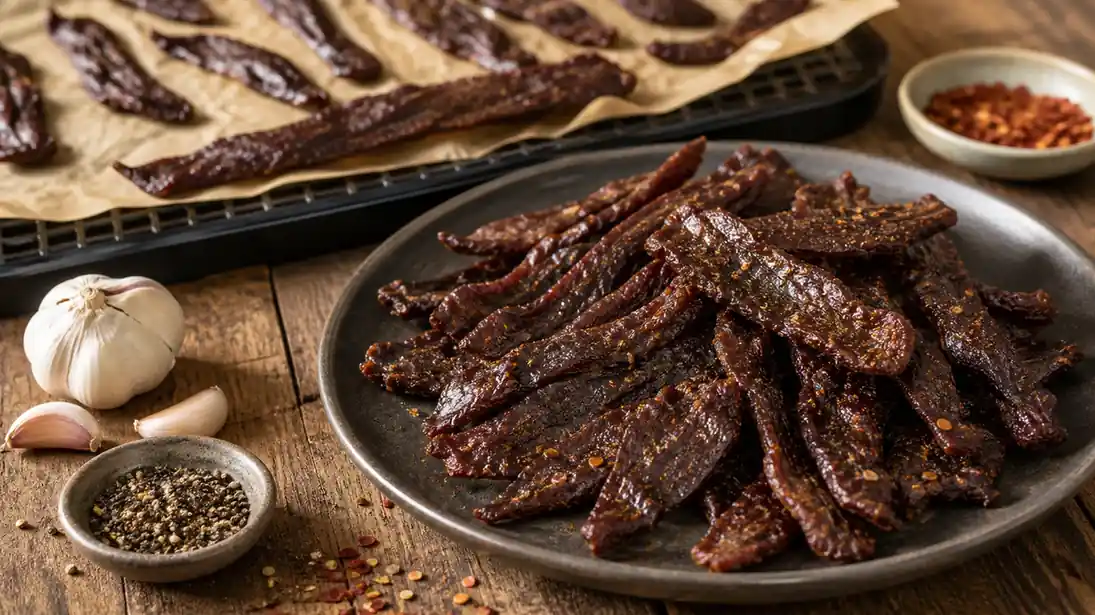
Make ground beef jerky strips when you want a savory, portable snack without slicing a whole roast. This version uses lean beef and a lightly sweet, smoky soy seasoning, then presses the mixture into thin strips before heat-treating and drying it. A jerky gun makes shaping easy, but a sturdy piping bag works well too.
Keep the meat cold, choose lean beef, and give the strips time to dry at a low temperature. Since the recipe starts with ground beef, use a thermometer and bring every strip to 71°C / 160°F before dehydrating. That safety step is what lets the finished jerky stay tender and chewy rather than simply dried out.
Why You'll Love This Recipe
- No trimming or knife work is needed with ground beef.
- The savory, gently sweet seasoning can take a little more pepper or heat if you like.
- A dehydrator handles most of the work and helps the strips dry evenly.
- Thin, even strips are straightforward to pack and dry more predictably.
- The batch makes eight portions for make-ahead snacks.
Recipe Information
| Detail | Time or amount |
|---|---|
| Prep time | 20 minutes |
| Cook time | 5 hours 10 minutes |
| Rest time | 30 minutes |
| Total time | 6 hours |
| Servings | 8 |
| Safe internal temperature | 71°C / 160°F |
Ingredients
- 2 pounds 90% lean ground beef, kept cold
- 1/4 cup low-sodium soy sauce
- 2 tablespoons alcohol-free Worcestershire-style sauce
- 2 tablespoons packed light brown sugar
- 1 tablespoon smoked paprika
- 2 teaspoons garlic powder
- 1 teaspoon onion powder
- 1 teaspoon freshly ground black pepper
- 1/2 teaspoon crushed red pepper flakes, optional
- 1/2 teaspoon ground coriander
Use ground beef that is at least 90% lean. Extra fat does not dry well and can shorten the jerky's storage life. If you use regular soy sauce instead of low-sodium, skip any extra salt; the sauces already bring plenty of seasoning.
Step-by-Step Instructions
1. Mix the seasoned ground beef
Set a large bowl over an ice pack, or work quickly with cold ingredients. Add the ground beef, soy sauce, Worcestershire-style sauce, brown sugar, smoked paprika, garlic powder, onion powder, black pepper, red pepper flakes, and coriander. With clean hands, mix only until the seasoning is evenly distributed. Stop once there are no pockets of spice; too much mixing can make the strips dense.
Cover and refrigerate for 30 minutes. The short rest gives the flavors time to settle in and firms the mixture slightly for easier shaping.
2. Prepare the dehydrator and shape the strips
Line a baking sheet with parchment and place the dehydrator racks nearby. Load the cold mixture into a jerky gun fitted with a flat strip nozzle. Press 1/4-inch-thick strips onto the parchment, about 6 inches long, leaving a little room between each one. Transfer them to the dehydrator racks.
Without a jerky gun, spoon the mixture into a large heavy-duty zip-top bag, trim a 1/2-inch corner, and pipe strips onto the parchment. You can also press it between two sheets of parchment to an even 1/4-inch thickness, then cut strips with a knife or pizza wheel. Even thickness matters more than a perfect shape.
3. Heat-treat the strips for safety
Heat the oven to 163°C / 325°F. Arrange the strips on parchment-lined baking sheets, keeping them separated. Bake for 8 to 10 minutes, until the thickest strip reaches 71°C / 160°F on an instant-read thermometer. Check near the center of a strip, not where it touches the pan.
This step matters with ground beef. A dehydrator's low temperature dries the meat well, but it does not replace bringing it to the recommended safe temperature first. As soon as the strips reach 71°C / 160°F, return them promptly to the dehydrator racks.
4. Dehydrate until chewy
Set the dehydrator to 68°C / 155°F and dry for 5 hours. If your dehydrator dries unevenly, rotate the racks once halfway through. Start checking at 4 1/2 hours. A finished strip should bend and crack slightly on the surface without snapping in half. It should be dry to the touch, with no soft or moist spots in the middle.
Strip thickness, humidity, and dehydrator design all affect the timing. If the jerky is still soft, keep drying in 20-minute intervals. Avoid taking it all the way to brittle; a little flexibility is the goal.
5. Cool and portion
Spread the finished jerky on a clean rack or plate and cool it completely for 20 to 30 minutes. Blot visible surface oil with a clean paper towel. Divide the cooled strips into eight servings before storing so you do not have to handle the whole batch repeatedly.
Food Safety
Keep raw ground beef refrigerated at 4°C / 40°F or below. Wash hands and tools after handling it, and use a clean thermometer. Heat every strip to 71°C / 160°F before dehydrating. Refrigerate the cooled jerky promptly, and discard any portion that smells off, feels unusually damp, or has mold.
Tips for Best Results
Keep the beef mixture cold from start to finish. Cold meat is less sticky, easier to press into tidy strips, and safer to handle. If the kitchen is warm, refrigerate the filled jerky gun or piping bag for 10 minutes before shaping.
For your first batch, use a ruler. Strips close to 1/4 inch thick dry at a similar rate, so you are less likely to get a brittle edge beside an underdried center. Do not overlap them on the racks; every piece needs air circulation.
Before shaping the full batch, cook a teaspoon of the mixture in a small skillet and taste it. You can then add a little more black pepper or red pepper flakes without guessing. For more ideas that start with an economical beef staple, see these 3 ingredient ground beef recipes.
Ingredient Substitutions
For a gluten-free option, replace the soy sauce with tamari and choose one with no alcohol in the ingredient list. Coconut aminos also work, though they are sweeter and less salty; if you use them, add 1 extra teaspoon of tamari or soy sauce. Maple sugar can replace brown sugar in the same amount. Honey is less suitable because its moisture can extend drying time.
For a warmer flavor, use 1/2 teaspoon ground cumin in place of the coriander. For a pepper-forward batch, increase the black pepper to 1 1/2 teaspoons. Do not swap in ground turkey or chicken without changing the safety handling; those meats must reach 74°C / 165°F before drying.
What to Serve With Ground Beef Jerky
Ground beef jerky is good on its own or tucked into a snack box with crisp apple slices, roasted chickpeas, cheese, and whole-grain crackers. For a road-trip meal, pair it with a sturdy bean salad and fruit. If you would rather turn ground beef into dinner, try these air fryer beef patties or browse all our beef recipes.
You can also chop the strips finely and scatter them over a grain bowl for a smoky, savory accent. Add them at the end so they keep their chew.
Storage Instructions
Cool the jerky fully before packing it. Trapped warmth creates condensation and shortens its keeping quality. Store the cooled strips in an airtight container in the refrigerator for up to 1 week. For the best texture, tuck a small sheet of clean paper towel into the container to absorb remaining surface moisture, replacing it if it becomes damp.
For longer storage, freeze portions in freezer-safe bags for up to 3 months, pressing out as much air as possible before sealing. Because this recipe uses ground beef and home equipment, refrigeration or freezing is the cautious choice instead of treating it as shelf-stable commercial jerky.
Reheating Instructions
Jerky is meant to be eaten chilled or at room temperature, so there is no need to reheat it. If frozen, thaw a sealed portion overnight in the refrigerator or for about 30 minutes on the counter before eating. Do not microwave the strips; the edges can turn hard and greasy.
Discard any jerky with an off smell, visible mold, or an unusually damp surface. When in doubt, throw it away rather than trying to dry it again.
Frequently Asked Questions
Can I make ground beef jerky without a dehydrator?
Yes. Set oven racks over parchment-lined baking sheets and dry the strips at your oven's lowest reliable setting, ideally around 77°C / 170°F. If your appliance instructions allow it, crack the door slightly. Check often because an oven can dry faster than a dehydrator. Still complete the 71°C / 160°F heat-treatment step first.
Why is my ground beef jerky crumbly?
The meat may have been too lean, pressed too thin, or dried too long. Aim for 90% lean beef, keep the strips about 1/4 inch thick, and start checking before the five-hour mark. Mix only until combined; aggressive mixing changes the meat's texture.
How do I know when homemade jerky is done?
Bend a cooled strip. It should flex and show small cracks along the bend but should not break cleanly in half. Pull one piece apart: the middle should look dry and fibrous, never shiny, pasty, or wet. Dry it longer if you see moisture.
Can I double this ground beef jerky recipe?
Yes, if your dehydrator has enough rack space for air circulation. Work in batches instead of stacking or crowding the strips. Heat-treat every batch to 71°C / 160°F and rotate racks as needed for even drying.
Conclusion
Ground beef jerky strips offer a straightforward route to a flavorful snack with ordinary grocery-store ingredients and no slicing. Keep the strips thin, heat them to 71°C / 160°F before drying, and cool them fully before refrigerating. Give the dehydrator time to do its work, and you will have smoky, chewy beef jerky ready for the week.
Nutrition Notes
Nutrition estimates are per serving and based on the listed ingredients. Values vary with the beef's exact leanness and the sodium content of the soy and Worcestershire-style sauces.
Keep cooking
You might also like
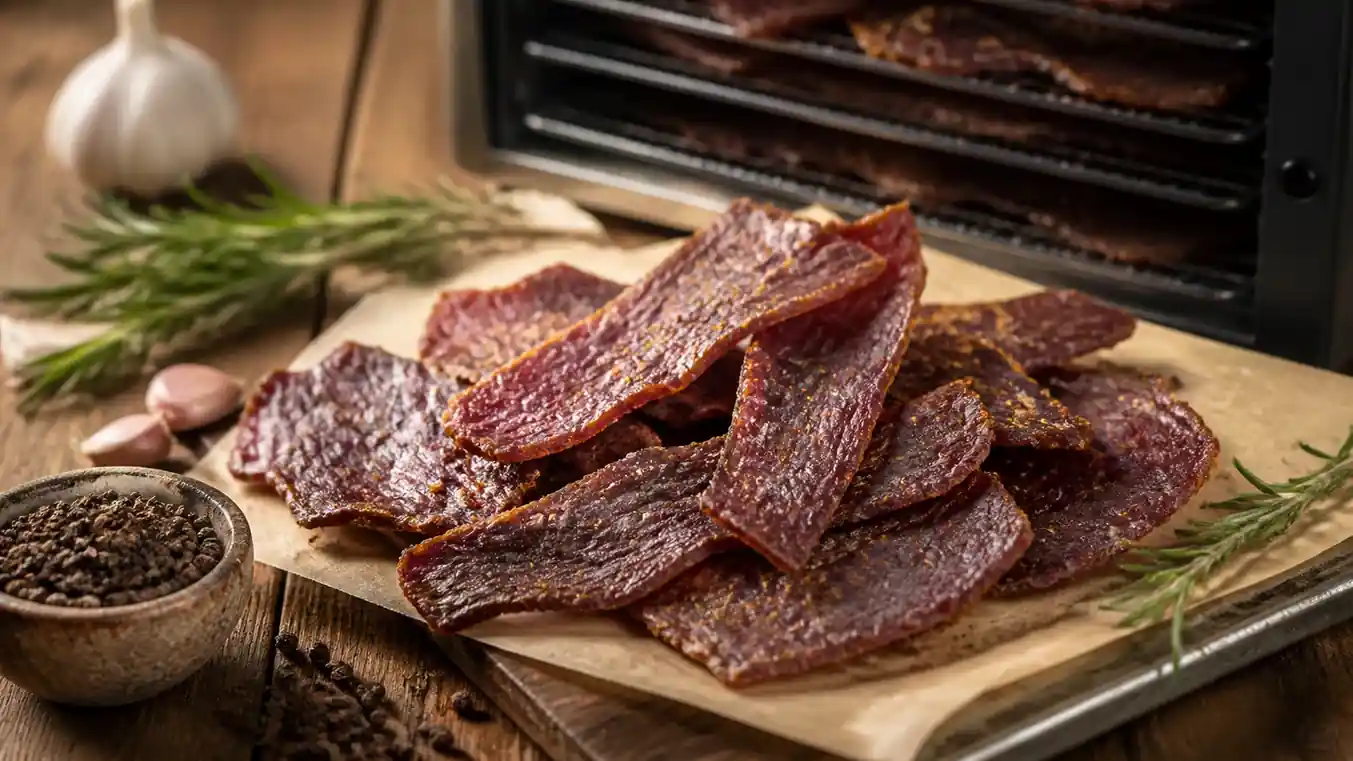
Peppered Beef Jerky in a Dehydrator
Make tender, peppery beef jerky in a dehydrator with a savory marinade, simple timing, storage tips, and reliable food-safety guidance for home cooks.
Beef · Prep 25 minutes · Cook 4 hours 30 minutes
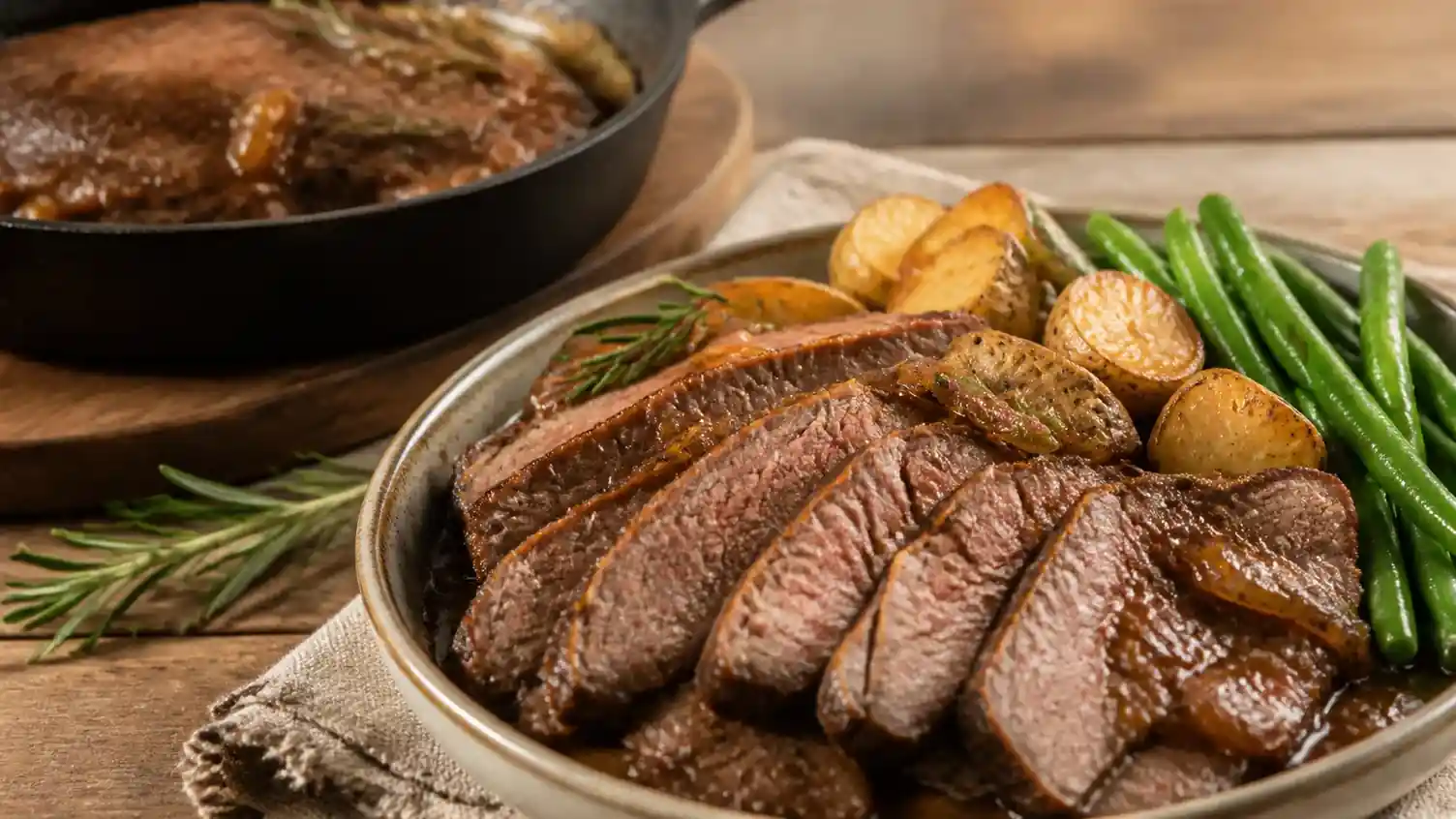
Braised Bottom Round Steak with Onion Gravy
Make tender braised bottom round steaks with a quick sear, savory onion gravy, and simple stovetop braising for an easy family dinner tonight.
Beef · Prep 15 minutes · Cook 45 minutes
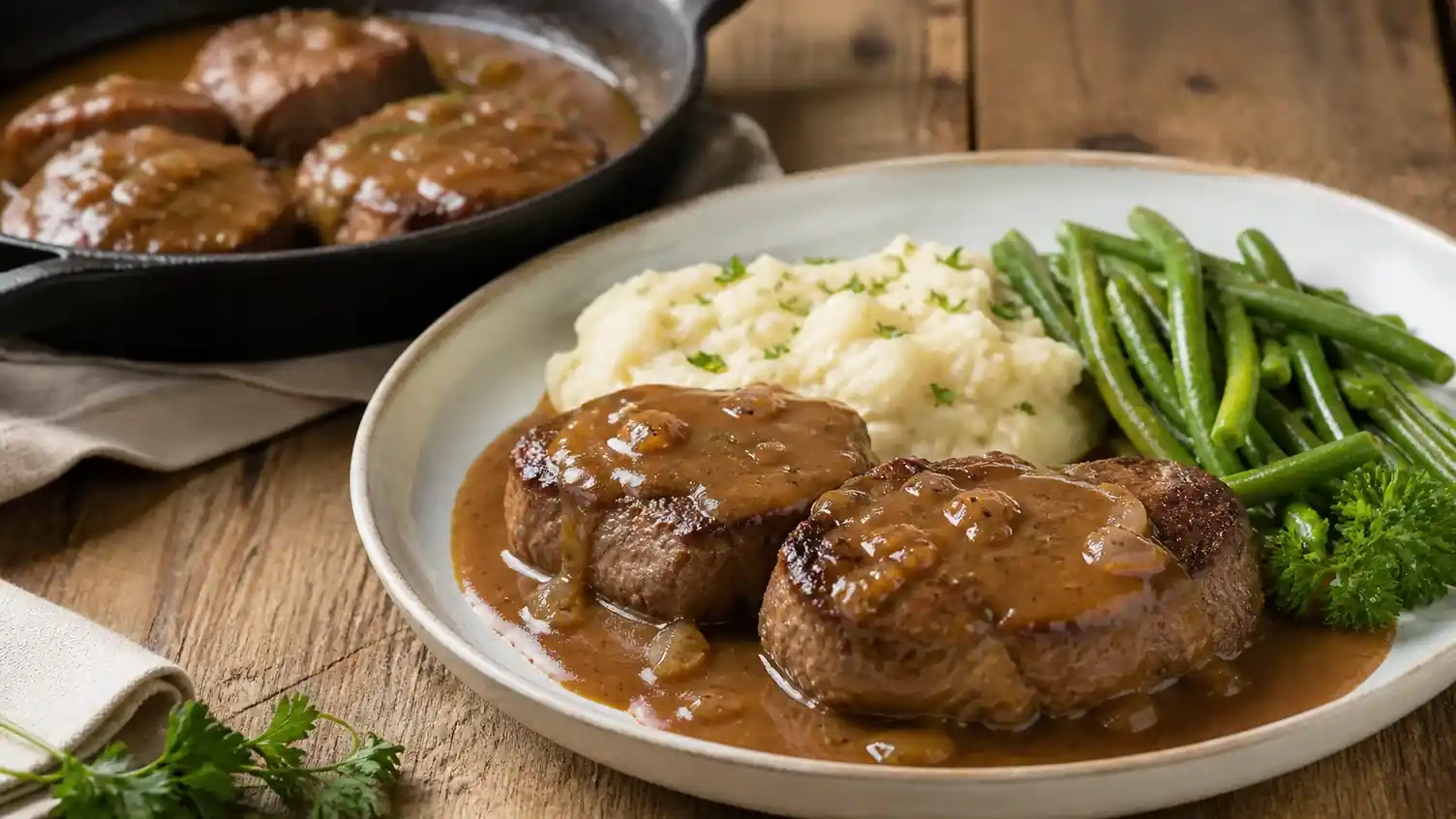
Skillet Sirloin Steak with Onion Gravy
Pan-fry sirloin steak and make an onion gravy in the same skillet. Serve with mashed potatoes or rice to catch the homemade sauce.
Beef · Prep 15 minutes · Cook 20 minutes