Easy Pan-Seared Lamb Steak Recipe with Rosemary and Garlic
Cook a juicy pan-seared lamb steak recipe with rosemary, garlic, and crisp potatoes in 35 minutes for an easy, flavorful dinner that feels special at home.
Prep
15 minutes
Cook
14 minutes
Rest
6 minutes
Total
35 minutes
Servings
4
Difficulty
Easy
Cut
Boneless lamb leg steaks
Method
Pan seared
Safe internal temperature
63°C / 145°F
Nutrition per serving
455 calories
- Protein
- 38g
- Fat
- 27g
- Carbs
- 17g
- Fiber
- 3g
- Sat. fat
- 10g
- Sugar
- 2g
- Sodium
- 610mg
Nutrition values are estimates based on the listed ingredients and serving size.
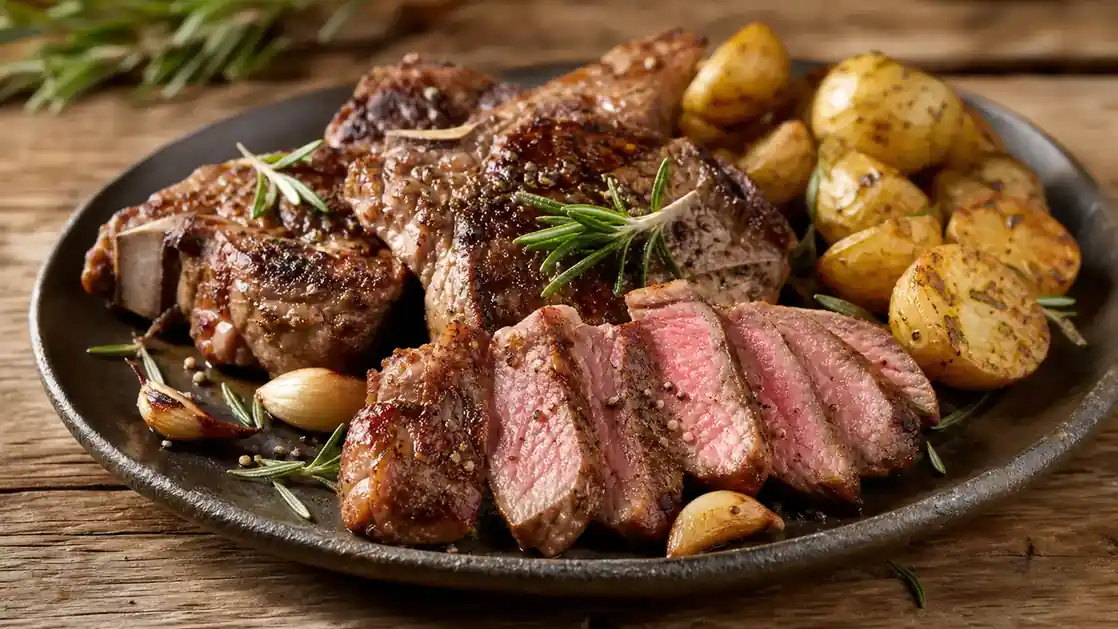
This lamb steak recipe gives you a browned, tender dinner without firing up the grill or planning ahead for a long marinade. Boneless lamb leg steaks cook fast in a hot skillet, while rosemary, garlic, lemon, and crisp potatoes keep the meal simple and familiar.
Dry the steaks thoroughly, heat the pan properly, and use an instant-read thermometer rather than timing alone. After a short rest, you have a practical 35-minute dinner for a weeknight or an unhurried weekend meal.
Why You’ll Love This Recipe
- One skillet and a short ingredient list keep dinner manageable.
- Boneless lamb leg steaks cook quickly and still feel substantial.
- Rosemary and garlic complement the lamb instead of covering it up.
- Roasted potatoes round out the plate, and lemon cuts through the richness.
- Temperature guidance helps you cook the lamb safely to the doneness you prefer.
Recipe Information
| Detail | Value |
|---|---|
| Prep time | 15 minutes |
| Cook time | 14 minutes |
| Rest time | 6 minutes |
| Total time | 35 minutes |
| Servings | 4 |
| Cooking method | Pan seared |
| Target temperature | 63°C / 145°F before removal, then rest at least 3 minutes |
Take the lamb from the refrigerator while you prepare the potatoes. It does not need to reach room temperature; letting the surface chill come off is enough. The stated temperature is the USDA safe minimum for whole cuts of lamb with a rest period. For more well-done lamb, keep cooking to your preferred temperature, bearing in mind that lean leg steaks get firmer as they cook.
Ingredients
For the lamb and seasoning
- 4 boneless lamb leg steaks, about 170 g / 6 ounces each
- 1¼ teaspoons kosher salt, divided
- 1 teaspoon freshly ground black pepper
- 1 teaspoon ground cumin
- 1 teaspoon sweet paprika
- 1 tablespoon olive oil
- 4 garlic cloves, lightly crushed
- 3 rosemary sprigs
- 1 tablespoon lemon juice
For the potatoes
- 680 g / 1½ pounds baby potatoes, halved
- 1 tablespoon olive oil
- ½ teaspoon kosher salt
- ¼ teaspoon black pepper
- ½ teaspoon dried oregano
Choose steaks of roughly the same thickness so they finish at the same time. If one has a thick seam of surface fat, leave a thin layer for flavor and trim the excess after cooking. Whole crushed garlic is a better fit here than pre-minced garlic: it scents the oil without burning as quickly.
Step-by-Step Instructions
1. Roast the potatoes
Heat the oven to 220°C / 425°F. On a rimmed baking tray, toss the halved potatoes with 1 tablespoon olive oil, ½ teaspoon kosher salt, pepper, and oregano. Arrange them cut-side down and roast for 20 to 24 minutes, until the cut sides are deeply golden and the centers give easily when pierced with a knife. Keep warm while you cook the lamb.
2. Season and dry the lamb
Pat the lamb steaks very dry with paper towels; a dry surface browns instead of steaming. Season both sides with the remaining ¾ teaspoon kosher salt, black pepper, cumin, and paprika. Leave the seasoned steaks out for about 10 minutes while the skillet heats.
3. Heat the skillet
Set a heavy cast-iron or stainless-steel skillet over medium-high heat for 2 to 3 minutes, then add 1 tablespoon olive oil. It should shimmer without smoking heavily. Add the lamb with space between the steaks; if the pan is crowded, cook in two batches.
4. Sear the first side
Cook the steaks without moving them for 3 to 4 minutes. Turn them with tongs once they release easily and have a dark golden-brown crust. If one sticks firmly, give it another 30 seconds before trying again.
5. Finish with rosemary and garlic
After turning the steaks, add the crushed garlic and rosemary. Cook the second side for 3 to 4 minutes, lowering the heat to medium if the aromatics are browning too quickly. For the final minute, tilt the skillet and spoon the fragrant oil over the steaks. Start checking the center with an instant-read thermometer; remove the steaks only after they reach at least 63°C / 145°F, then rest them for at least 3 minutes.
6. Rest, slice, and serve
Transfer the lamb to a warm plate and loosely cover it for a 6-minute rest. Discard the rosemary stems, then stir the lemon juice into the warm skillet oil. Slice the steaks across the grain, spoon over a little garlic-rosemary oil, and serve with the roasted potatoes.
Tips for Best Results
Choose a heavy pan. It holds enough heat to brown the lamb quickly. A thin pan cools down when the meat goes in, which can leave the surface pale.
Do not crowd the skillet. Space lets moisture evaporate. If your pan is smaller than 30 cm / 12 inches, cook two steaks at a time and keep the first batch warm on a plate.
Watch the thermometer. Thickness and pan heat change the timing. Insert it sideways into the center of the thickest part, avoiding fat seams. Whole-cut lamb should reach 63°C / 145°F and rest for at least 3 minutes before serving; this recipe gives it 6 minutes.
Slice against the grain. Find the direction of the visible muscle fibers, then cut across them. Shorter fibers make the lamb easier to chew.
Ingredient Substitutions
Boneless lamb loin steaks can replace leg steaks; they may be thinner, so begin checking the temperature a minute earlier. Lamb shoulder steaks contain more connective tissue and are not a direct substitute for this quick-seared leg steak.
No rosemary? Use thyme, oregano, or a small pinch of dried rosemary. For a mild smoky note, swap in smoked paprika. Yukon Gold potatoes, cut into 3 cm / 1-inch pieces, work well in place of baby potatoes. For a lighter potato-free plate, serve the lamb with roasted cauliflower or a chopped salad.
What to Serve With
The crisp potatoes make this a complete simple dinner, though a green vegetable freshens the plate. Try steamed green beans with lemon, roasted carrots, or a sharp cucumber-and-tomato salad. Warm flatbread and plain yogurt with herbs are also good with the savory pan juices.
For more ideas, browse lamb recipes, pair the meal with garlic butter steak bites, or save grilled chicken drumsticks for another easy meat-forward dinner.
Storage Instructions
Cool leftover lamb and potatoes within 2 hours. Store them separately in airtight containers in the refrigerator for up to 3 days. The potatoes hold their texture better this way, and slicing the lamb only as needed reduces moisture loss.
For longer storage, wrap cooled lamb portions tightly and freeze for up to 2 months. Freeze the potatoes in a single layer first, then transfer them to a freezer-safe container. Thaw frozen leftovers overnight in the refrigerator before reheating.
Reheating Instructions
Reheat potatoes on a baking tray at 200°C / 400°F for 8 to 12 minutes, until hot and crisp again. For the lamb, use a covered skillet over low heat with a teaspoon of water or stock until just warmed through. High heat can overcook sliced meat, so gentle reheating works best. Reheat leftovers to 74°C / 165°F before serving.
Frequently Asked Questions
Can I make this lamb steak recipe without an oven?
Yes. Replace the roasted potatoes with a quick salad, couscous, or microwave-steamed vegetables. You can also cook parboiled potato halves in a second skillet until browned; give them plenty of space so they crisp.
How do I know when lamb steak is done?
An instant-read thermometer is the most reliable guide. For a safe minimum on whole cuts, cook to 63°C / 145°F and allow at least a 3-minute rest. Reach that temperature before taking the steaks from the pan; carryover heat is variable.
Can I marinate the lamb first?
Yes. A 30-minute marinade of olive oil, lemon zest, garlic, rosemary, and pepper works well. Pat the surface dry before searing and add salt just before cooking so the exterior can still brown efficiently.
Why did my lamb steak turn out tough?
Overcooking and slicing with the grain are the usual reasons. Keep the pan hot enough for a quick crust, check the internal temperature early, rest the meat, and slice across the muscle fibers.
Conclusion
This lamb steak recipe keeps a satisfying lamb dinner straightforward: a hot skillet, well-dried seasoned steaks, and a thermometer are all it takes for a good crust and tender center. Serve it with crisp potatoes and a bright lemon finish, then explore the full recipe collection for another dependable dinner.
Nutrition note
Nutrition estimates are per serving and include one lamb steak, potatoes, and the listed cooking oil. Actual values vary with the trim level of the lamb and the amount of pan oil served.
Leg steaks need careful carving
Look for the direction of the muscle fibers before cooking so you can slice across them afterward. Boneless leg steaks differ from shoulder steaks; shoulder contains more connective tissue and is not a direct substitute for this quick sear. Cook the leg steak to 145°F before removing it from the pan and rest at least three minutes.
For an oven method, try lamb loin chops with rosemary.
Food Safety
USDA recommends cooking whole cuts to 145°F before removal from the heat, followed by at least a 3-minute rest. Reheat cooked leftovers to 165°F. See the USDA minimum temperature chart. Refrigerate perishables within 2 hours, or within 1 hour above 90°F; see USDA leftover handling guidance.
Keep cooking
You might also like
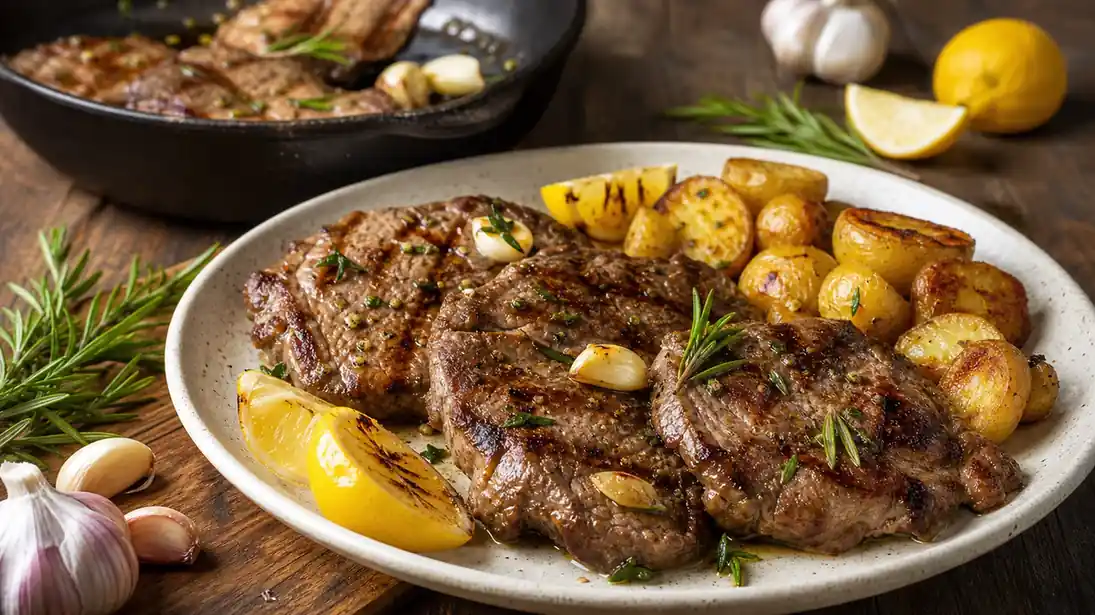
Skillet Lamb Steaks with Rosemary Garlic Potatoes
Make tender lamb steaks with a rosemary-garlic skillet method, crisp potatoes, and clear temperature guidance for an easy 35-minute dinner at home.
Lamb · Prep 15 minutes · Cook 14 minutes
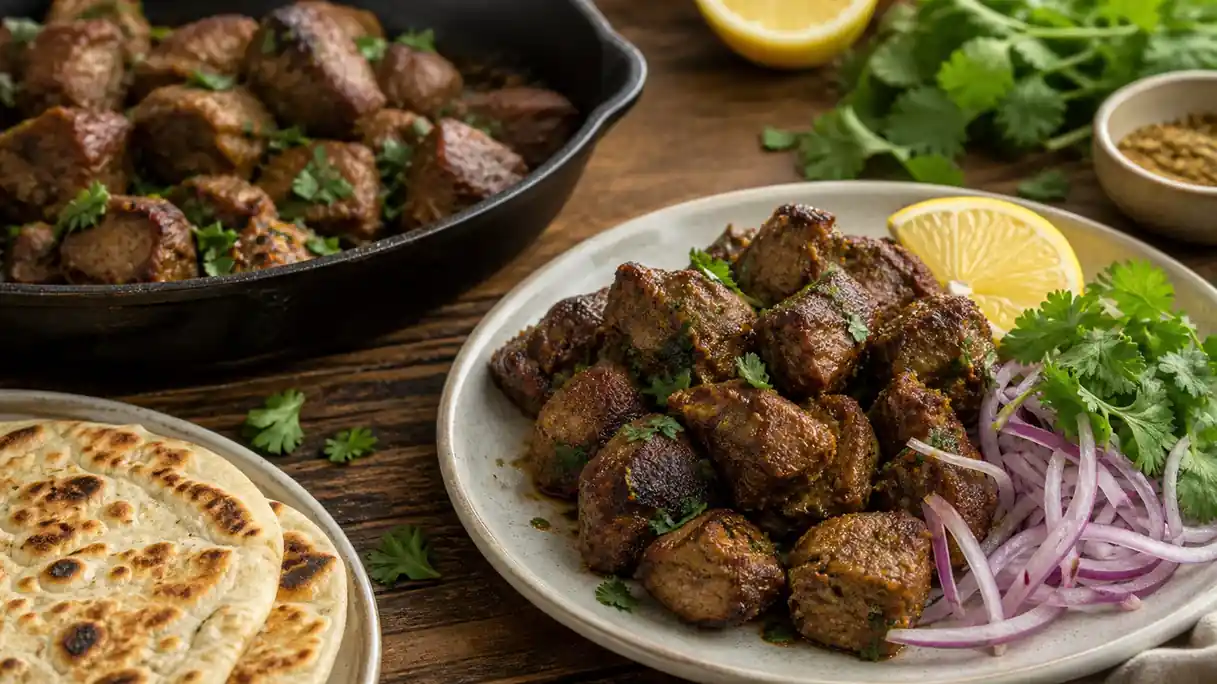
Easy Cumin Lamb Recipe for a Flavorful Skillet Dinner
This cumin lamb recipe pairs tender seared lamb shoulder with warm spices, lemon, and herbs for a fast, deeply flavorful skillet dinner at home.
Lamb · Prep 20 minutes · Cook 20 minutes
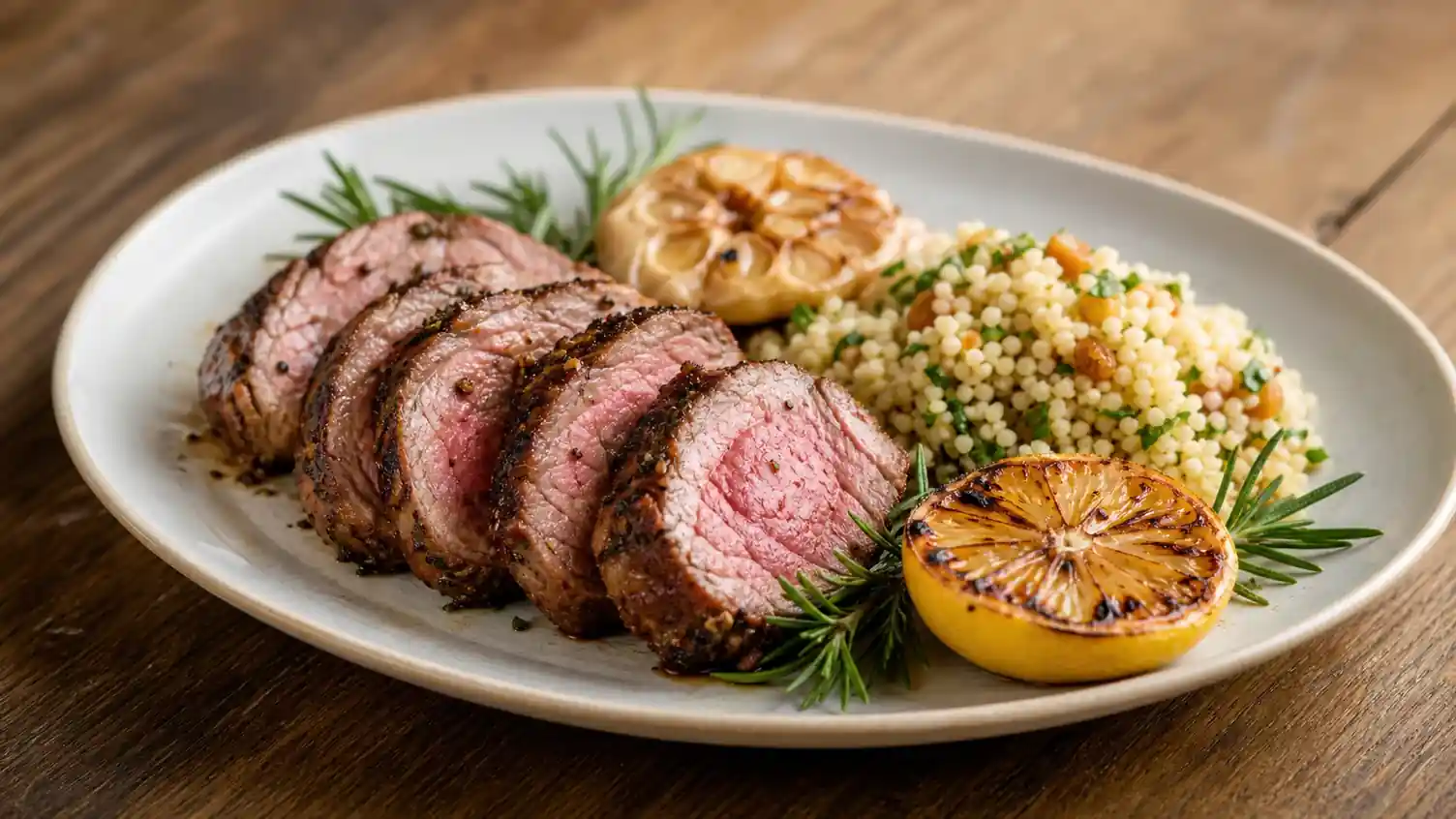
Grilled Lamb Loin Recipes: Easy Rosemary Medallions
Make tender grilled lamb loin medallions with rosemary, garlic, and lemon. This easy lamb loin recipe delivers a flavorful dinner at home in 32 minutes.
Lamb · Prep 15 minutes · Cook 12 minutes