Garlic-Herb Boneless Turkey Breast Roast
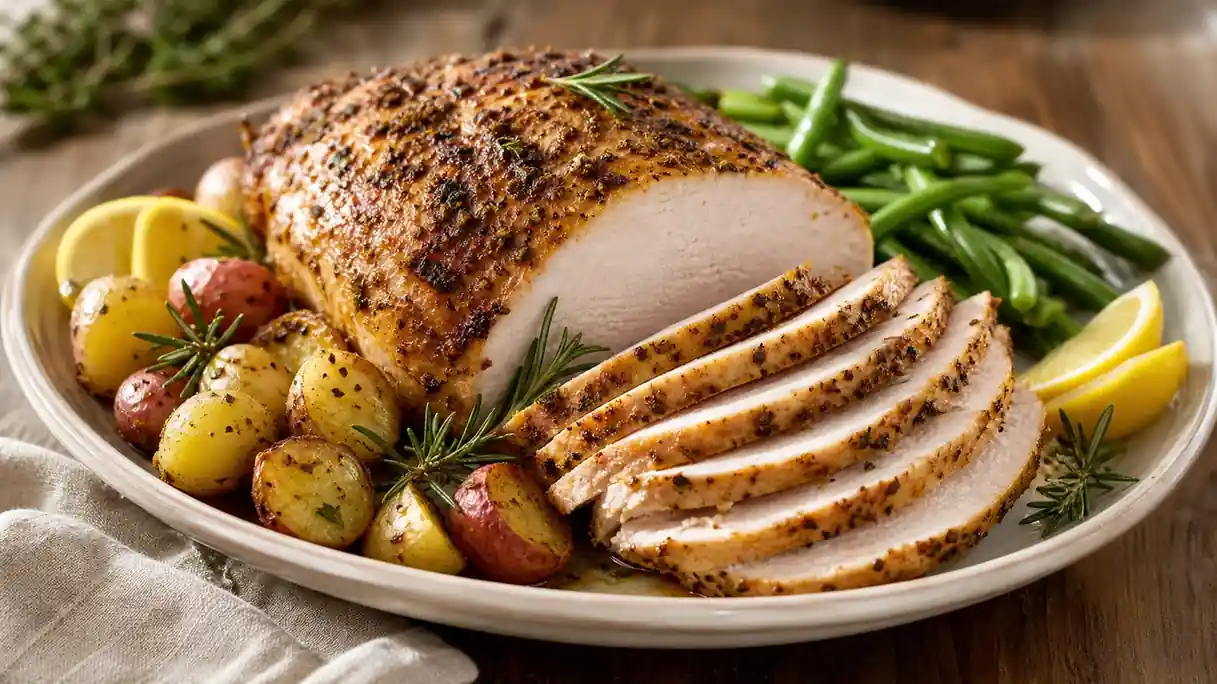
Roast a boneless turkey breast over carrots and onions with garlic, mustard, and herbs. Check the center for 165°F and rest before slicing.
Prep
20 minutes
Cook
50 minutes
Rest
15 minutes
Total
1 hour 25 minutes
Servings
6
Difficulty
Easy
Cut
Boneless turkey breast roast
Method
Oven roasted
Safe internal temperature
74°C / 165°F
Nutrition per serving
373 calories
- Protein
- 55g
- Fat
- 13g
- Carbs
- 9g
- Fiber
- 2g
- Sat. fat
- 2g
- Sugar
- 3g
- Sodium
- 650mg
Nutrition values are estimates based on the listed ingredients and serving size.
This boneless turkey breast roast cooks over carrots and onions with garlic, herbs, mustard, and lemon. A rolled roast can be much thicker than an unrolled breast, so use the center temperature to decide when it is ready.
Use an instant-read thermometer as your guide rather than relying on the clock. Boneless breasts vary in thickness, so cook the center to 74°C / 165°F for the food-safety target. After a full 15-minute rest, slice across the grain for tender pieces that are good at dinner and in sandwiches, salads, or meal prep.
Why You'll Love This Recipe
- It makes a six-serving dinner with one roasting pan.
- Boneless turkey breast cooks faster and more evenly than a whole turkey.
- Garlic, rosemary, thyme, and lemon create familiar, balanced flavor.
- The carrots and onion become a built-in side dish instead of an extra project.
- Leftovers keep well for several days and reheat gently.
Recipe Information
| Detail | Amount |
|---|---|
| Preparation time | 20 minutes |
| Cooking time | 50 minutes |
| Resting time | 15 minutes |
| Total time | 1 hour 25 minutes |
| Servings | 6 |
| Internal temperature | 74°C / 165°F |
Ingredients
For the turkey
- 3 pounds (1.36 kg) boneless turkey breast roast, tied if needed
- 2 tablespoons olive oil, divided
- 1 tablespoon Dijon mustard
- 1 tablespoon lemon juice
- 4 garlic cloves, finely grated or minced
- 2 teaspoons chopped fresh rosemary, or 3/4 teaspoon dried rosemary
- 2 teaspoons chopped fresh thyme, or 3/4 teaspoon dried thyme
- 1 teaspoon sweet paprika
- 1 1/2 teaspoons fine sea salt
- 3/4 teaspoon freshly ground black pepper
For the roasting pan
- 1 pound (450 g) carrots, cut into 2-inch pieces
- 1 large yellow onion, cut into thick wedges
- 1 lemon, cut into wedges
- 1/2 cup (120 ml) low-sodium chicken or turkey stock
- 2 tablespoons chopped parsley, for serving
Choose a roast with a fairly even shape. If it is loosely rolled, tie it with kitchen twine at 1 1/2-inch intervals so it cooks at a steadier rate. A netted roast can stay in the net while it cooks; remove it after the rest, just before slicing.
Step-by-Step Instructions
1. Heat the oven and prepare the vegetables
Set an oven rack in the center position and heat the oven to 400°F (205°C). Add the carrots, onion, and lemon wedges to a large roasting pan. Drizzle with 1 tablespoon olive oil, season with a small pinch of salt and pepper, and toss. Pour the stock around, not over, the vegetables. The liquid helps prevent scorching while the turkey gives off flavorful drippings.
2. Make the herb rub
In a small bowl, mix the remaining olive oil, Dijon, lemon juice, garlic, rosemary, thyme, paprika, salt, and pepper. The mustard helps the herbs cling to the roast, and the lemon keeps the flavor bright. You do not need to marinate for hours; the rub seasons the turkey as it roasts.
3. Season the boneless turkey breast
Pat the turkey dry with a paper towel. A dry surface browns better instead of steaming. Rub the herb mixture over every side, including the ends, then place the roast on top of the vegetables with the smoothest side facing up. Wash the bowl and any utensils that touched the raw poultry before using them again.
4. Roast and check the temperature
Roast uncovered for 40 minutes, then begin checking the center with an instant-read thermometer. Continue roasting until the thickest part reaches 74°C / 165°F, using the thermometer rather than a fixed finish time; a thick or rolled roast may take considerably longer. Insert the probe from the side toward the middle so it does not touch the pan. If the top browns faster than expected, tent it loosely with foil while it finishes.
5. Rest, carve, and serve
Move the turkey to a clean cutting board and tent it loosely with foil. Rest for 15 minutes so the juices settle into the meat instead of running onto the board. Remove any netting or twine, then slice across the grain into 1/4- to 1/2-inch slices. Spoon the roasted vegetables and a little pan juice alongside, then scatter parsley over the platter.
Tips for Best Results
Let temperature determine when the turkey is done. Oven performance, pan material, and roast thickness all affect timing, so a thermometer is more reliable than adding extra minutes. If the turkey is irregularly shaped, check more than one spot and use the coolest reading as your guide.
Avoid crowding the vegetables. They need some space around the roast to brown instead of steam. If the pan is small, roast the vegetables on a separate sheet pan and add a splash of stock to the turkey pan instead.
Resting matters with lean poultry. Fifteen minutes makes the roast easier to carve and helps each slice stay moist. When possible, keep the roast whole until serving because pre-sliced turkey dries more quickly in storage.
For extra pan juice, transfer the cooked vegetables to a serving dish while the turkey rests. Set the roasting pan over low heat, scrape up the browned bits with a wooden spoon, and add a few tablespoons of stock if needed. Taste before adding salt; the rub has already seasoned the drippings.
Ingredient Substitutions
If a rolled roast is unavailable, use boneless, skinless turkey breast cutlets. Arrange them in one layer and start checking much earlier because they are thinner and can reach the safe temperature in 20 to 30 minutes. Turkey tenderloins are another option; see this turkey tenderloin recipe for a smaller, faster roast.
Fresh sage pairs well with rosemary and thyme. Substitute 1 teaspoon finely chopped sage for one teaspoon of rosemary, or use an Italian herb blend in place of the individual dried herbs. Whole-grain mustard can replace Dijon for a more textured rub. For the vegetables, use parsnips, small potatoes, or fennel wedges in place of some or all of the carrots.
If you do not have stock, use water and add an extra lemon wedge to the pan. Avoid sweetened lemon drinks or strongly flavored broth, which can throw off the balance of the pan juices.
What to Serve With
The roasted carrots and onions make this meal nearly complete. Add a crisp green salad, steamed green beans, or warm rice for a larger gathering. Creamy mashed potatoes pair especially well with the pan juices, while a peppery arugula salad adds a fresh contrast.
For more poultry dinners, browse turkey recipes and weeknight dinner ideas. Leftover slices are also useful in turkey rice soup. For another turkey-focused meal, pair a smaller roast with easy turkey burger recipes.
Storage Instructions
Refrigerate cooked turkey within 2 hours of cooking. Let it stop steaming briefly, then transfer it to a shallow airtight container so it cools promptly. Store it for 3 to 4 days. Keep large pieces intact when possible, and store a few spoonfuls of pan juice with the meat to help prevent it from drying out.
For longer storage, wrap the cooled turkey tightly, place it in a freezer-safe container, and freeze for up to 2 months. Label the container with the date. Thaw frozen turkey overnight in the refrigerator, never on the counter. The vegetables can be stored separately for up to 4 days, though their texture is best in the first two days.
Reheating Instructions
Warm turkey gently to preserve its texture. Arrange slices in a baking dish, add a splash of stock or reserved pan juice, and cover tightly. Heat at 300°F (150°C) for 10 to 15 minutes, until the center reaches 74°C / 165°F. Avoid a hot oven, which can make lean slices tough before they are warmed through.
For the microwave, place slices in a microwave-safe dish with a spoonful of liquid, cover loosely, and heat at 50% power in 30-second intervals. Turn the slices between intervals. Reheat only the portion you plan to eat, and do not reheat leftovers more than once.
Frequently Asked Questions
How long do boneless turkey breast roast take to cook?
The 50-minute cooking estimate is a planning guide, not a validated time for every 3-pound roast. A tightly rolled roast may need substantially longer at 400°F (205°C). Thickness matters more than weight alone, so start checking at 40 minutes and cook until the thickest part reaches 74°C / 165°F.
Should I cover a boneless turkey breast while roasting?
Start uncovered so the herb rub can brown. If the surface gets dark before the center is done, add a loose foil tent for the remaining time. A tight cover from the start traps steam and limits browning.
Can I make this recipe ahead?
Yes. Mix the herb rub one day ahead and refrigerate it in a covered container. You can also season the turkey, cover it, and refrigerate it for up to 8 hours. Set the roast out for 20 minutes while the oven preheats, but do not leave raw poultry at room temperature longer than 2 hours.
Are the nutrition values exact?
The nutrition values are per-serving estimates based on six servings and the listed turkey, oil, mustard, vegetables, and stock. They will vary with the exact turkey breast, stock brand, and amount of pan juice served.
Conclusion
This no bone turkey breast recipe keeps a roast dinner manageable: season the turkey, use the thermometer, and give it time to rest before carving. You get juicy slices and roasted vegetables from one pan, with leftovers ready for easy lunches. For another practical poultry dinner, explore more turkey recipes.
Rolled and unrolled breasts cook differently
Check the package weight and whether the breast is rolled, tied, or enhanced with a salt solution. Keep oven-safe netting on during roasting if the package directs it, and avoid adding extra salt to an already seasoned roast. Probe the center from more than one direction and use the lowest reading. A thicker rolled roast may take substantially longer than the estimate below; allow extra time and cook to 165°F.
Serve with gravy made from turkey drippings.
Food Safety
Cook poultry, including ground chicken and turkey, to 165°F. Check with a food thermometer rather than color alone. See the USDA minimum temperature chart. Refrigerate perishables within 2 hours, or within 1 hour above 90°F; see USDA leftover handling guidance.
Keep cooking
You might also like
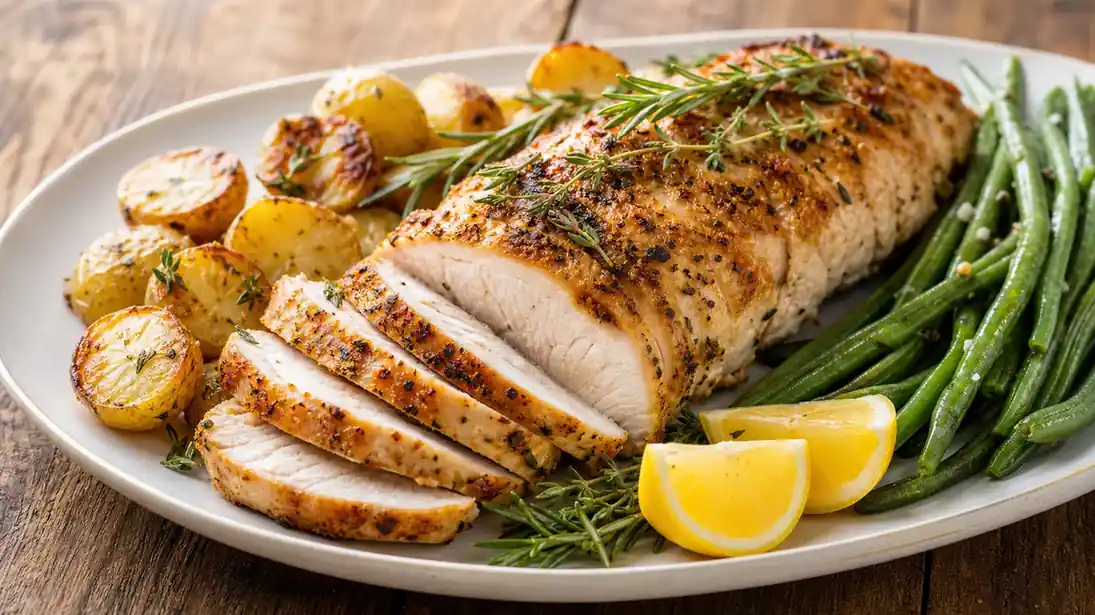
Easy Oven-Roasted Turkey Tenderloin Recipe with Herbs
This turkey tenderloin recipe makes juicy garlic-herb roasted turkey with lemon in under an hour, a simple, flavorful choice for an easy family dinner.
Turkey · Prep 15 minutes · Cook 30 minutes
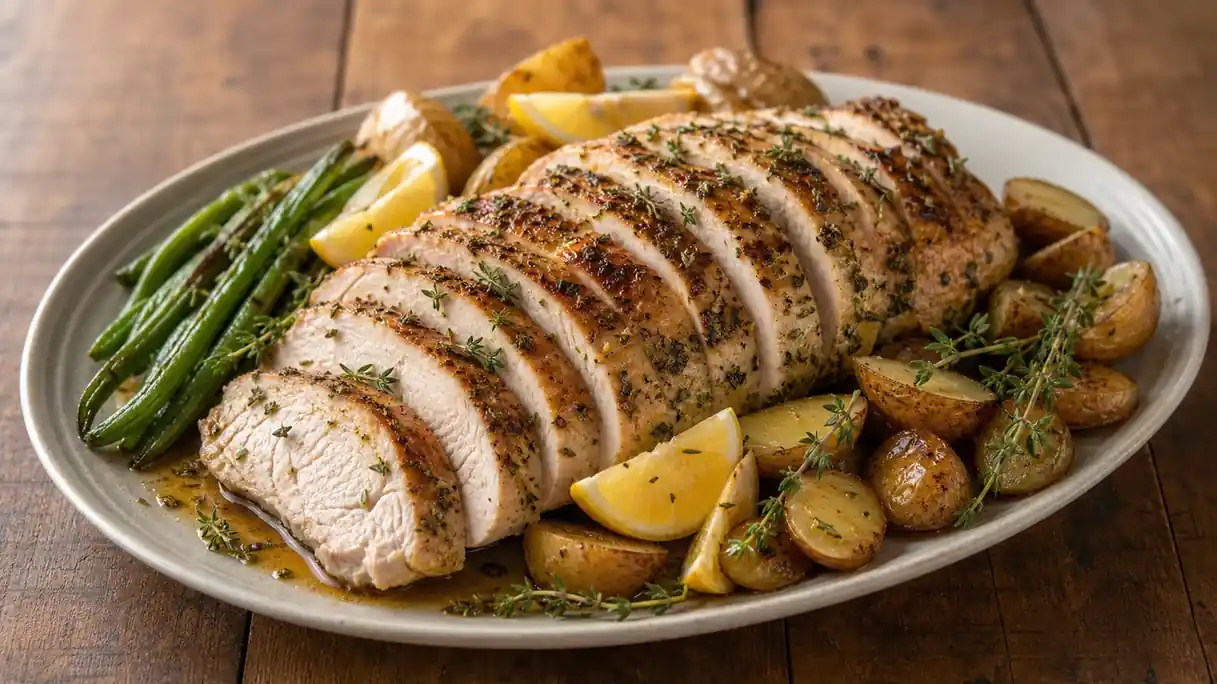
Wild Turkey Recipes: Easy Herb-Roasted Breast Dinner
These wild turkey recipes start with a juicy herb-roasted breast, crisp potatoes, and green beans for an easy, flavorful dinner with reliable cooking tips.
Turkey · Prep 20 minutes · Cook 40 minutes
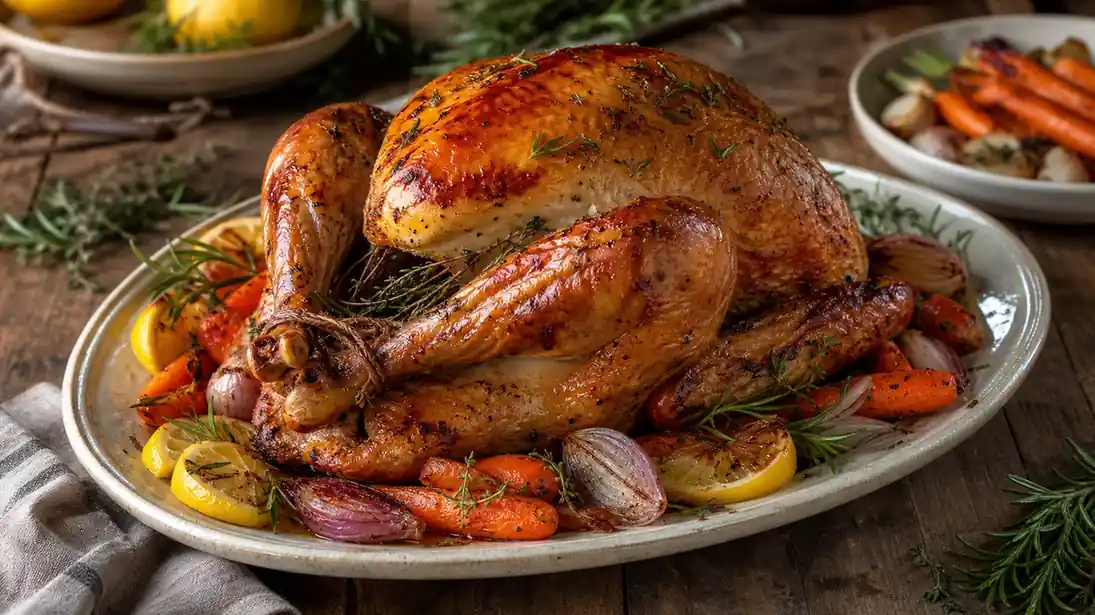
Easy Turkey in a Bag Recipe for a Golden Holiday Roast
Make a juicy turkey in a bag recipe with rosemary, lemon, and vegetables; the roasting bag locks in moisture for an easy, golden holiday table centerpiece.
Turkey · Prep 20 minutes · Cook 3 hours