Turkey Jerky Recipe: Easy Oven-Dried Turkey Strips
Make this turkey jerky recipe with a savory soy-free marinade and low oven heat for chewy, flavorful easy homemade turkey strips perfect for snacking.
Prep
20 minutes
Cook
3 hours
Rest
30 minutes
Total
3 hours 50 minutes
Servings
4
Difficulty
Easy
Cut
Turkey breast
Method
Oven dried
Safe internal temperature
74°C / 165°F
Nutrition per serving
180 calories
- Protein
- 31g
- Fat
- 2g
- Carbs
- 8g
- Fiber
- 0.5g
- Sat. fat
- 0.5g
- Sugar
- 6g
- Sodium
- 720mg
Nutrition values are estimates based on the listed ingredients and serving size.
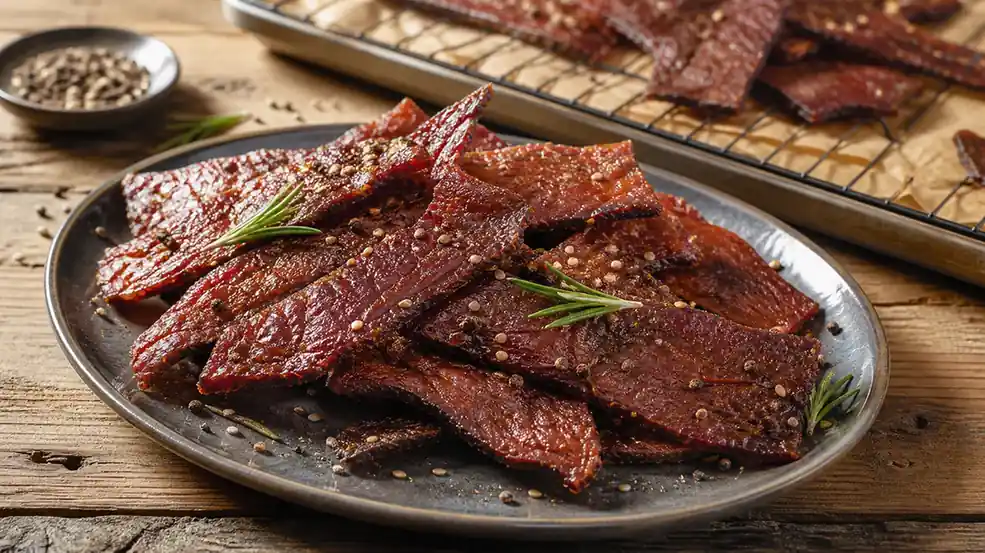
This turkey jerky recipe makes chewy, savory turkey breast strips with a lightly sweet, peppery finish. The meat dries gently in a low oven after a simple soy-free marinade, so there is no dehydrator to set up. Pack the finished strips for road trips and lunch boxes, or keep them on hand for a savory afternoon snack.
Good jerky should bend before it breaks, rather than shatter like a brittle dried snack. Even slicing, a low oven, and a close check near the end of the drying time make the difference. The recipe yields four snack-size portions and can be doubled if you have room for more racks.
Why You’ll Love This Recipe
- It starts with familiar pantry seasonings and lean, easy-to-slice turkey breast.
- You can dry it in the oven; no dehydrator is needed.
- The soy-free marinade is savory, lightly sweet, and simple to adjust.
- Thin, even strips dry more predictably and are easy to portion.
- A small change to the pepper flakes makes the jerky milder or hotter.
Turkey Jerky Recipe Information
| Detail | Amount |
|---|---|
| Prep time | 20 minutes |
| Marinating time | 30 minutes |
| Cook time | 3 hours |
| Total time | 3 hours 50 minutes |
| Servings | 4 |
| Safe internal temperature | 74°C / 165°F |
The active prep is short, but allow time for marinating and low-temperature drying. Because this is poultry, verify that the thickest strip reaches 74°C / 165°F before you cool it. An instant-read thermometer is the most dependable way to check.
Ingredients
- 680 g (1 1/2 pounds) boneless, skinless turkey breast
- 60 ml (1/4 cup) halal-certified coconut aminos
- 2 tablespoons honey
- 1 tablespoon apple cider vinegar
- 1 tablespoon olive oil
- 1 teaspoon smoked paprika
- 1 teaspoon garlic powder
- 1/2 teaspoon onion powder
- 1/2 teaspoon freshly ground black pepper
- 1/4 teaspoon red pepper flakes, optional
Choose a firm whole turkey breast rather than thin cutlets. The brief chill in step one makes uniform slicing much easier. Coconut aminos give the marinade a rounded savory flavor without soy sauce; choose a halal-certified brand and check the sodium level if you are limiting salt.
Step-by-Step Instructions
1. Chill and slice the turkey
Place the turkey breast in the freezer for 20 to 25 minutes, just until the exterior feels firm but not frozen solid. Trim away any visible silverskin. With a sharp knife, slice the turkey across the grain into strips about 6 mm (1/4 inch) thick and 2.5 cm (1 inch) wide. Cutting across the grain gives the finished jerky a pleasantly tender chew.
2. Mix the marinade
In a large zip-top bag or shallow nonreactive dish, whisk together the coconut aminos, honey, apple cider vinegar, olive oil, smoked paprika, garlic powder, onion powder, black pepper, and optional red pepper flakes. Stir until the honey is fully dispersed.
3. Marinate
Add the turkey strips and turn until coated on all sides. Cover and refrigerate for 30 minutes. Do not leave raw turkey at room temperature. For deeper flavor, marinate for up to 4 hours, turning the strips once halfway through.
4. Set up the oven
Heat the oven to 93°C / 200°F. Position racks in the upper and lower thirds. Line two rimmed baking sheets with foil for easy cleanup, then set oven-safe wire racks on top. The raised racks let warm air circulate around the strips rather than steaming their underside.
5. Arrange and dry the strips
Lift the turkey from the marinade, letting excess drip back into the bag. Arrange the strips in a single layer on the racks, leaving a little space between them. Bake for 2 1/2 to 3 hours, rotating the pans and flipping the strips after 90 minutes. Start checking at 2 1/2 hours.
6. Check for doneness and cool
The strips are ready when they look dry at the edges, feel firm, and bend with a few small cracks instead of snapping cleanly. Check a thick strip with an instant-read thermometer; it must reach 74°C / 165°F. Transfer the jerky to a clean cooling rack and cool for 30 minutes before storing. Cooling prevents trapped steam from softening the strips in the container.
Tips for Best Results
Slice consistently
Uneven strips are the usual reason for mixed results: thin pieces turn brittle while thick ones stay damp. Aim for 6 mm slices, and keep any unusually thin pieces together on one side of a tray so you can remove them early.
Keep the heat low
Turkey jerky is dried, not roasted. A 93°C / 200°F oven keeps the surface from browning too quickly and gives moisture time to leave the center. Ovens vary, so use texture and temperature rather than the clock alone.
Avoid overcrowding
Leave space between the strips and use racks whenever possible. If you have only one rack, dry the turkey in batches. Crowding traps moisture and lengthens the drying time.
Taste the marinade safely
If you want to adjust the seasoning, taste the marinade before it touches raw turkey. Once poultry has been added, discard any leftover marinade; never brush it onto cooked jerky.
Ingredient Substitutions
Use halal-certified tamari in place of coconut aminos if soy is suitable for your kitchen; reduce the amount slightly and add a teaspoon of water because tamari is saltier. Maple syrup can replace honey in the same amount. For a citrusy note, substitute lemon juice for the apple cider vinegar. Ground coriander or cumin works well in place of the smoked paprika, though the flavor will be less smoky.
Turkey tenderloins also work when sliced evenly. Avoid very dark thigh meat for this method because its higher fat content shortens the storage window. For another lean, make-ahead option, browse healthy ground turkey recipes.
What to Serve With
Serve the jerky on a snack board with crisp cucumber, carrot sticks, grapes, roasted chickpeas, and a small bowl of unsalted nuts. It also works as a topping for a grain bowl just before serving, where its salty chew contrasts with vegetables and fluffy rice.
For a heartier turkey meal, pair your snack prep with turkey meatballs or plan a comforting pot of turkey rice soup. If you prefer smoky outdoor flavors, grilled turkey legs are another practical dinner idea.
Storage Instructions
Cool the turkey jerky completely before packing it. Refrigerate it in an airtight container for up to 5 days. For longer storage, freeze portions in a freezer-safe bag for up to 2 months, pressing out excess air first. Label the container with the date so the oldest portion gets used first.
Homemade turkey jerky does not have the preservatives or controlled commercial drying process used for shelf-stable packaged jerky. Keep it chilled instead of at room temperature, and discard it if it develops an off smell, visible mold, or an unusually wet surface.
Reheating Instructions
Jerky is meant to be eaten cool or at room temperature after refrigeration. If cold strips feel too firm, let one serving sit on a plate for 10 to 15 minutes. Do not microwave the full batch; microwaving can toughen thin pieces and create uneven hot spots. To warm it for a grain bowl, add the strips during the final minute of cooking instead.
Frequently Asked Questions
Can I make this turkey jerky recipe in a dehydrator?
Yes. Arrange the marinated strips on dehydrator trays in a single layer and dry at 74°C / 165°F until they bend and crack slightly, usually 3 to 5 hours depending on thickness. Confirm the thickest strip reaches 74°C / 165°F before cooling.
How do I know when turkey jerky is dry enough?
Cool one test strip for five minutes, then bend it. It should flex and show small cracks in the fibers without feeling wet in the center. If it is still soft or moist, return it to the oven for 15-minute intervals.
Can I marinate the turkey overnight?
You can, but the flavor may become noticeably saltier and the texture can get softer. Four hours is plenty for these thin strips. If you need to prep ahead, slice the turkey and refrigerate it separately, then marinate on the day you dry it.
Is the nutrition information exact?
The nutrition figures are per-serving estimates based on the listed ingredients and four servings. Some marinade remains in the bag, so the amount of sodium and sugar that adheres to each strip can vary.
Conclusion
This turkey jerky recipe is a straightforward way to make a flavorful homemade snack with a lean cut and a low oven. Slice evenly, dry gently, and confirm the poultry reaches 74°C / 165°F for dependable results. Once cooled and refrigerated, the strips are ready whenever you need a savory, portable bite.
Keep cooking
You might also like
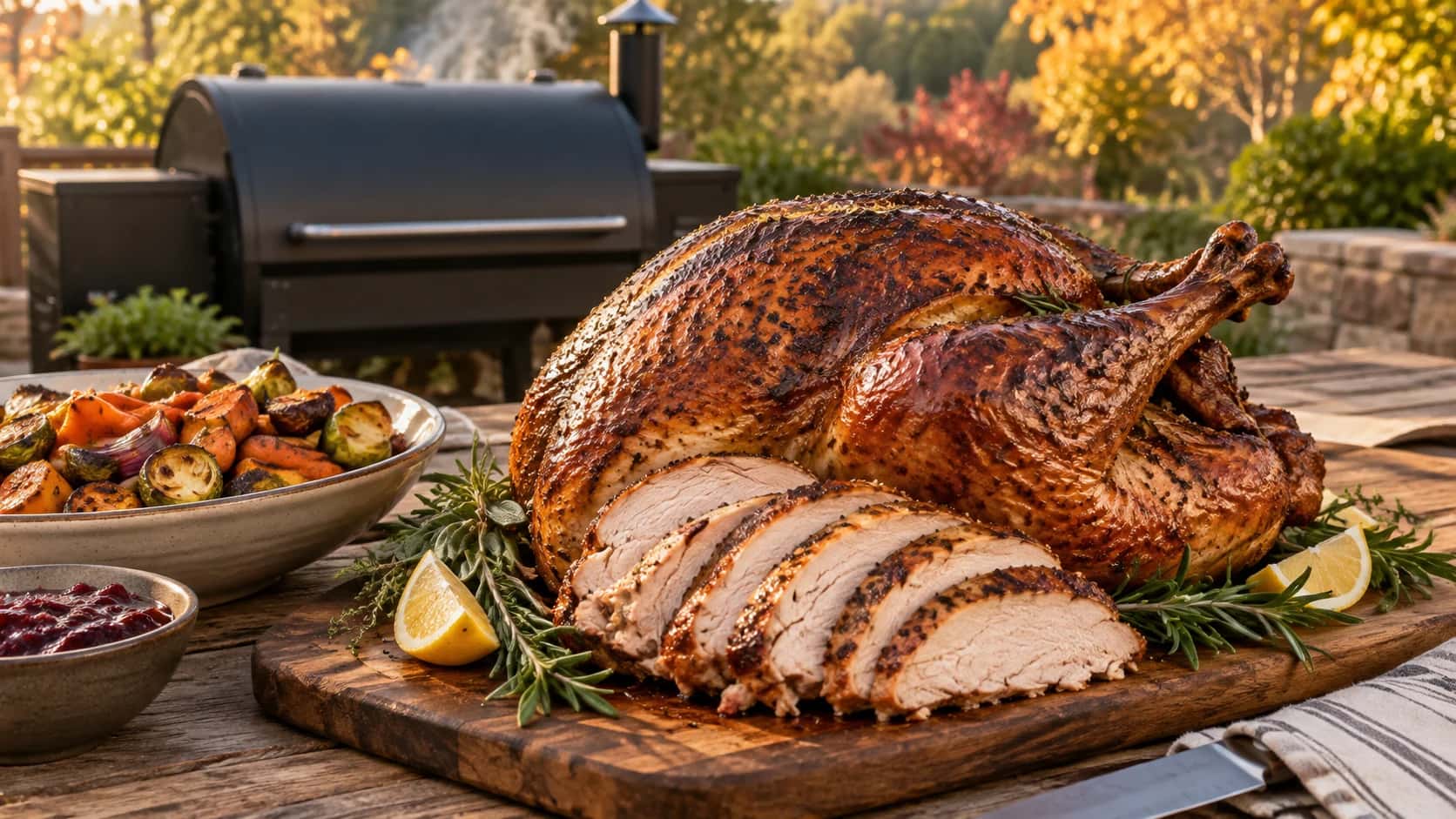
Traeger-Smoked Whole Turkey with Herb Rub
Make this Traeger-smoked turkey recipe for juicy, herb-rubbed meat, crisp bronzed skin, and reliable pellet-grill timing for a festive family meal.
Turkey · Prep 25 minutes · Cook 3 hours 30 minutes
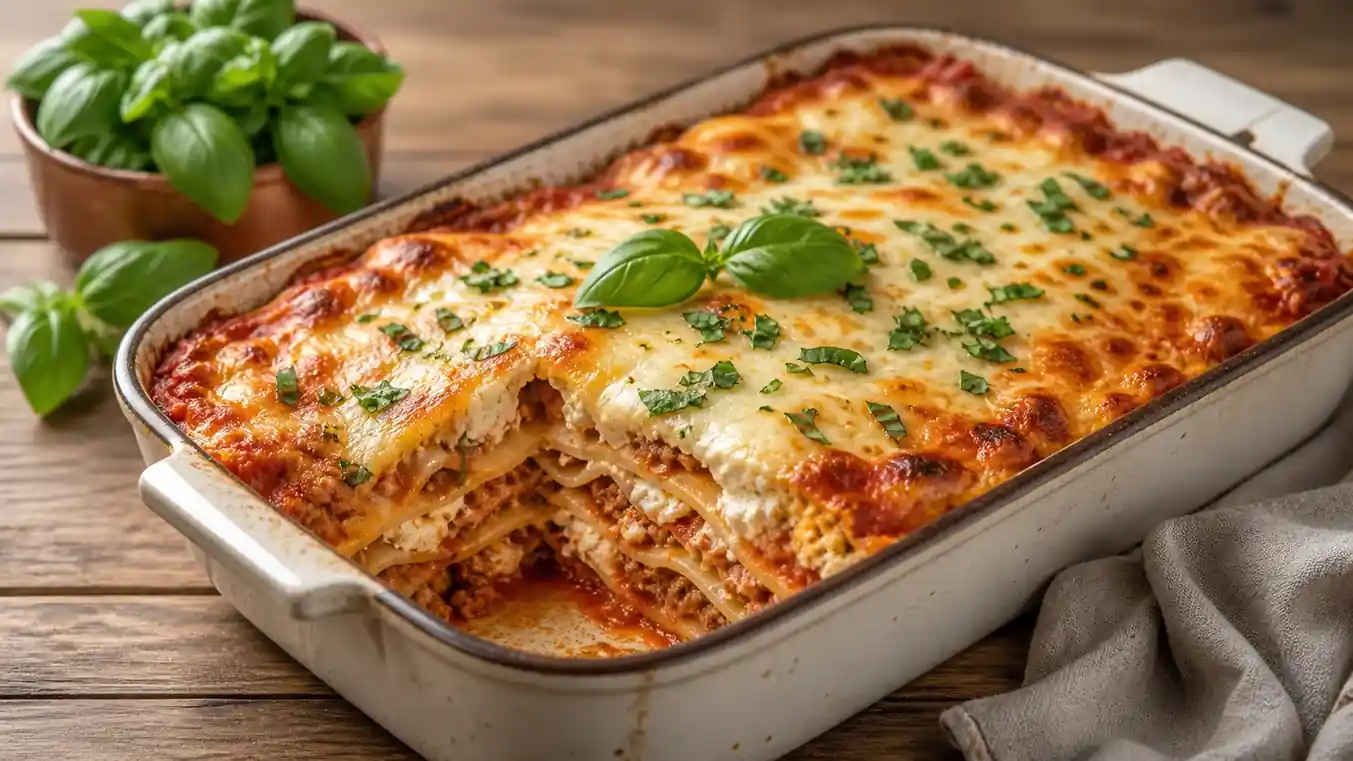
Turkey Lasagna Recipe: Easy Ground Turkey Family Dinner
Make this turkey lasagna recipe with savory ground turkey, tender noodles, tomato sauce, and creamy cheese for a hearty, easy baked family dinner.
Turkey · Prep 25 minutes · Cook 45 minutes
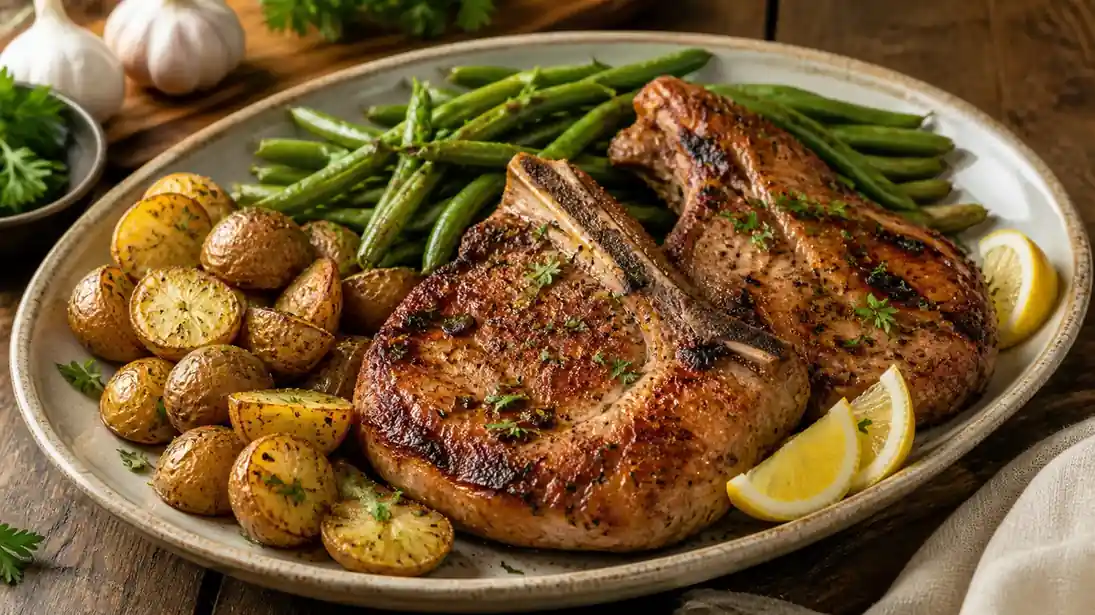
Garlic-Lemon Turkey Chops with Roasted Vegetables
Sear bone-in turkey chops, then finish them in the oven with potatoes and green beans. Includes thermometer placement and a garlic-lemon seasoning.
Turkey · Prep 15 minutes · Cook 25 minutes