Turkey Giblet Gravy Recipe: Rich, Smooth, and Easy
Make this turkey giblet gravy recipe with tender giblets, savory stock, and herbs for a rich, silky sauce for roast turkey, potatoes, and holiday dinners.
Prep
20 minutes
Cook
50 minutes
Rest
0 minutes
Total
1 hour 10 minutes
Servings
4
Difficulty
Easy
Cut
Turkey giblets
Method
Stovetop simmered
Safe internal temperature
74°C / 165°F
Nutrition per serving
310 calories
- Protein
- 24g
- Fat
- 16g
- Carbs
- 15g
- Fiber
- 1g
- Sat. fat
- 8g
- Sugar
- 4g
- Sodium
- 780mg
Nutrition values are estimates based on the listed ingredients and serving size.
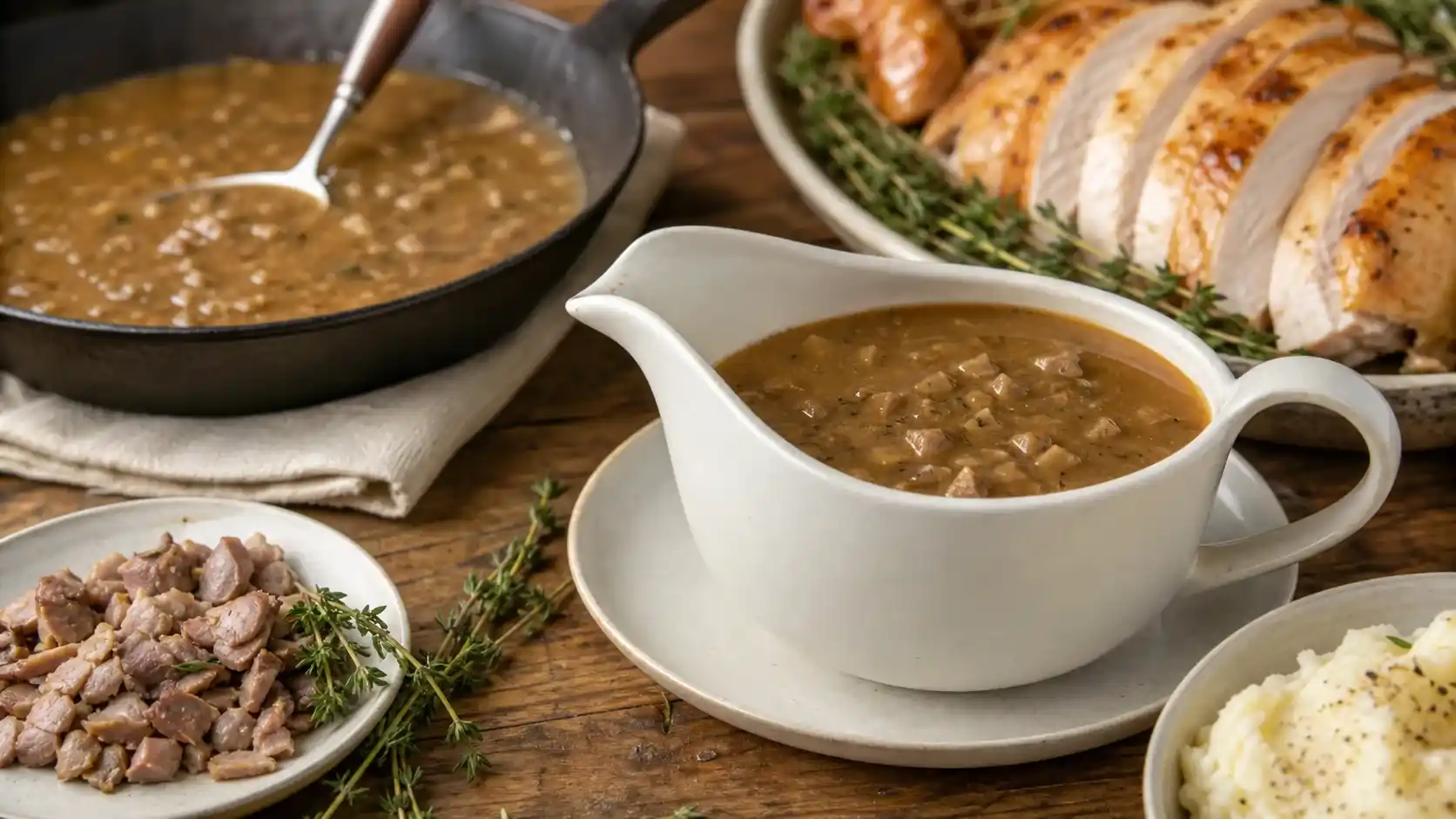
This turkey giblet gravy recipe turns the packet tucked inside a whole turkey into a savory sauce for roast turkey, mashed potatoes, stuffing, and vegetables. If you came looking for a gravy recipe giblets turkey meal can use, this is a straightforward way to put those flavorful parts to work. Simmer the giblets for a rich broth, make a buttery roux, then whisk the two together until the gravy is smooth.
Give the gizzards enough time to soften before adding them to the pan. The result is rich in turkey flavor, with small pieces of giblet and a silky texture that clings to a spoon without turning pasty.
Why You'll Love This Recipe
- Turkey giblets and stock bring plenty of flavor without a complicated ingredient list.
- Make it while the turkey rests, or prepare the giblet broth a day ahead.
- The roux makes it easy to control the thickness.
- Finely chopped giblets add texture, though you can leave them out for a completely smooth gravy.
- The recipe serves a family dinner and can be scaled up for a larger gathering.
Gravy Recipe Giblets Turkey Cooks Can Make Ahead
| Detail | Amount |
|---|---|
| Preparation time | 20 minutes |
| Cooking time | 50 minutes |
| Resting time | 0 minutes |
| Total time | 1 hour 10 minutes |
| Servings | 4 |
| Safe turkey temperature | 74°C / 165°F |
The giblets simmer long enough to cook through and soften. If you use any raw turkey neck meat or other raw turkey parts in the broth, make sure the thickest meat reaches 74°C / 165°F before serving or storing it.
Ingredients
For the giblet broth:
- 1 pound turkey giblets, including gizzards and hearts, rinsed well
- 4 cups low-sodium turkey or chicken stock
- 1 small yellow onion, quartered
- 1 celery stalk, cut into 2-inch pieces
- 1 small carrot, cut into 2-inch pieces
- 3 sprigs fresh thyme
- 1 bay leaf
For the gravy:
- 4 tablespoons unsalted butter
- 1/3 cup all-purpose flour
- 2 1/2 to 3 cups strained giblet broth
- 1/2 teaspoon fine salt, plus more as needed
- 1/2 teaspoon black pepper
- 1 teaspoon finely chopped fresh thyme leaves, optional
- 1 teaspoon lemon juice, optional, for brightness
Step-by-Step Instructions
1. Simmer the giblets
Put the giblets, stock, onion, celery, carrot, thyme sprigs, and bay leaf in a medium saucepan. Bring the liquid to a gentle boil over medium-high heat, then lower the heat right away so it barely simmers. Cover loosely and cook for 35 to 40 minutes.
Avoid a hard boil, which can make the broth cloudy and toughen the gizzards. The gizzards should be tender enough to cut easily with a knife. If they still feel firm, simmer for another 10 minutes and check again.
2. Strain and chop
Lift out the giblets with tongs and let them cool for a few minutes on a cutting board. Strain the broth through a fine-mesh sieve into a measuring jug, then discard the vegetables, herbs, and bay leaf. You need 2 1/2 to 3 cups of broth for the gravy, so add more stock if necessary.
Remove and discard any tough connective tissue. Chop the cooked gizzards and hearts very finely. Small pieces distribute more evenly in the sauce and make each spoonful pleasant rather than chewy.
3. Make a blond roux
In a clean saucepan or skillet, melt the butter over medium heat. Sprinkle in the flour and whisk continuously for 2 to 3 minutes. It should smell lightly nutty and turn pale golden, but not brown deeply. This cooks off the raw flour taste while keeping the gravy a warm, classic color.
4. Whisk in the broth
While whisking, slowly pour in about 1 cup of warm broth. The roux will seize at first; keep whisking and it will smooth out. Add the remaining broth in two additions, whisking after each. Bring the gravy to a gentle simmer and cook for 5 to 8 minutes, whisking often, until it coats the back of a spoon.
For a thinner turkey giblet gravy recipe, whisk in a splash more broth. For a thicker sauce, simmer a few minutes longer rather than adding extra flour, which can leave a chalky flavor.
5. Finish and season
Stir in the chopped giblets, salt, pepper, and fresh thyme, if using. Simmer for 2 minutes to warm the giblets through. Taste before adding more salt, especially if your stock is not low sodium. Add lemon juice only if the gravy tastes heavy and needs a little lift.
Serve hot in a warmed gravy boat. If the gravy sits for more than 10 minutes, whisk in a tablespoon or two of hot broth to loosen it before serving.
Tips for Best Results
Start with warm broth
Warm broth works into a roux more smoothly than cold liquid. If the strained broth has cooled, reheat it gently while you make the roux. Add it gradually and whisk into the corners of the pan to prevent lumps.
Chop, don't puree
Finely chopped giblets give the gravy its traditional character. Pureeing them can make it grainy or overly thick. If you prefer no pieces at all, use the same broth and leave out the chopped giblets; the sauce will still have excellent turkey flavor.
Control the salt at the end
Stock brands vary widely. Season after the gravy has reduced and thickened, then taste it with the side dishes you plan to serve. This matters most with salty stuffing or seasoned potatoes.
Keep the heat moderate
Once the flour and butter are combined, medium heat is enough. High heat can scorch the roux and make the whole batch bitter. After the broth goes in, a calm simmer is all you need for a glossy finish.
Ingredient Substitutions
Use chicken giblets when turkey giblets are unavailable; the technique and timing stay the same. For a gluten-free gravy, replace the flour with a 1-to-1 gluten-free flour blend designed for sauces. You can also whisk 2 tablespoons cornstarch with 2 tablespoons cold water and add that slurry to simmering broth instead of making a roux.
Turkey stock gives the most direct flavor, though good chicken stock works well. Dried thyme can replace fresh thyme; use 1/4 teaspoon in the broth and a small pinch at the end. If you have roast-turkey pan drippings, spoon off the excess fat and replace up to 1/2 cup of the stock with the defatted juices. Taste carefully before salting.
What to Serve With
This gravy belongs with a roast bird and soft, absorbent sides. Spoon it over turkey rice soup leftovers the next day, or serve it with roasted vegetables, green beans, cornbread dressing, and mashed potatoes. For more main-dish inspiration, browse our turkey recipes and weeknight dinner ideas.
It also works with oven-baked chicken thighs when you want a comfort-food dinner without cooking a whole turkey. Keep the rest of the plate simple so the savory gravy has room to shine.
Storage Instructions
Cool leftover gravy promptly: transfer it to a shallow container within 2 hours of cooking, then cover and refrigerate it for up to 3 days. Do not leave gravy at room temperature through a long meal. Instead, put out a small serving dish and refill it with hot gravy as needed.
To freeze, cool the gravy completely and pack it in a freezer-safe container with a little headspace. Freeze for up to 2 months, then thaw overnight in the refrigerator before reheating. Flour-thickened gravy can separate slightly after freezing, so whisk it well while warming.
Reheating Instructions
Warm refrigerated gravy in a small saucepan over medium-low heat, stirring frequently, until it is steaming hot throughout. Add broth or water a tablespoon at a time if it has become too thick. Reheat leftovers to 74°C / 165°F before serving.
For the microwave, use a covered microwave-safe bowl and heat in 30-second intervals, stirring between each. Avoid an aggressive boil; gentle heat keeps the butter and flour emulsion smooth.
Frequently Asked Questions
What are turkey giblets?
Turkey giblets are the edible organs often packaged inside a whole turkey: usually the heart and gizzard, and sometimes the liver and neck. This recipe uses the heart and gizzard for a clean, meaty flavor. The liver has a stronger taste and can make the gravy slightly bitter, so leave it out unless you enjoy that flavor.
Can I make the giblet broth ahead?
Yes. Simmer and strain the broth, chop the giblets, and refrigerate them separately for up to 2 days. Make the roux and finish the gravy just before the meal. It is one less task on a busy cooking day.
Why is my gravy lumpy?
Lumps usually happen when broth goes into the roux too quickly or when the pan is too hot. Whisk steadily as you add warm broth in stages. If a few lumps remain, pour the gravy through a fine-mesh sieve before stirring in the chopped giblets.
How do I make gravy darker?
Use roasted turkey drippings or a well-browned turkey stock for deeper color. You can also cook the roux for an extra minute until it is light brown, though a darker roux thickens slightly less. If you want the cleanest homemade flavor, skip bottled browning sauces.
Conclusion
This gravy recipe giblets turkey cooks can rely on turns simple turkey parts into a generous, comforting sauce. Simmer the giblets gently, whisk the broth slowly into a light roux, and season at the end. Serve it for a celebration or freeze a batch for later; either way, it brings real turkey flavor to the rest of the meal.
Keep cooking
You might also like
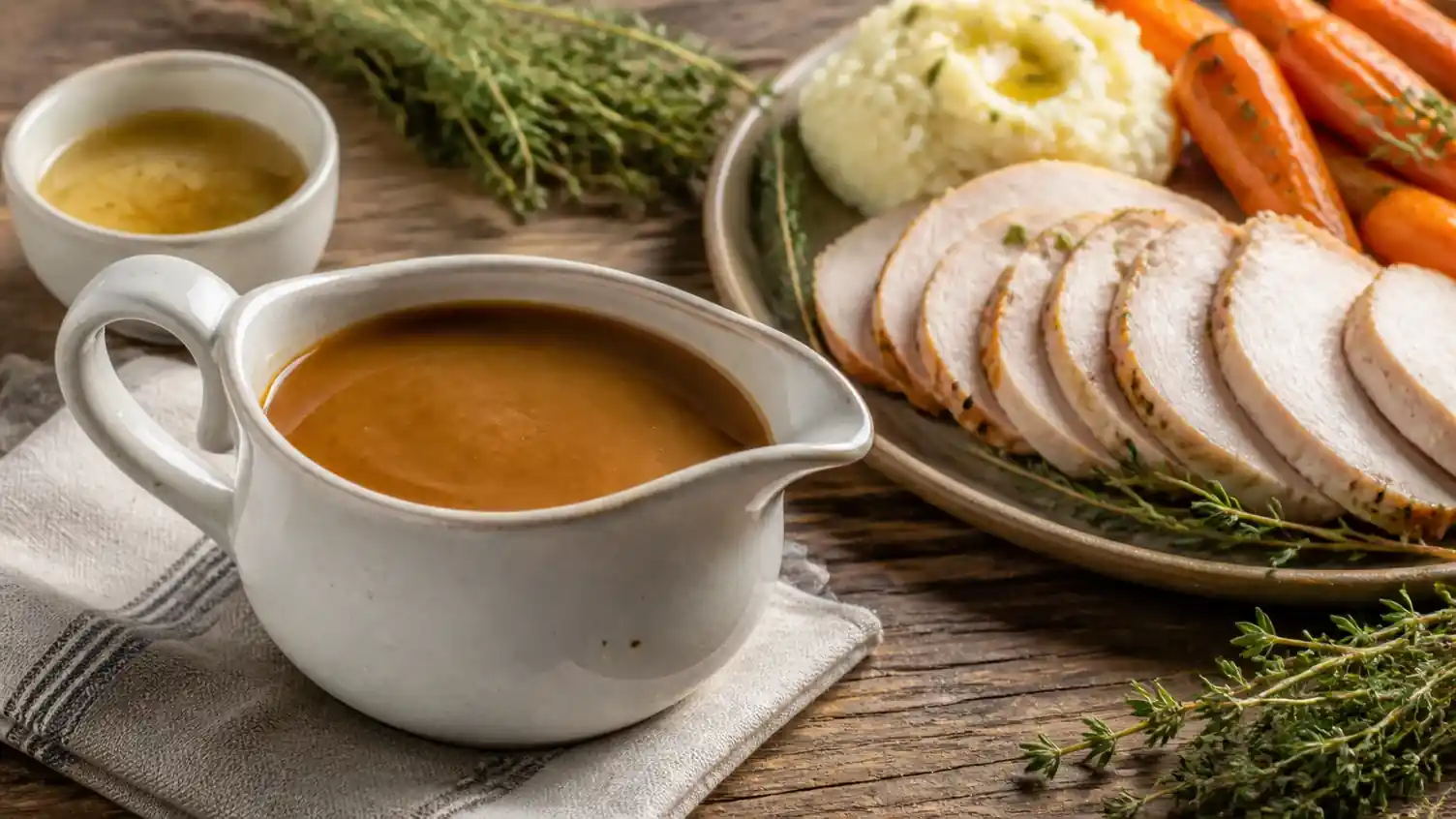
Gravy with Turkey Drippings Recipe: Rich, Easy, and Fast
Make this gravy with turkey drippings recipe for a smooth, savory sauce with rich roast flavor, perfect for turkey, mashed potatoes, vegetables, and roasts.
Turkey · Prep 15 minutes · Cook 15 minutes
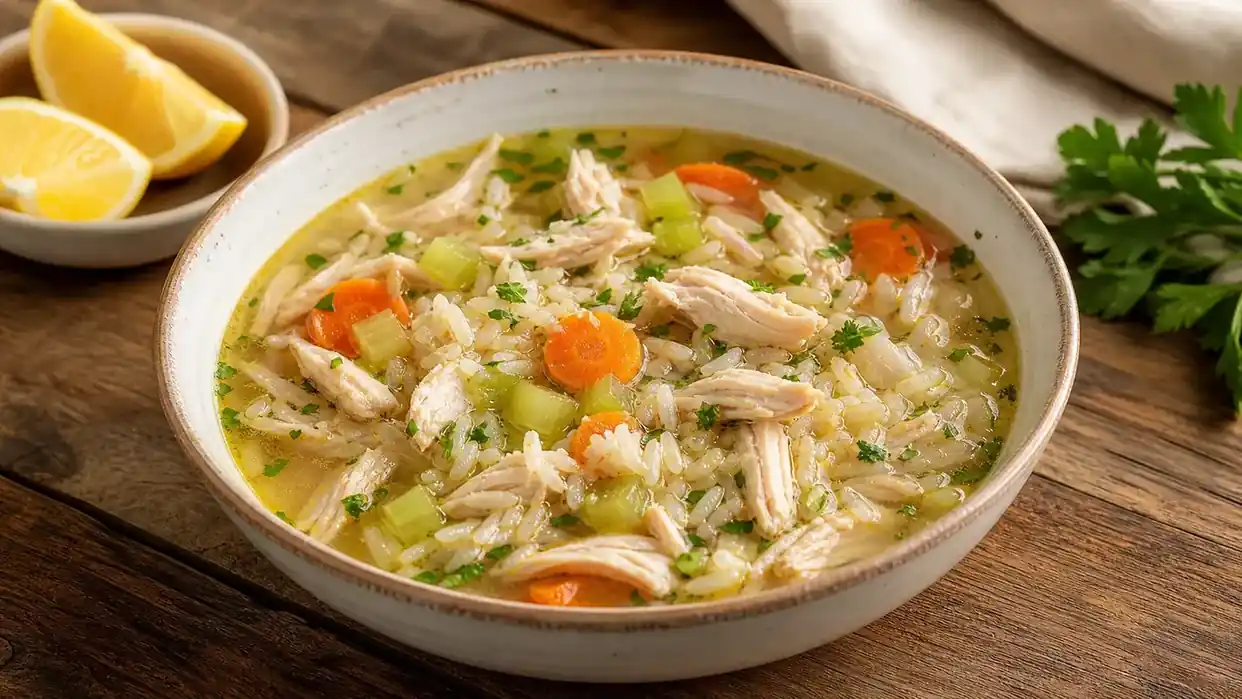
Easy Turkey Rice Soup Recipe (Comforting One-Pot Dinner)
This easy turkey rice soup recipe turns tender turkey, vegetables, rice, and savory broth into a comforting, wholesome one-pot dinner for busy nights.
Turkey · Prep 15 minutes · Cook 35 minutes
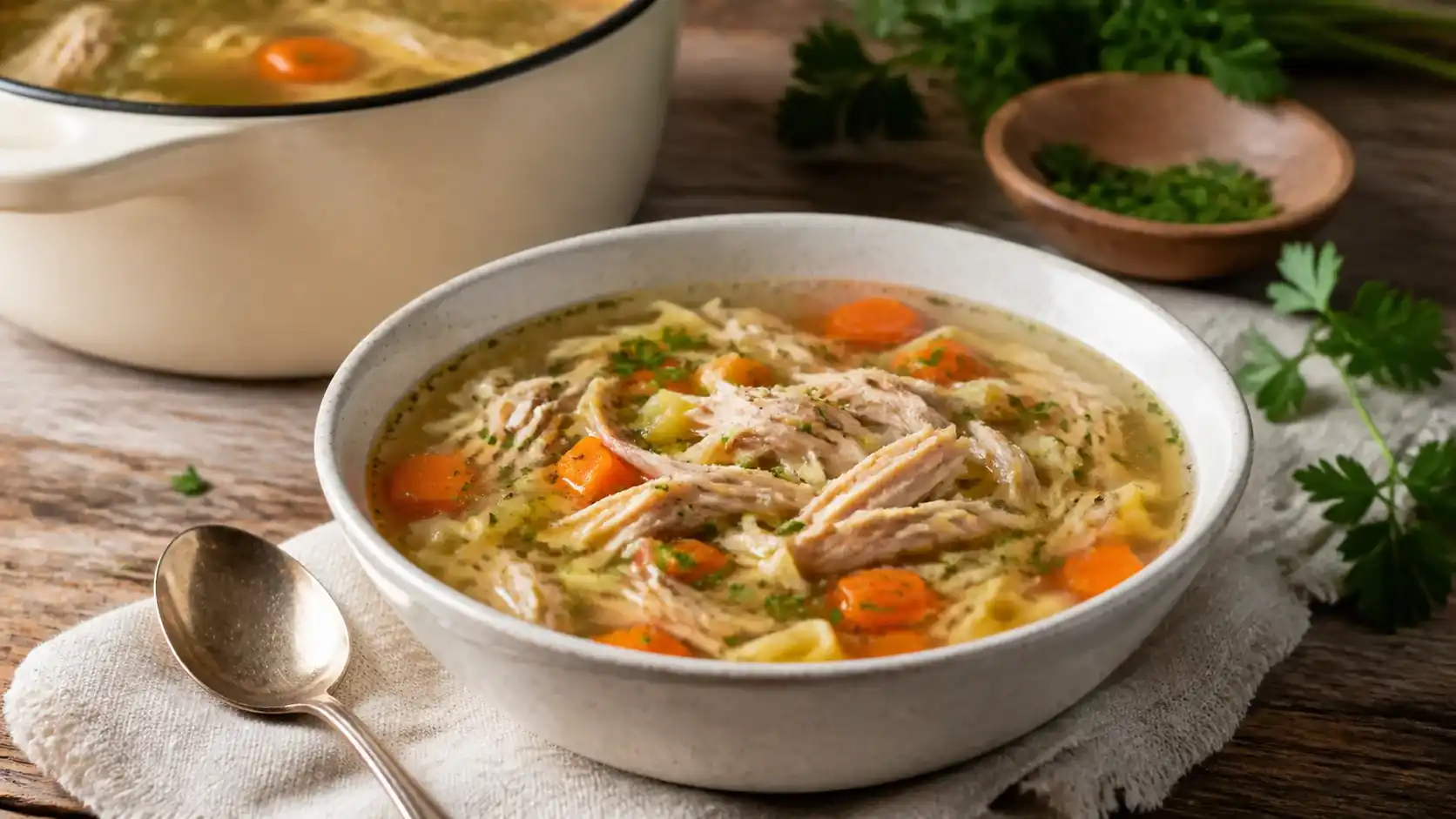
Turkey Soup Recipe From Bones (Rich Homemade Broth)
Make a rich turkey soup recipe from bones with tender leftover turkey, vegetables, egg noodles, and aromatic homemade broth in one comforting pot tonight.
Turkey · Prep 20 minutes · Cook 2 hours 15 minutes