Easy Giblet Gravy Turkey Recipe: Rich Homemade Sauce
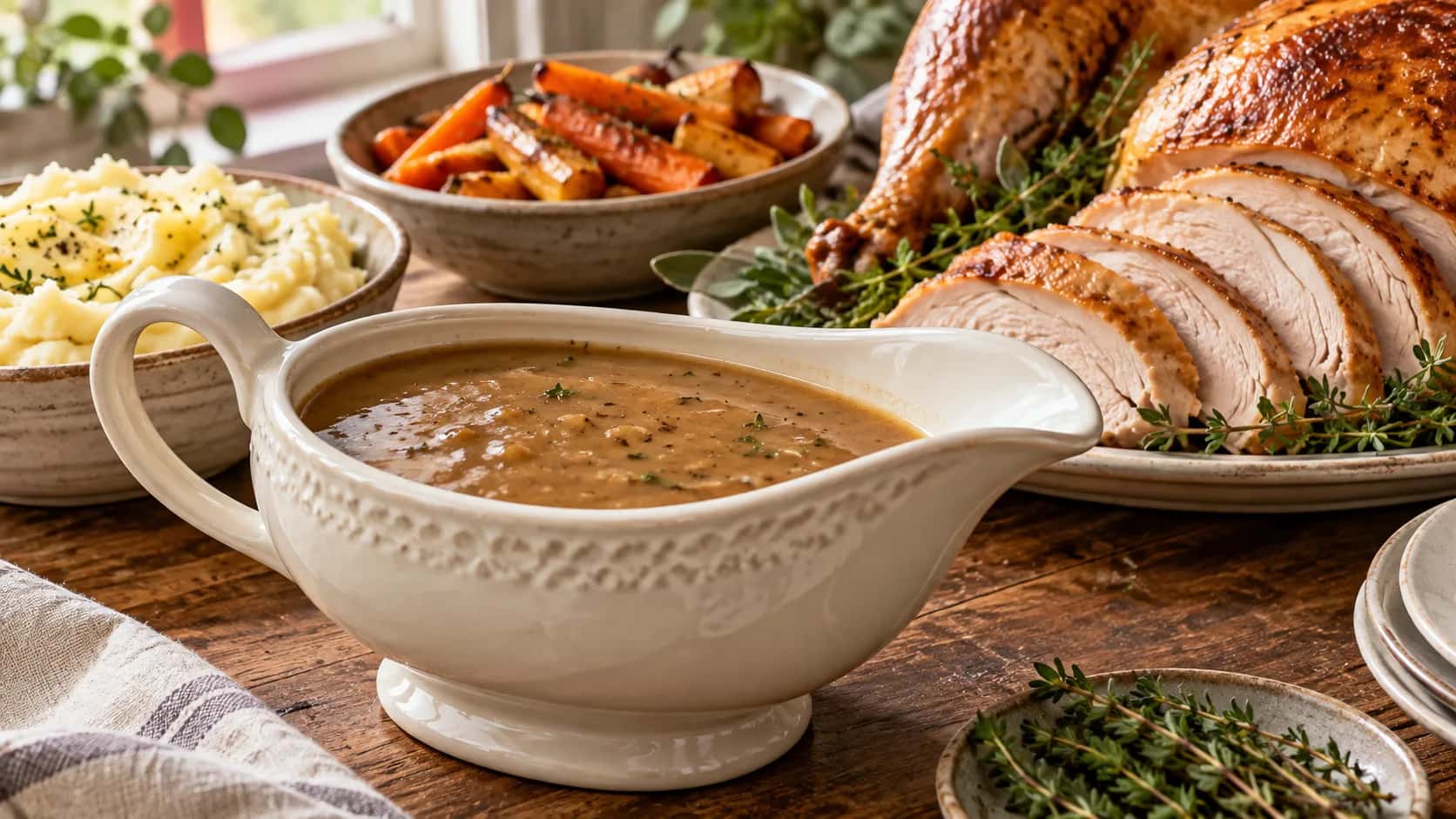
Make this giblet gravy turkey recipe with tender chopped giblets, savory broth, and a silky roux for an easy make-ahead sauce for roast turkey.
Prep
15 minutes
Cook
1 hour
Rest
5 minutes
Total
1 hour 20 minutes
Servings
4
Difficulty
Easy
Cut
Turkey giblets
Method
Simmered
Safe internal temperature
74°C / 165°F
Nutrition per serving
240 calories
- Protein
- 14g
- Fat
- 14g
- Carbs
- 9g
- Fiber
- 1g
- Sat. fat
- 7g
- Sugar
- 2g
- Sodium
- 460mg
Nutrition values are estimates based on the listed ingredients and serving size.
Easy Giblet Gravy Turkey Recipe: Rich Homemade Sauce
This giblet gravy turkey recipe turns the neck, heart, and gizzard from a whole bird into a glossy, deeply savory sauce. The turkey pieces simmer gently with onion, celery, and herbs, making a concentrated broth while they become tender enough to chop. A simple butter-and-flour roux gives that broth body, so the finished gravy is smooth, spoonable, and full of turkey flavor.
It is a practical way to use the giblet packet rather than setting it aside. Make the gravy while the turkey rests, or prepare it up to three days ahead and reheat it slowly with a splash of stock. The liver is optional here: adding it near the end keeps its flavor mild and its texture tender.
Why You'll Love This Recipe
- It uses the whole giblet packet for a more flavorful homemade gravy.
- One saucepan makes both the turkey broth and the finished sauce.
- The method is easy to scale for a smaller roast or a large holiday meal.
- You can make it ahead and reheat it without losing its silky texture.
- The chopped giblets are optional, so you can choose a smooth or rustic finish.
Giblet Gravy Turkey Recipe Information
| Detail | Amount |
|---|---|
| Preparation time | 15 minutes |
| Cooking time | 1 hour |
| Resting time | 5 minutes |
| Total time | 1 hour 20 minutes |
| Servings | 4 |
| Safe internal temperature | 74°C / 165°F |
Start with raw turkey giblets and cook the thickest piece to 74°C / 165°F before chopping. That temperature is especially important for the gizzard and heart. Once the chopped meat is stirred into hot gravy, keep the sauce at a gentle simmer until everything is steaming hot.
Ingredients
- 12 ounces turkey giblets, including neck, heart, and gizzard
- 1 turkey liver, optional
- 4 cups low-sodium turkey or chicken stock, plus more as needed
- 1 small yellow onion, quartered
- 1 celery stalk, cut into large pieces
- 2 sprigs fresh thyme, or 1/2 teaspoon dried thyme
- 1 bay leaf
- 4 tablespoons unsalted butter
- 1/3 cup all-purpose flour
- 1/2 teaspoon fine salt, plus more to taste
- 1/2 teaspoon ground black pepper
- 1 teaspoon lemon juice
- 1 tablespoon finely chopped parsley
Choose a low-sodium stock so the finished gravy is easier to season. If you have turkey pan drippings, replace up to 1 cup of stock with strained drippings after skimming off excess fat. Avoid drippings with burnt bits, which can make the sauce bitter.
Step-by-Step Instructions
1. Simmer the giblets and vegetables
Put the neck, heart, gizzard, stock, onion, celery, thyme, and bay leaf in a medium saucepan. Bring the liquid just to a boil over medium-high heat, then reduce the heat to a quiet simmer. Partially cover and cook for 45 minutes, turning the neck once if it is not fully submerged.
Check that the thickest giblet reaches 74°C / 165°F. If you are using the liver, add it only for the final 12 to 15 minutes; it cooks faster than the gizzard and becomes grainy when simmered too long. Lift the giblets onto a plate and strain the broth into a heat-safe measuring jug. Discard the cooked vegetables, thyme, and bay leaf.
2. Chop the cooked turkey
When the giblets are cool enough to handle, pull the meat from the neck and discard the bones. Finely chop the neck meat, heart, gizzard, and optional liver into small, even pieces. Small pieces warm through quickly and give each serving a little turkey flavor without making the gravy feel chunky.
Measure 4 cups of strained broth. Add a little extra stock if necessary. Keep the broth warm while you make the roux; warm liquid blends into flour and butter more smoothly than cold liquid.
3. Make the roux
Wipe out the saucepan and melt the butter over medium heat. Whisk in the flour until no dry spots remain. Cook the paste for 2 to 3 minutes, whisking constantly, until it smells lightly toasted and looks pale gold. Do not let it brown deeply, because a blonde roux keeps the turkey gravy lighter in color and flavor.
4. Whisk in the broth
Pour in about 1 cup of warm broth in a slow stream while whisking. Once the first addition is completely smooth, add the remaining broth in two additions. Bring the gravy to a gentle simmer, then cook for 8 to 10 minutes, whisking often, until it coats the back of a spoon.
If the gravy seems too thick, whisk in extra stock 1 tablespoon at a time. If it is thinner than you like, let it simmer a few minutes longer. Keep the heat moderate; a hard boil can make the sauce stick at the edges of the pan.
5. Finish, rest, and serve
Stir in the chopped giblets, salt, pepper, lemon juice, and parsley. Simmer for 2 minutes, then remove the pan from the heat. Rest the gravy for 5 minutes before tasting and serving. This short pause lets the roux settle and makes it easier to judge the final thickness.
Tips for Best Results
Warm broth and steady whisking are the two best protections against lumps. Pay special attention to the corners of the pan during the first addition of liquid, where flour can collect. If small lumps remain, pour the gravy through a fine-mesh sieve before stirring in the chopped giblets.
For a completely smooth sauce, strain the finished gravy and leave the chopped turkey out. For a heartier result, use all the chopped giblets. Taste only after the gravy has simmered because stock and drippings vary widely in saltiness.
Do not leave turkey gravy at room temperature for more than 2 hours. Transfer leftovers to shallow containers promptly so they cool quickly and safely.
Ingredient Substitutions
Chicken giblets and chicken stock make a good substitute when turkey giblets are unavailable. Leave out the liver for a milder flavor, or use a little more neck meat and gizzard instead. Fresh sage can replace thyme, but use it sparingly because it is stronger.
For a gluten-free version, skip the butter-and-flour roux. Bring the strained broth to a simmer, whisk 3 tablespoons cornstarch with 3 tablespoons cold water, then stream the slurry into the broth. Simmer until glossy and thick before adding the chopped giblets. The texture will be a little shinier but still satisfying.
What to Serve With
Spoon this gravy over roast turkey, mashed potatoes, stuffing, rice, or roasted carrots. Pair it with these turkey thigh recipes for a smaller turkey dinner, or browse more turkey recipes when planning a holiday menu. It is also especially good beside turkey legs and a bowl of turkey rice soup the next day.
Storage Instructions
Cool the gravy slightly, then divide it among shallow airtight containers and refrigerate within 2 hours. It keeps for up to 3 days. For longer storage, freeze portions for up to 2 months, leaving a little headspace for expansion. Thaw frozen gravy overnight in the refrigerator, never on the counter.
Reheating Instructions
Reheat gravy in a small saucepan over medium-low heat, stirring frequently, until steaming hot throughout. Add stock or water 1 tablespoon at a time if it has thickened in the refrigerator. In a microwave, use a covered microwave-safe bowl and heat in 30-second intervals, stirring between intervals, until the gravy and turkey pieces are hot all the way through.
Frequently Asked Questions
What are turkey giblets?
Turkey giblets are the edible parts commonly packed inside a whole turkey: the neck, heart, gizzard, and sometimes liver. They make a flavorful broth because they contain concentrated turkey flavor and connective tissue that softens during a gentle simmer.
Can I make giblet gravy ahead?
Yes. Make this giblet gravy turkey recipe up to three days ahead, cool it quickly, and refrigerate it. Reheat it gently with a splash of stock and stir in fresh parsley just before serving for the brightest finish.
Why is my gravy lumpy?
Lumps usually form when liquid is added too quickly to hot flour and butter. Whisk constantly and add warm broth gradually. If lumps remain, strain the gravy before adding the chopped giblets.
Can I use only the neck and gizzard?
Absolutely. The liver and heart are optional. The neck and gizzard alone still make a savory gravy; just simmer the gizzard until tender and mince both meats finely after they reach the safe internal temperature.
Conclusion
This giblet gravy turkey recipe is a simple way to turn turkey giblets into a rich, homemade sauce. Simmer the turkey pieces gently, whisk the strained broth into a blonde roux, and season only after the gravy has thickened. The nutrition information is an estimate per serving and will vary with the giblet mix, stock, and any drippings you use.
Keep cooking
You might also like
Turkey Giblet Gravy Recipe: Rich and Silky from Scratch
Make this turkey giblet gravy recipe with tender giblets, aromatic vegetables, and a smooth, savory pan-style sauce for your next comforting turkey dinner.
Turkey · Prep 15 minutes · Cook 1 hour 5 minutes
Gravy with Turkey Drippings Recipe: Rich, Easy, and Fast
Make this gravy with turkey drippings recipe for a smooth, savory sauce with rich roast flavor, perfect for turkey, mashed potatoes, vegetables, and roasts.
Turkey · Prep 15 minutes · Cook 15 minutes
Turkey Giblet Gravy Recipe: Rich, Smooth, and Easy
Make this turkey giblet gravy recipe with tender giblets, savory stock, and herbs for a rich, silky sauce for roast turkey, potatoes, and holiday dinners.
Turkey · Prep 20 minutes · Cook 50 minutes